






“The spirit of our endeavour is, To strive, to seek, to find and not to yield”

Alessandro Minuto-Rizzo, President

Between a rock and a hard place

Source: The National News.
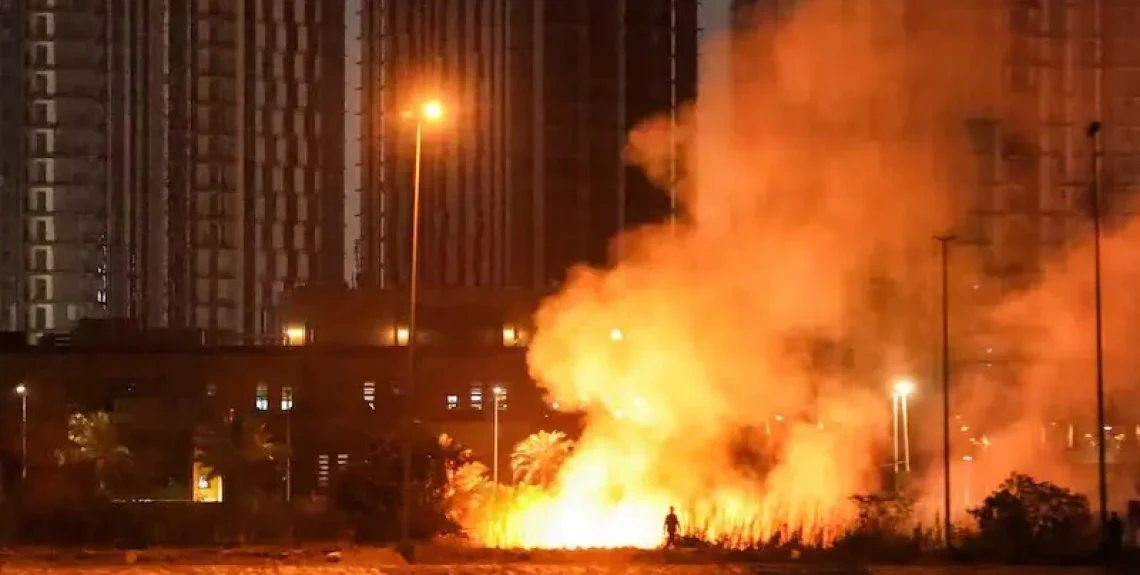
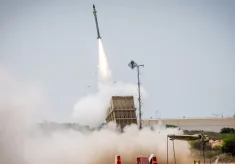
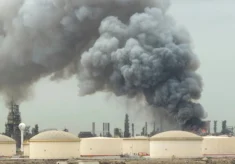
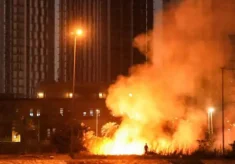
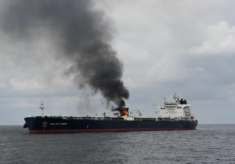
The new Gulf war triggered by Israel and the US against Iran and Tehran’s subsequent swift retaliation, which is taking a heavy toll on neighbouring countries, is having immediate repercussions on both a regional and global scale. The partial closure of the Strait of Hormuz, a vital maritime chokepoint through which a fifth of global oil and liquefied natural gas (LNG) normally pass each day, is raising fears of a global energy crunch and fuelling inflation. Further attacks against oil and gas fields (as well as other energy facilities) in the Gulf are deeply destabilising the whole region and aggravating shocks to the global economy.
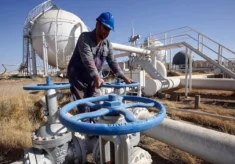
To bypass Hormuz, oil-producing countries are investing in alternative routes, revamping pipelines that have been idled for a long time or are not running at full capacity. Iraq has just resumed oil exports along the Kirkuk–Ceyhan pipeline after an agreement with the Kurdistan Regional Government (KRG) reached on 17 March. The deal, which resolves long-running financial disputes that previously blocked the pipeline, allows for the export of about 250.000 barrels per day (b/d) from Iraq to Türkiye, providing some relief to Baghdad’s economy. Hard hit by the escalation in the Gulf, Iraq’s oil production has dropped to about 1,4 million b/d, nearly a third of the total output of 4,2 million b/d recorded before the war.
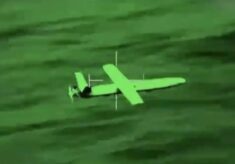
Oil and gas facilities in Iraq have also been hit by Iranian-affiliated militants, who have resumed their activities in the aftermath of the war in Iran. Attacks have targeted energy projects in which US firms have a stake, including the oilfields of Sarsang in Kurdistan (operated by the US-based HKN Energy) and Majnoon near Basra (operated by KBR). Armed groups within the Islamic Resistance in Iraq (IRI) and the Popular Mobilisation Forces (PMF) have also launched drone and rocket attacks against US diplomatic facilities (including the embassy in Baghdad and the consulate in Erbil). Military bases have also been struck, sparing neither US personnel nor those of its allies such as France and Italy.
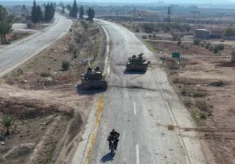
Resumed militant activity has refocused the attention of Israel and the US on Iraq, at a time when Washington was supposed to wind down the Combined Joint Task Force (CJTF), also known as Operation Inherent Resolve. The tempo of Israeli and US attacks in Iraq has increased markedly since the start of the Gulf war, targeting groups within the IRI and the PMF such as Kataib Hezbollah and the Badr Organization, whose senior leaders Abu Hussein al-Hemedawi and Rashif Qasim Abu Ali were reportedly killed in an airstrike in Baghdad on 14 March. Further attacks against these Iranian-affiliated groups have been carried out in the following days.
Under relentless pressure from both Iranian proxies and Operation Roaring Lion conducted by Tel Aviv and Washington, Prime Minister Mohammed Shia al-Sudani finds himself stuck between a rock and a hard place, unable to escape the spiral of violence engulfing the region. His government is now struggling to steer a middle course between Iran and the US, and this is reverberating in negotiations to form a new government. In a caretaker role since the 11 November 2025 elections, Sudani has agreed to step back, favouring the nomination of former Prime Minister Nuri al-Maliki, criticised by US President Donald J. Trump for the latter’s proximity to Iran.

Share on

Archive

JANUARY

FEBRUARY

MARCH

APRIL

MAY

JUNE

JULY

AUGUST

SEPTEMBER

OCTOBER

NOVEMBER

DECEMBER

JANUARY

FEBRUARY

MARCH

APRIL

MAY

JUNE

JULY

AUGUST

SEPTEMBER

OCTOBER

NOVEMBER

DECEMBER

JANUARY

FEBRUARY

MARCH

APRIL

MAY

JUNE

JULY

AUGUST

SEPTEMBER

OCTOBER

NOVEMBER

DECEMBER

Subscribe to our newsletter

Newsletter