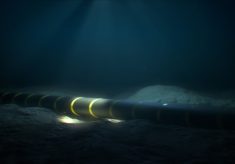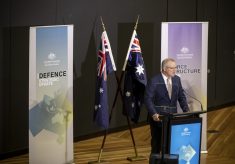
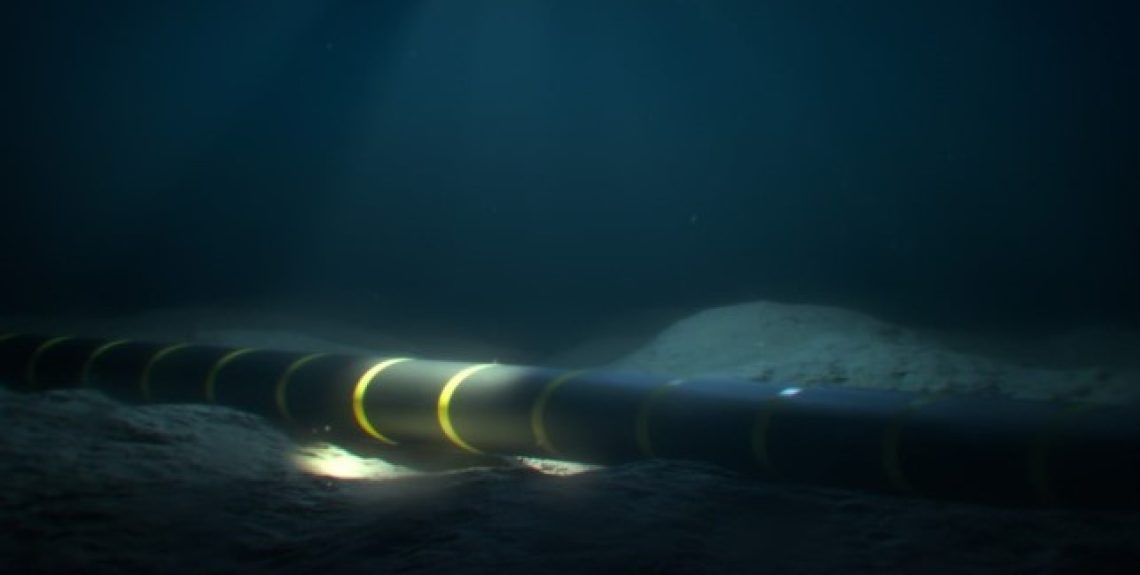
Richard Marles used unusually direct language to describe a vulnerability that is becoming increasingly difficult to ignore. Speaking at the Shangri-La Dialogue (30 May 2026) in Singapore, Australia’s Defence Minister described his country as one of the world’s most exposed nations when it comes to risks affecting subsea cables, on which much of its connectivity depends. More importantly, he raised a question likely to resonate well beyond the region: could some of the incidents recorded in recent years be attempts to test attribution capabilities, response times, and the political resolve of allied governments?
During this Dialogue the Guiding Principles for Underwater Infrastructure Defence Exchanges (Guide), which aims at bringing countries together to explore potential areas of collaboration to enhance security, where adopted by 17 countries:
- Asia‑Pacific: Australia, Brunei, Malaysia, New Zealand, the Philippines, Singapore, Thailand;
- Europe: Estonia, Finland, France, Italy, Latvia, Lithuania, the Netherlands, Sweden, the United Kingdom;
- Middle East: Qatar.
There are also some interesting absences (United States, China, Russia, Japan, India and South Korea), leaving the exercise at an initial beginning that could include further enlargements.
On the other hand, the question comes as the United States, Australia and the United Kingdom have announced a new AUKUS initiative focused on unmanned undersea vehicles. Officially, the programme aims at strengthening reconnaissance, mine-countermeasure and anti-submarine warfare capabilities. More broadly, however, it reflects growing concern over the security of infrastructure located on the seabed.
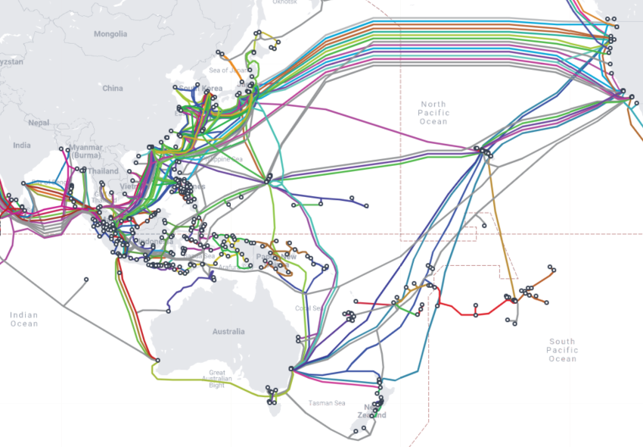
In recent years, subsea cables have moved from the technical domain into the strategic one. Taiwan offers one of the clearest examples of this shift. Last month, Taipei activated emergency communications systems for Dongyin Island following another disruption affecting a subsea cable. The incident adds to a series of disruptions recorded between 2023 and 2025 that have fuelled concerns over the vulnerability of the island’s critical infrastructure.
The issue extends beyond the continuity of communications. Such incidents are increasingly being understood as hybrid threats. Physical disruptions can generate effects in the information domain, creating uncertainty, undermining public trust and placing political pressure on institutions. Infrastructure vulnerability and cognitive vulnerability increasingly reinforce one another.
The difficulty of distinguishing between accident and sabotage is one of the factors that makes the issue strategically significant. Subsea cables are particularly exposed to activities that exploit ambiguity and plausible deniability. In highly connected societies, attribution often becomes more complex than the immediate management of the disruption itself.
This dynamic is not limited to the Indo-Pacific. The protection of critical underwater infrastructure is emerging as one of the most important areas of convergence between the Euro-Atlantic and Indo-Pacific theatres. The Baltic Sea and Taiwan represent very different strategic environments, yet they share a common vulnerability: disruptions affecting cables and other critical infrastructure are increasingly viewed through the lens of hybrid threats. Important differences remain. In the Baltic, a consolidated NATO framework provides a collective response mechanism. In the Indo-Pacific, attribution remains more contested and no comparable security architecture exists. Yet it is precisely this asymmetry that is encouraging new forms of cross-regional cooperation.
Against this backdrop, the growing dialogue between NATO and the Indo-Pacific Four (Australia, Japan, New Zealand and South Korea) acquires additional relevance. The security of subsea cables is one of the few issues for which vulnerabilities experienced in the Baltic and perceived in the Indo-Pacific appear immediately comparable, making it easier to identify shared interests and practical forms of cooperation. More than a technical matter, subsea infrastructure is becoming an indicator of the maturity of the NATO-IP4 relationship: a test case for transforming political dialogue between the two theatres into concrete coordination on common challenges.