

“The spirit of our endeavour is, To strive, to seek, to find and not to yield”

Alessandro Minuto-Rizzo, President

Kosovo elections: breaking the deadlock?

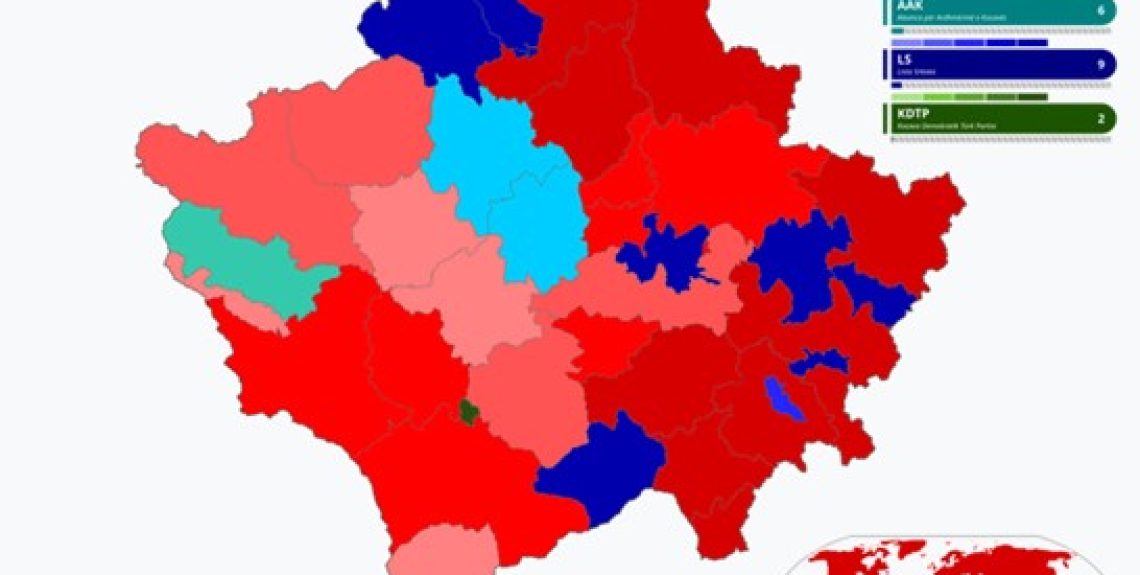
Source: Wikimedia, on Central Election Commission of Kosovo.
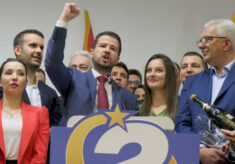
On December 28, 2025, Kosovo held snap elections, resulting in a decisive victory for the acting PM Albin Kurti’s party, Vetëvendosje (Self-Determination), attaining 51% of the vote (57 seats). Following the regular parliamentary elections in February last year, that led to Kurti’s failure to secure a parliamentary majority, this outcome suggests a clear consolidation of the PM’s electoral support, which previously stood at 42%. The Democratic Party of Kosovo (PDK) ranked second with 20% (23 seat), while the Democratic League of Kosovo (LDK) obtained 13% (14 seats), reflecting a decline of 5% compared to the prior elections. Nine out of ten seats reserved for the Serb community were secured by the Belgrade-backed Srpska Lista (9 seats, which is remarkable), whereas a further ten seats are automatically allocated to other minority communities. Thus, Vetëvendosje now has more room for manoeuvre to overcome the political stalemate that has affected the country for almost a year.
A major challenge that Kurti will face is balancing domestic political commitments – notably his pledge to refrain from compromise with Serbia in the context of the normalisation process and with the northern Kosovo’s Serb majority – with the demands of the international community, notably the USA and the EU. In this regard, the European Commission has recently announced its intention to lift the punitive measures that have been blocking more than €600 million in funds. This decision follows the developments that occurred in October 2025, when the newly appointed mayors assumed office peacefully in the Serb-majority municipalities. Their Albanian predecessors were elected amid a boycott on behalf of the Serb community, a process that triggered escalating violence and the intervention of NATO’s KFOR peacekeeping force. 
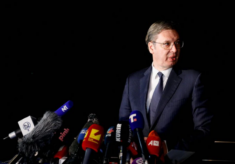
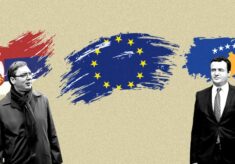
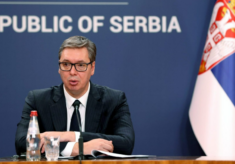
In this context, Brussels and Washington are likely to expect Pristina to demonstrate greater cooperation in the long-stalled dialogue with Belgrade. Meanwhile, strained relations between Kurti and Serbian President Aleksandar Vučić may complicate efforts in this direction. To mitigate these challenges and avoid international isolation, Kurti would need to adopt a less polarising approach on issues that are critical to strengthening relations with key international partners.

Share on

Archive

JANUARY

FEBRUARY

MARCH

APRIL/1

APRIL/2

MAY

JUNE

JULY

AUGUST

SEPTEMBER

OCTOBER

NOVEMBER

DECEMBER


JANUARY

FEBRUARY

MARCH

APRIL

MAY

JUNE

JULY

AUGUST

SEPTEMBER

OCTOBER

NOVEMBER

DECEMBER

JANUARY

FEBRUARY

MARCH/1

MARCH/2

APRIL/1

APRIL/2

MAY/1

MAY/2

JUNE

JULY

AUGUST

SEPTEMBER

OCTOBER

NOVEMBER

DECEMBER

JANUARY

FEBRUARY

MARCH

APRIL

MAY

JUNE

JULY

AUGUST

SEPTEMBER

OCTOBER

NOVEMBER

DECEMBER

Subscribe to our newsletter

Newsletter