
The global fertility rate has more than halved since 1950. The average fertility rate in OECD countries now stands at 1,46 births per woman, well below the 2,1 births per woman considered necessary for generational replacement. Population decline is a challenge for most developed countries, but it is particularly acute in China, where annual births fell to approximately 7,92 million in 2025, the lowest level since 1949, while the total fertility rate, or average number of children born per woman, dropped below 1,0.
Over the past half-century, China’s population has been at the centre of perhaps the most dramatic demographic experiment in modern history. To enforce the One-Child Policy, introduced in 1980, the Chinese authorities implemented strict measures, including mandatory contraception and, in some cases, forced abortion. Those who violated the policy could face substantial financial penalties, while children born outside the permitted limits often could not be officially registered and were denied access to essential benefits and services. Parents employed by the government—and, under China’s economic system, this included a large proportion of urban workers—could also risk losing their jobs if they had more than one child.
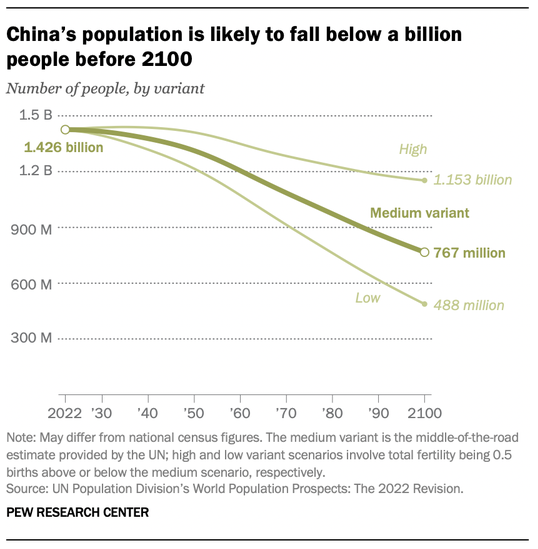
In 2015, the allowed number of children was increased to two, and in 2021 to three. Yet the demographic crisis has persisted. The legacy of the One-Child Policy has proved difficult to reverse because many of the structural factors that discourage childbearing remain deeply entrenched. These include the rising cost of raising children, the pressures of education and housing, and workplace discrimination against women of childbearing age.
The shrinking population poses a significant threat to economic growth and to China’s ambition to establish itself as a global superpower. In response, the authorities have introduced a range of measures designed to encourage couples to have more children. So far, however, this patchwork of incentives has produced few results. The most recent initiative, a nationwide child subsidy of CNY 3.600 (approximately €460) per child per year until the age of three, has yet to produce any significant change in fertility trends. Some regions have also introduced more coercive measures.
At the same time, new pro-natalist policies and campaigns increasingly portray women primarily as mothers and caregivers. Yet the traditional belief that marriage is the natural culmination of romantic love and that motherhood represents the fulfilment of a woman’s life is being increasingly challenged. More women have gained access to higher education and economic independence and have become more conscious of the personal costs associated with motherhood. These include the physical risks of childbirth, interruptions to their careers, the financial cost of raising children and the unequal distribution of unpaid care work.
Chinese society has changed dramatically over the past few decades. The division of labour within the household, however, has often failed to keep pace with these broader social changes. While having children may be the result of a joint decision, the responsibility for raising them is still widely perceived as primarily regarding on the mother. The idealisation of motherhood can reinforce this imbalance. The more maternal sacrifice is celebrated, the less space women may feel they have to acknowledge exhaustion, frustration, or even regret.
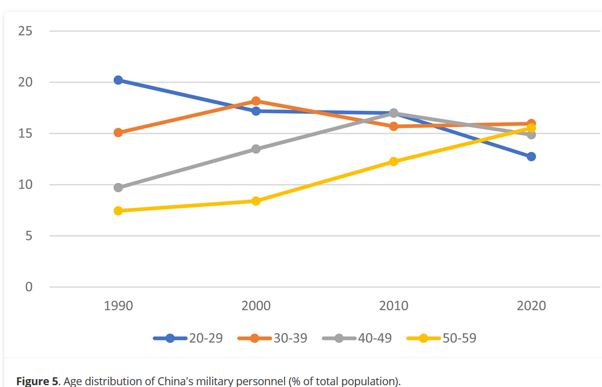
The demographic crisis in China therefore cannot be understood simply as a consequence of the former One-Child Policy. It is also closely connected to profound changes in women’s expectations, economic opportunities, family structures, and attitudes towards marriage and motherhood. The challenge facing China is not merely to persuade women to have more children, but to address the social and economic conditions that increasingly influence their decision not to do so. In terms of security this implies in the medium-term a drastic reduction in numbers concerning Chinese armed forces and a real obstacle in waging a high-intensity war.