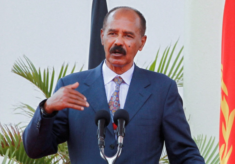
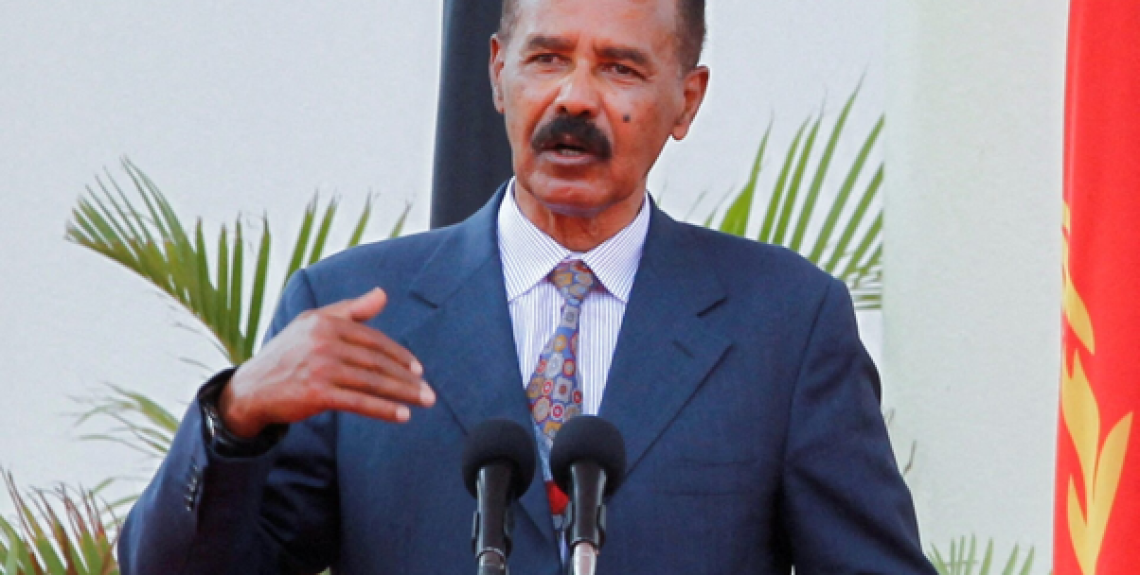
On 18 September 2026, the US Treasury quietly lifted sanctions on Eritrea’s ruling party, its armed forces, and the Red Sea Trading Corporation, which is the state entity that controls most of the country’s foreign trade. Sanctions on a top economic adviser to President Isaias Afwerki were revoked too. It happens exactly 25 years after the day when Afwerki launched the crackdown that created the issues these sanctions were meant to address.
On 18 September 2001, Afwerki’s government arrested the “G15”, senior officials and liberation-war veterans who had publicly demanded that the constitution be implemented and elections finally held, two years after Eritrea’s 1993 declaration of independence had promised them. Days later, journalists were arrested and their media were closed. There has been no trial and no information about the prisoners since then, as confirmed by a UN report in 2026. The sanctions were linked to this situation.
The waiver’s rationale is entirely operational: the US needs basing access on Eritrea’s Red Sea islands to sustain its campaign against the Houthis, who now effectively control the Bab el-Mandeb Strait, the chokepoint through which a large share of global shipping, and European energy flows, must pass. For European allies the stakes are direct, since disruption at Bab el-Mandeb threatens trade and energy prices.

Until today there is no NATO mission in the Red Sea: allied navies operate instead under the EU’s Operation Aspides or the US-led Prosperity Guardian coalition, two separate command structures. With EU and US-led naval operations already fully engaged in keeping that corridor open, the Eritrean ports of Assab, Massawa and the Dahlak archipelago begin to be particularly attractive in addition to possibly congested Gibuti bases.

Interestingly, the UAE used to hold this exact position, running a military base at Assab a short distance from Yemen. That relationship has cooled sharply in recent years, leaving a gap Washington now appears to be filling with a fresh relationship with a quite closed country. The US sanctions lifting and basing appears not to contemplate a coordination with European allies.
The problem goes beyond Eritrea. When a shipping lane is under attack and time is short, access goes to whoever will grant it, and lifting sanctions is the cheapest thing to offer in return. But the deal rests on one man. Afwerki has ruled Eritrea since independence, with no elections and no working constitution, so the agreement is with him personally, not with a system that would honour it after he is gone. If he dies or is replaced, his successor may not feel bound by it. If another power offers him more, he can look elsewhere. And because the sanctions were lifted by executive decision, a future US administration could reimpose them, which could push Eritrea to cut off access. Any of these could close the bases just when they are needed most. For Alliance planners, this raises a consequential question: How durable is Red Sea access that depends on an authoritarian host?