
Within the evolving architecture of hybrid warfare (an environment in which the traditional boundaries between war and peace dissolve into a continuum of coercion, informational interference, and infrastructural vulnerability) Palantir Technologies emerges as a paradigmatic actor. Far from being a conventional software company, Palantir constitutes an epistemic infrastructure: a system designed to transform data into actionable intelligence, information into strategic leverage, and predictive modelling into a form of anticipatory governance.
Its operational domain lies precisely at the intersection of intelligence analysis, state administration, and military strategy, positioning the company as a central node in the contemporary reconfiguration of geopolitical power.
Understanding Palantir requires an examination of the intellectual trajectories of its founders, Peter Thiel and Alexander Karp, whose philosophical backgrounds profoundly shape the company’s ethos.
Thiel’s intellectual formation was deeply influenced by the French anthropologist René Girard, whose theory of mimetic desire posits that individuals and societies desire objects not for their intrinsic value, but because others desire them. This mechanism generates rivalry, escalation, and systemic crisis.
Thiel extrapolates Girard’s insights to the geopolitical sphere:
international relations are arenas of mimetic competition;
states oscillate between imitation and antagonism;
systemic instability is endemic;
only superior cognitive and analytical capacities can mitigate the inherent volatility of global interactions.
In this sense, Palantir is conceived as a technological apparatus capable of anticipating mimetic dynamics before they manifest as conflict.
Karp’s intellectual background, shaped by the critical theory of Habermas and Adorno, introduces a distinct sensibility toward the risks of technological power and the fragility of democratic systems. Paradoxically, this critical awareness does not lead to technological restraint; rather, it motivates the construction of a system designed to govern complexity from within.
Karp thus becomes the mediator between Thiel’s apocalyptic reading of global disorder and the operational needs of intelligence and defence institutions. His role exemplifies the transformation of philosophical critique into a form of technocratic pragmatism.
The Cognitive Arsenal: Gotham, Foundry, Apollo
Palantir’s operational architecture is articulated through three major platforms, each embodying a specific dimension of its epistemic project.

Originally developed for the CIA, Gotham integrates heterogeneous data (signals intelligence, financial transactions, satellite imagery, digital traces) into dynamic risk maps. Its function is not merely descriptive: Gotham identifies latent patterns, suggests courses of action, and supports predictive modelling. It is the analytical core of hybrid conflict.
Foundry extends Palantir’s logic to the civilian domain. By constructing digital twins of critical infrastructures—energy networks, supply chains, healthcare systems—it enables scenario simulation and crisis anticipation. Foundry operationalizes the idea that governance itself can be modelled algorithmically.
Apollo ensures the resilience and continuity of Palantir’s systems, enabling real‑time updates and secure deployment even in degraded or hostile environments. It is the orchestration layer that allows Palantir to function in war zones, cyber‑blackouts, and contested operational theatres.
Together, these platforms constitute a cognitive infrastructure that aspires to render the world legible, predictable, and therefore governable.
Palantir in Hybrid Warfare: The Strategic Value of Anticipation
Hybrid warfare is characterized by the fusion of kinetic, informational, cyber, and infrastructural dimensions. In this context, Palantir’s value lies in its capacity to reduce uncertainty and accelerate decision‑making.
Gotham’s analytical capabilities compress decision cycles from days to minutes, identifying anomalies and correlations invisible to human analysts. This temporal advantage is decisive in environments where strategic tempo determines operational success.
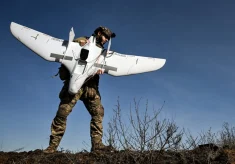
By integrating data from drones, satellites, and field sensors, Palantir provides a unified operational picture. The individual combatant becomes a node within a distributed cognitive network, augmenting situational awareness and tactical precision.
Palantir’s capacity to analyse social networks and communication flows enables the detection of disinformation campaigns, the protection of cognitive infrastructures, and the shaping of public perception. In hybrid conflict, this constitutes a form of non‑kinetic deterrence.
Empirical Illustrations of Palantir’s Strategic Impact
Ukraine (2022–present)
The combined use of MetaConstellation and Gotham has allowed Ukrainian forces to integrate satellite imagery, radio intercepts, and logistical data, enabling the identification and targeting of a 60‑km Russian convoy advancing toward Kyiv in March 2022. Ukrainian officials have acknowledged that Palantir’s systems were essential to maintaining operational visibility during the initial phase of the conflict.
Counterterrorism: The Times Square Bombing Attempt (2010)
Following the attempted bombing in Times Square, the FBI used Gotham to correlate disparate data points—financial anomalies, travel records, communication metadata—reconstructing Faisal Shahzad’s network within 48 hours. The rapid identification and arrest of the suspect illustrate Palantir’s capacity to accelerate investigative processes.
Protection of European Energy Infrastructure (2022)
After the Nord Stream sabotage, Norway deployed Foundry to monitor underwater sensors, maritime traffic, and energy flows. In October 2022, Foundry detected anomalies along the Europipe II gas pipeline, prompting a naval intervention that likely prevented a major disruption to European energy supplies.
Palantir embodies a new paradigm in the governance of complexity. Its platforms do not merely process information; they structure the conditions of decision‑making, shaping the temporal and cognitive environment in which states operate.
In the twenty‑first century, power increasingly resides not in the possession of data, but in the capacity to interpret it, model it, and act upon it before others. Palantir’s ascent signals the emergence of a form of predictive sovereignty, in which the ability to foresee becomes indistinguishable from the ability to govern.