Poland is one of the few European States to have substantially achieved the 4,5-5% GDP defence spending target. How did it achieve this? What are the political and military implications of achieving this goal for the European defence sector? What deterrent effects does Poland’s achievement of this goal have on Russia, which shows no signs of easing its ongoing military attacks on an already-torn Ukraine?
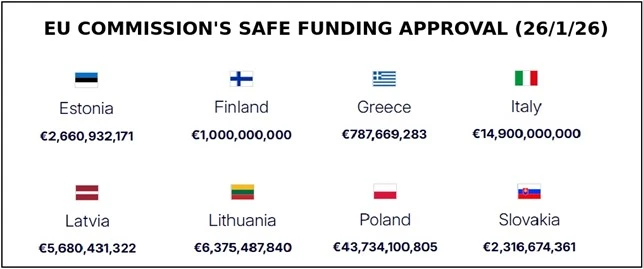
Poland has received the largest sum of funds from the €150 billion SAFE (Security Action for Europe) program, that aims at strengthening the armed forces of European Union member states. However, the project is controversial at national level: the political opposition opposes some aspects of Brussels’ involvement in defence matters. Indeed, Warsaw, historically reluctant to accept foreign domination throughout its history, has always tended to maintain a broad margin of autonomy from Brussels’ centralism, just as it has always sought to minimize European political interference in its internal political processes.
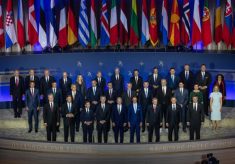
Its policy of significant military rearmament clearly has repercussions on shifting the overall balance of power to its advantage, taking also into account the parallel German effort in the most significant rearmament effort after 1955. This is happening in a quite fragmented situation where NATO, the European Union and the United States, have different policies, economic interests, spending criteria and the final distribution of military spending; all this in the hope that in a decade all NATO allies will spend 5% in the defence/GDP ratio.
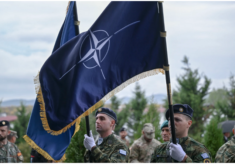
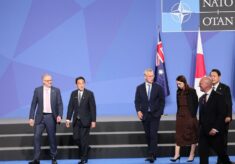
Willy nilly, this is strengthening NATO’s European component, which has also resulted in the appointment of the Polish four-star general, Sławomir Wojciechowski from Pomerania, to command the Joint Force Command (JFC) Brunssum (NL), following the established rotation with a German colleague. This command is important since it controls the different multinational battlegroups in Eastern Europe and the NFIUs (NATO Force Integration Units), small multinational headquarters to support operations in the region across eight Eastern Europe allies. Polish press has obviously emphasised, beyond the prestige aspect, the difficult situation of Poland vis-à-vis Russian hybrid attacks, including probes of the Polish air space.
The Polish conservative party Law and Justice (PiS Pravo i Spravedlivost), however, argues that the SAFE program will limit arms purchases from Poland’s key ally, the United States, in favour of the European military industry. A position energetically championed by Jarosław Aleksander Kaczyński, president of the party and former prime minister under the presidency of his deceased twin brother Lech. However, the European military industry suffers from fragmentation problems due to industrial rivalry and internal competition in the arms market, being therefore sometimes less competitive than the more technologically advanced and standardized US products.
The government of liberal Prime Minister Donald Tusk, traditionally more open to international collaboration in the name of “shared values and cohesive and common military strategy” with Western allies refutes PIS accusations on Brussels’ political interference in Poland’s internal affairs, emphasizing that SAFE funds are not subject to stringent political conditions that would necessarily give them priority for the purchase of European-made weapons, and that low-cost financing, up to 0%, from SAFE is essential to the country’s security against of the growing Russian military threat. A final decision on this complex issue is expected shortly from Polish President Nawrocki, who will have to rule on the matter.
The changing landscape of the Polish defence sector also includes the gradual return to military conscription, which the Polish government has not yet made compulsory, but which is strongly encouraged by the state by making military training available to all Polish citizens through month-long voluntary military training camps: the hope is to train some 40.000 units in the territorial defence by the year. Something similar to Communist Soviet traditions, when all Polish male university students, had to go compulsory three-month, summer-break training courses at military units, while females could join voluntarily.