“The spirit of our endeavour is, To strive, to seek, to find and not to yield”

Alessandro Minuto-Rizzo, President

Turkey’s Summit: Reaffirming NATO’s Strategic Cohesion with some Bro Vibes

Source: NATO
Source: NATO
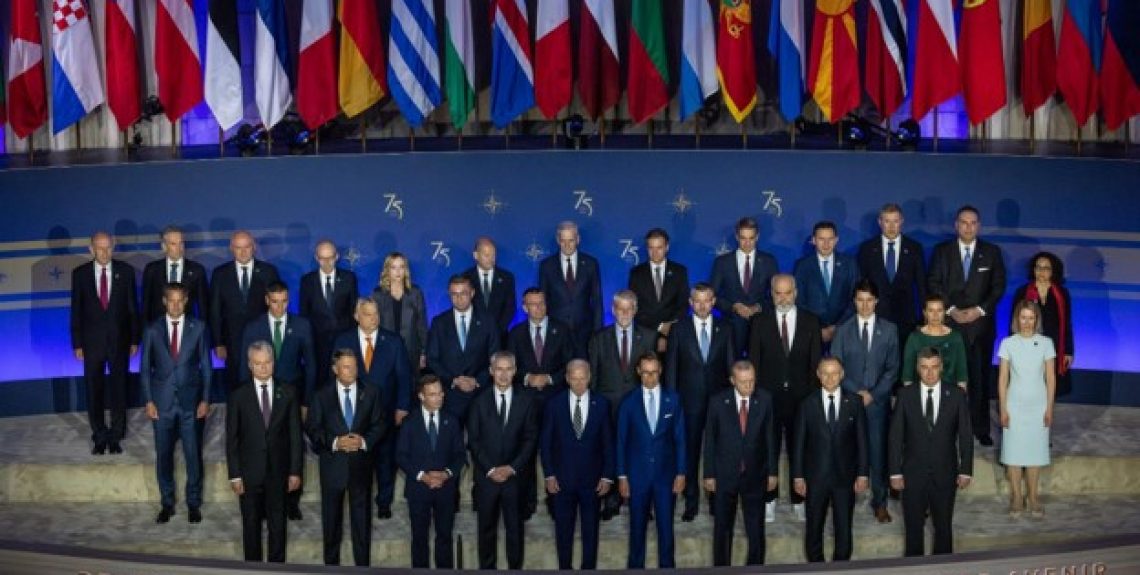
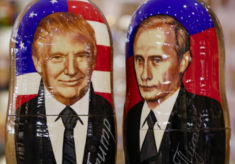
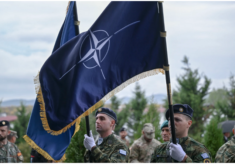
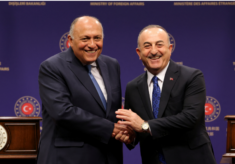
Despite the public kerfuffle in Ankara over Trump’s comments about Greenland and Spain, the summit was actually a qualified success and achieved what NATO summits need to do these days, fostering ‘Bro vibes’ and signaling deterrence to NATO’s adversaries. As easily foreseen, attention has naturally focused on defense spending targets, capability commitments and the Alliance’s response to an increasingly contested security environment. Yet the significance of a NATO Summit extends well beyond the communiqué issued at its conclusion. As NDCF President Ambassador Alessandro Minuto-Rizzo observed in conversation on my Disorder podcast last month, the enduring value of these gatherings lies in their ability to reaffirm political cohesion and strategic purpose at a time of growing international uncertainty. What I will add is that vibe has become essential and summits are the time to personally get “Bro Vibes” flowing with Trump. As was predictable, Rutte, Macron, Starmer, and especially Stubb are all good at cultivating those bro vibes with Trump and he has been in part wooed back to the Alliance by their deference and chumminess, despite the public spats. Therefore, this summit is among the organization’s most important in recent memory. 

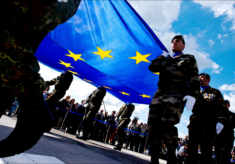
For much of its history, NATO’s strength has rested on an often-overlooked characteristic: its adaptability and clubbiness. Founded as a collective defense alliance, NATO evolved after the Cold War to embrace crisis prevention and management and cooperative security, projecting stability through partnerships, dialogue and shared expertise rather than military deployments alone. This flexibility has enabled the Alliance to respond to successive geopolitical shifts without losing sight of its core mission of safeguarding Allied security, as reaffirmed in NATO’s 2022 Strategic Concept.
The summit has indeed respected a pragmatic tradition. Some commentators have even said that the duller the summit, the more successful it is. I would argue a successful summit is its ability to project public unity despite possible private disunity and hence to deter adversaries.  Although casual observers will have detected disunity from Ankara, I think in Beijing and the Kremlin they saw superficial disunity but a more profound unity. When Bro Vibes are able to be introduced to the closed door part of the Summit, it provides that top-down energy needed to make Defense Ministries coordinate better together and commanders in the field feel more camaraderie on exercises. Rather than pursuing sweeping institutional reforms, discussions have been indeed centered on a limited number of priorities: strengthening defense industrial capacity, investing in emerging technologies, enhancing resilience against hybrid threats and sustaining credible deterrence through higher, better targeted defense spending. As recent conflicts have been demonstrated, military effectiveness increasingly depends not simply on larger budgets but on smarter investment in capabilities such as air and missile defense, intelligence, surveillance and reconnaissance, and the rapid integration of new technologies. These priorities build upon NATO’s continuing emphasis on strengthening capabilities and encouraging greater defense investment across the Alliance.
Against this backdrop, Turkey occupies a particularly significant position. And NATO is proving increasingly willing to overlook Turkey’s human right’s record and domestic squabbles to leverage Turkey’s key assets. While Ankara, since the end of the Cold War, often pursues an autonomous foreign policy and maintains channels of communication with actors across an increasingly fragmented international landscape, its strategic interests remain firmly tied to staying in NATO and bringing its wide network of connections and relationships to NATO. Hosting the July 7-8 summit offered Turkey an opportunity not only to showcase its diplomatic influence but also to reaffirm its role as an indispensable Ally at the crossroads of Europe, the Black Sea, the Eastern Mediterranean and the wider Middle East, in addition to its burgeoning industrial defense role.
Turkey’s value to NATO extends beyond geography. Its economic weight, diplomatic reach and engagement across the Middle East, Central Asia, and Africa have made it an increasingly important interlocutor for the Alliance. From this perspective, Ankara’s objective was not to challenge NATO cohesion but to demonstrate that its regional influence complements broader Allied strategic interests or at least provides NATO various intel and leverage in region’s traditionally outside the Alliance’s remit.
Perhaps Ambassador Minuto-Rizzo’s most important observation in our recent Disorder conversation concerned NATO’s decision-making processes itself. Unlike many international organizations, NATO does not operate through majority voting but through consensus. This method may appear slow or cumbersome, yet it has proven remarkably resilient and surely more efficient than the EU voting system. Consensus-building encourages compromise, accommodates differing national priorities and ultimately reinforces the political solidarity upon which collective defense depends. In periods of heightened geopolitical tension, it becomes a strategic asset in its own right.
The summit happened at a moment when Allied unity was and is currently being tested by multiple pressures: Russia’s continued aggression against Ukraine, instability across the Middle East, Trump’s constant talking down NATO, accelerating technological competition and uncertainty surrounding the future international order. While Allies may differ on tactics, sustaining confidence in the Alliance remains essential. This is where the Bro Vibes came in to heal the Trump Meloni spat of late June and to largely reaffirm the place of the Alliance in European politics.
For this reason, the true measure of success of the Summit was not the length of the final declaration nor the number of new initiatives announced. Rather, the one can measure this Summit on its apability in projecting to the globe a reinforced confidence that NATO remains capable of adapting to new challenges, while preserving the political cohesion that has underpinned transatlantic security for several decades. In an era defined by fragmentation, uncertainty, and Disorder, that reaffirmation actually happened in Ankara and may prove to be the Alliance’s most valuable achievement. Trump’s attendance and ability to parrot various catch phrases and to vibe with Erdogan, Stubb, Rutte, and Starmer in a bro-way was truly almost all that was needed. One may argue that some passages of the declaration may be inappropriate or concerning issues that are squarely out of area, but the first three opening and decisive paragraphs leave no doubt about deterrence, union, solidarity and a stronger Europe in a stronger NATO that will genuinely deter adversaries and generate more defense spending and better coordination. That constitutes a successful mid-21st century NATO summit. And it was truly a lot about Bro Vibes, mostly behind the scenes.

Share on

Archive

Subscribe to our newsletter

Newsletter