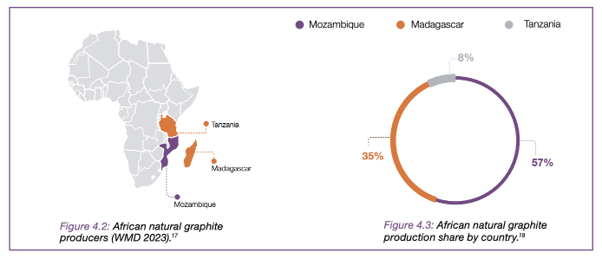
Mozambique’s graphite sector is becoming a test of whether African critical-mineral producers can turn resource ownership into strategic leverage. The country is one of the world’s major sources of natural graphite, a mineral needed for battery anodes, energy storage and defence-industrial supply chains. Yet the real issue is not scarcity. It is control over the stages where value, dependency and political influence are created.
Maputo’s 2026 mining law reflects this ambition. By requiring a 15% state stake in mining ventures and prioritising local processing, Mozambique is trying to avoid the familiar pattern in which African minerals are extracted locally but transformed elsewhere. The policy logic is understandable: without processing, infrastructure and skills, graphite risks becoming another export commodity rather than a source of industrial power. The challenge is that policies meant to increase sovereignty can also discourage investment if the rules appear unstable, restrictive or difficult to implement.
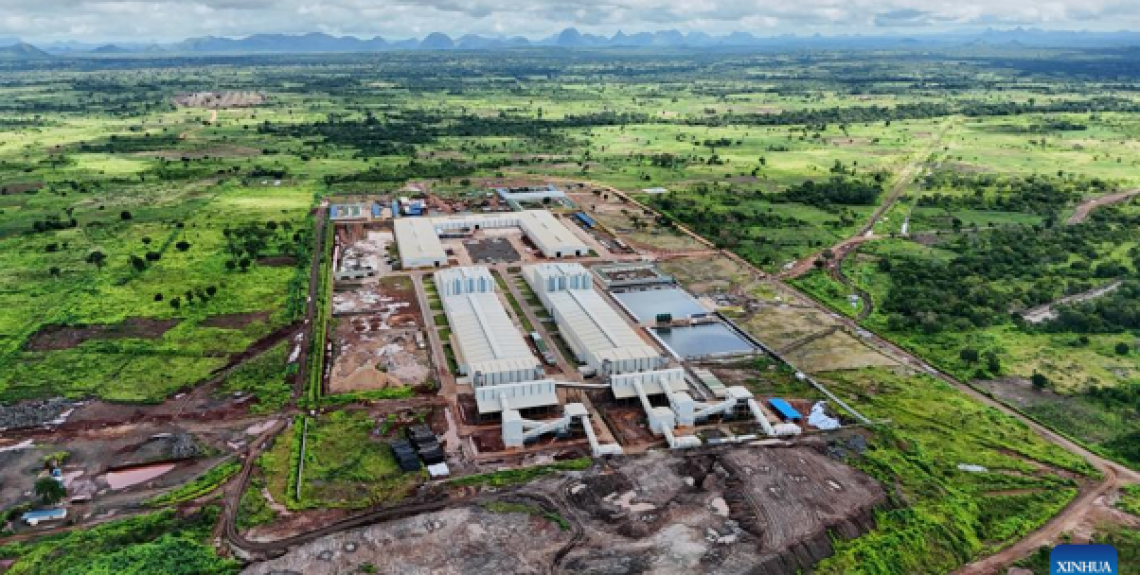
The stakes become clearer when looking at who is positioning around Mozambican graphite. China is already present not only as a buyer, but as a processor. In January 2026, President Daniel Chapo inaugurated a Chinese-owned graphite processing plant in Niassa, with planned annual capacity of 200.000 metric tons. South Korea is also trying to secure Mozambican graphite, with POSCO Future M, a major battery-materials company, signing a six-year supply deal with the Balama mine, already operated by the Australian company Syrah Resources.
The 27th of August a subsidiary of China’s Shandong Xinsheng has acquired a 70% stake in the graphite assets of Australian Triton Minerals for approx. $11 million in Cabo Delgado, covering the Ancuabe project and the Cobra Plains concessions
The paradox is that Mozambique may become indispensable without becoming powerful. Its graphite is increasingly important to the battery economy, yet the decisive negotiations, processing capacity and industrial demand still sit largely outside Africa. For NATO’s Southern Neighbourhood agenda, the issue is that resilience cannot be built by changing suppliers alone. It depends on whether African producers become stable industrial partners, rather than new extraction sites in the existing vulnerable chain.