“The spirit of our endeavour is, To strive, to seek, to find and not to yield”

Alessandro Minuto-Rizzo, President

Russian Influence in Central Africa: Strategic Challenges for NATO

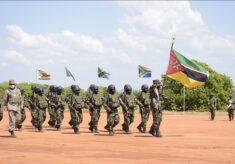
Source: HRF.
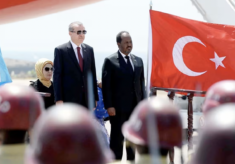
Source: HRF.
The countries of Central Africa are among the world’s regions richest in natural resources. Significant deposits of crude oil, natural gas, gold, diamonds, cobalt, copper, uranium, coltan, and rare earth metals give the region significant geostrategic importance. Paradoxically, this wealth of natural resources has not translated into sustainable socioeconomic development. Most countries in the region are characterized by high levels of political instability, protracted armed conflicts, weak state institutions, widespread corruption, and high levels of poverty. As a result, Central Africa remains one of the most unstable regions in the world, where control over natural resources is both a source of internal tensions and a subject of international rivalry. The region’s wealth of natural resources, combined with the weakness of its states and their limited ability to exercise effective control over their territories, has turned the region into an arena of intense geopolitical rivalry. The primary competitors for political, economic, and military influence are China, France, Qatar, Russia, Saudi Arabia, Turkey, UAE, USA and other European Union member states, which use economic instruments, infrastructure investments, military cooperation, and diplomatic efforts to strengthen their presence in the region. The Russian Federation plays a particularly important role in the competition for influence in Central Africa, as it consistently seeks to expand its political, military, and economic presence in the region.
During the Cold War, Central Africa was an arena of rivalry among the superpowers; however, unlike East or Southern Africa, it was not one of the Soviet Union’s main areas of engagement. The USSR’s primary goal was to limit the influence of Western powers, especially France, and to gain new political allies by supporting anti-colonial movements and governments that declared a socialist orientation. Moscow’s most important partner in the region was the People’s Republic of the Congo (Congo Brazzaville), with which it developed military, economic, and educational cooperation, including arms deliveries, officer training, and the education of students at Soviet universities.[1]
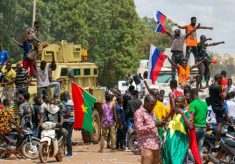
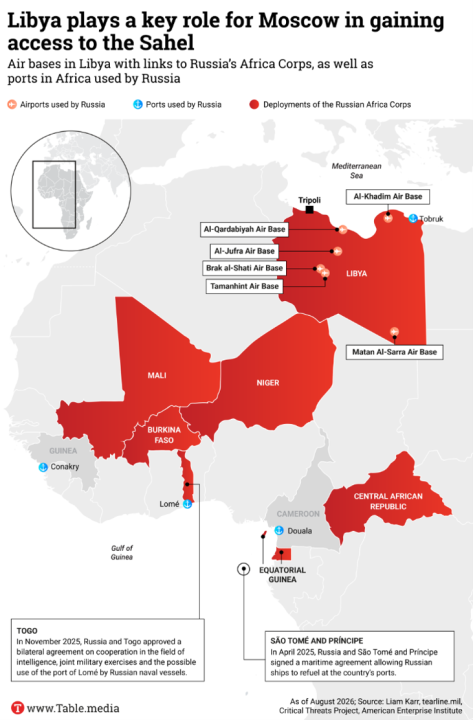
In the other countries of Central Africa (Central African Republic, Chad, Cameroon, and Gabon) the Soviet Union’s influence remained limited due to France’s strong position, political instability, and the region’s limited economic importance to Moscow. In the late 1980s, with Mikhail Gorbachev’s reforms and the deepening economic crisis in the Soviet Union, military and economic aid to African nations was gradually scaled back. The collapse of the Soviet Union in 1991 brought the first phase of the Soviet presence in Central Africa to an end and led to Russia’s near-total withdrawal from the region for over a decade. The process of rebuilding Russian influence in Africa began in the early 21st century with Vladimir Putin’s rise to power. Russian policy toward the continent drew on the tradition of the Soviet presence in Africa, utilizing cooperation networks, political contacts, and diplomatic channels established during the Soviet era.[2, 3, 4] The implementation of this strategy was facilitated not only by historical contacts and relationships with the political elites of many African countries, but also by the fact that Russia, unlike most Western countries, had no colonial past on the continent. This allowed Moscow to present itself as a partner free from the historical burdens associated with colonialism and to more effectively construct an anti-colonial and anti-Western narrative. At the same time, the gradual reduction of the presence of some Western countries (primarily France) and the deepening political instability in many African nations created a geopolitical vacuum that Russia consistently sought to exploit to advance its own political, military and economic interests.[5]
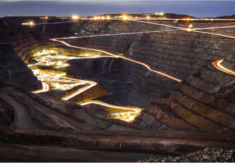
Source: Table.media
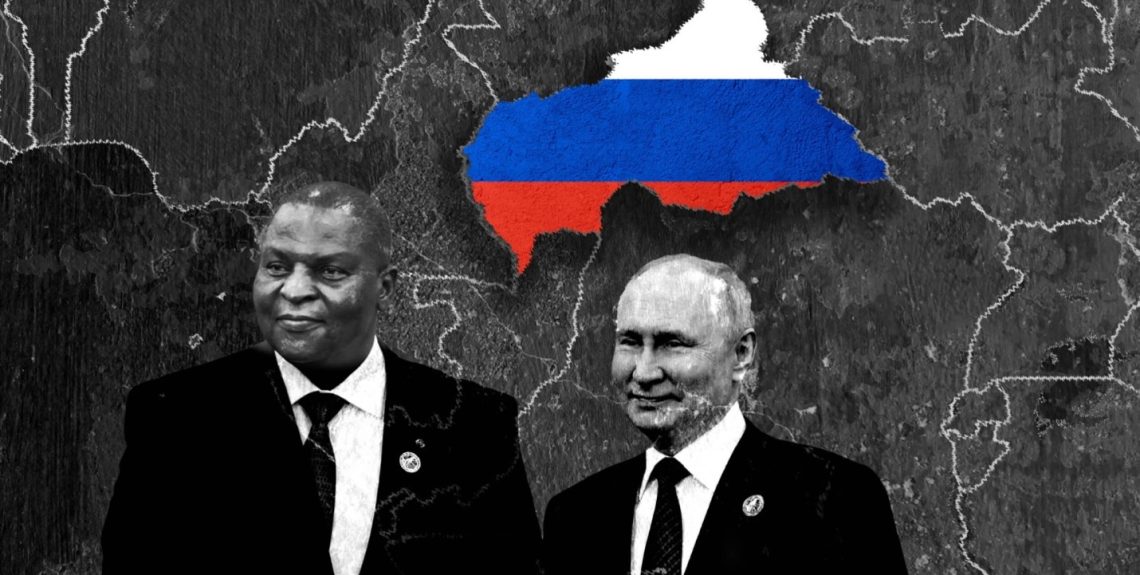
The Central African Republic: a Russian sphere of influence
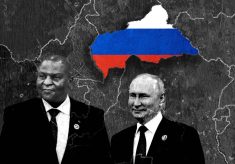
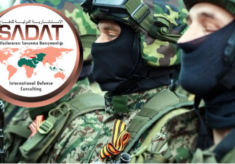
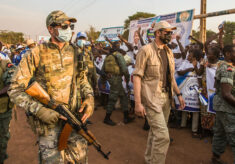
The Central African Republic (CAR) is one of the key countries targeted by Russia’s policy toward Africa and is currently among the countries most strongly influenced by the Russian Federation. Russia’s presence began to expand rapidly in 2018, when Moscow initiated military cooperation with the authorities in Bangui. Initially, this cooperation was based on the activities of the Wagner Group, which enjoyed an excellent reputation on the ground; however, since 2024, its tasks have been taken over by the Afrikansky Korpus, which reports directly to the Russian Ministry of Defense. It is estimated that there are currently about 1.000 Russian instructors and soldiers stationed in the country, whose mission is to train the Central African Republic’s armed forces (FACA), protect President Faustine-Archange Touadéra, and secure strategic facilities and natural resource deposits. Moreover, other sources report about 500 ex-Wagner breakaway soldiers, operating independently with the Bangui government.
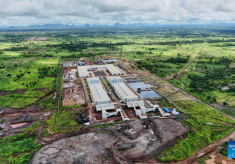
Russian military aid is not provided altruistically and is part of Moscow’s broader economic strategy. In exchange for the support provided to the Central African Republic’s government in 2021 in the fight against rebel groups, entities affiliated first with the Wagner Group, then with the Afrikansky Korpus, gained access to key sectors of the economy, primarily the extraction of natural resources. Russian companies control a significant portion of gold and diamond mining through enterprises linked to the former Wagner Group. According to available analyses, companies subject to US sanctions have taken control of the country’s largest gold mines and are simultaneously involved in illegal economic networks spanning the fuel, livestock, and raw materials sectors. Particularly significant is the Ndassima mine in Ouaka Prefecture, which has been developed since 2022 by Midas Resources, a company considered to be affiliated with the Wagner Group. The mine produces approximately five metric tons of gold annually, and estimates suggest that revenues from its extraction amount to at least $180 million per year. Part of the mined gold is then to be transported out of the country via Russian military aircraft and aircraft[6, 7].
The Central African Republic serves a much broader purpose for Russia than merely as a source of revenue from the extraction of raw materials. The country has become a key logistical hub for Russian military operations in Africa. Weapons, military equipment, and Afrikansky Korpus personnel are transported through its territory, and the country serves as an important point for projecting Russian influence on the continent. At the same time, Russia is expanding its control over transnational trade networks involving gold, diamonds, timber, wildlife, and livestock, by collaborating with local political elites and exploiting the weakness of state institutions[8, 9].
Cooperation Between the Republic of the Congo and Russia
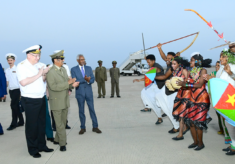
Another country under noticeable Russian influence is the Republic of the Congo, although with mixed results. Military cooperation between Russia and the Republic of the Congo (Congo-Brazzaville) has been developing gradually over the past few years and is primarily of a military-technical nature. Its formal foundations were strengthened in 2019, when the two countries signed an agreement providing for Russia to send military advisers responsible for training Congolese armed forces in the operation, maintenance, and repair of Soviet- and Russian-made military equipment. As Alexander Fomin, then Deputy Minister of Defense of the Russian Federation, emphasized, the cooperation primarily covered armoured vehicles, artillery systems, and helicopters. At the same time, Russia began negotiations on the supply of new weapons to the Congolese army, responding to the needs expressed by the authorities in Brazzaville.
The next stage in strengthening relations was the Russian Federation government’s approval in 2024 of a draft agreement on military cooperation with the Republic of the Congo. Although the details of the document were not fully disclosed, its aim was to expand existing cooperation in the areas of defence, military personnel training, and the development of military-technical cooperation. Unlike Russia’s activities in the Central African Republic, its cooperation with Congo-Brazzaville does not involve the permanent deployment of paramilitary units such as the Afrikansky Korpus. Russia is building its influence there primarily through military diplomacy, advisory services, training, and the transfer of military technology.
At the same time, cooperation between the two countries is gradually expanding into new areas of security. In recent years, Russia and the Republic of the Congo have announced plans to develop cooperation in the naval sector, and in July, they signed a memorandum on the peaceful use of nuclear energy. Although no tangible results of this initiative have been reported so far, it demonstrates both countries’ commitment to deepening a strategic partnership that goes beyond traditional military cooperation. This is part of Moscow’s broader strategy to gradually strengthen its political, military, and technological presence in Central African countries. In addition, Russia and the Congo have agreed to cooperate in the field of naval affairs. In July 2024, Russia and the Congo signed a memorandum of cooperation on the peaceful use of nuclear energy. There have been no results from this initiative yet.
More concretely, Russia is expanding cooperation in the oil and gas sector. Russian entities are participating in infrastructure projects, including the construction of the Pointe-Noire–Brazzaville fuel pipeline, which is of strategic importance to the country. Trade volumes remain relatively small, although it has been gradually increasing since 2023. Russia mainly exports fertilizers, petroleum products, machinery, and industrial equipment, while it imports timber, agricultural products, and small quantities of mineral resources. In the mining sector Russian companies are showing interest in investing in the extraction of gold, metal ores, and other raw materials; however, most projects remain in the planning or negotiation stages.
Russia’s Cooperation with the Democratic Republic of the Congo
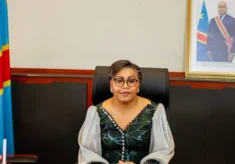
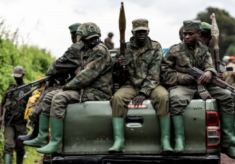
Unlike the Republic of the Congo and the Central African Republic, the Democratic Republic of the Congo is not a country under significant Russian influence. The country’s authorities are not interested in the presence of Russian paramilitaries. In October 2022, Congolese President Félix Antoine Tshisekedi Tshilombo ruled out the use of Wagner Group mercenaries the to address the persistent security crisis in the eastern part of the Democratic Republic of the Congo. Between 2022 and 2024, the DRC government hired several hundred mercenaries from Eastern Europe (mainly Romanian citizens, and previously also from France and other countries), who supported the Congolese army (FARDC) in its fight against the M23 rebels and other armed groups. By January 2026, the following PMCs were recorded in theatre: Agemira RDC and Congo Protection. The presence of Afrikansky Korpus elements is largely unconfirmed.[10]
Western countries, China, and regional actors play a greater role in that country. Russia maintains diplomatic ties, but its influence is limited. The United States plays a major role. The Democratic Republic of the Congo has also resumed military cooperation with the United States, signing an agreement in 2020 that includes, among other things, the training of Congolese officers in the United States. The US ambassador at the time emphasized that through this agreement, Washington is providing military support to eliminate armed groups in the eastern part of the Democratic Republic of the Congo.
Russia does not have an equal share in the natural resources of the Democratic Republic of the Congo. Chinese companies dominate the copper and cobalt mining sector; Western firms and the local state-owned company Gécamines are also present.
Conclusion
Russia is consistently strengthening its presence in Central Africa, using political, military, informational tools to build long-term influence. The country under the strongest influence of the Russian Federation is undoubtedly the Central African Republic. In exchange for military support and protection of the government, Russia has gained access to rich deposits of natural resources, while the Central African Republic has simultaneously become a key logistical hub for Russian activities on the continent. However, in the Republic of the Congo, Russian influence is focused primarily on military and political cooperation. It does not include a permanent presence of Russian paramilitaries, as is the case in the Central African Republic. Russian activity extends beyond diplomatic relations and includes training of the armed forces, security cooperation, information operations, and the development of structures of the Russian Orthodox Church, which attests to the multidimensional nature of Russia’s strategy of influence. The situation is different in the Democratic Republic of the Congo, where Russia’s influence remains fairly limited. Moscow’s economic activity is relatively small in scale and focuses mainly on the oil and gas sector, lagging behind investments made by China and Western countries in terms of volume. Despite attempts to increase its political and economic presence, Russia does not play a role there comparable to its position in the Central African Republic.
Implications for NATO
Russia’s growing activity in Central Africa extends beyond the regional level and has significant implications for the security of NATO member states. First, it enables Moscow to acquire strategic raw materials, such as gold, diamonds, and critical metals, which can finance Russian military operations and undermine the effectiveness of international sanctions. Second, Russia’s military and political presence in the region enhances its ability to project power beyond the post-Soviet space and to build a network of partner states that support Russian initiatives within international organizations. Third, Africa is becoming a logistical and operational base for Russian military structures, enabling the transport of equipment, the conduct of training, and the recruitment of personnel used in military operations, including during the war against Ukraine.
From NATO’s perspective, Russia’s presence in Africa may increase the risk of destabilization in regions neighbouring Europe by indirectly intensifying migratory pressure, fuelling serious transnational criminal activity, and create new channels for conducting hybrid and disinformation operations targeting Alliance member states. Additionally, gaining control over critical raw materials could affect the economic security of NATO countries and increase their dependence on unstable supply chains.
Bibliography
ADF Magazine. “Russia Pushes the Central African Republic to Choose Africa Corps over Wagner Mercenaries.” October 28, 2025. Accessed July 2, 2026. https://adf-magazine.com/fr/2025/10/la-russie-pousse-la-rca-a-choisir-lafrica-corps-au-lieu-des-mercenaires-de-wagner/.
Agence Afrique. “Russia and the Republic of the Congo Strengthen Their Military Cooperation.” Accessed July 2, 2026. https://www.agenceafrique.com/18245-la-russie-et-le-congo-consolident-leur-cooperation-militaire.html.
Besenyő, János. “The Africa Policy of Russia.” Terrorism and Political Violence 31, no. 1 (2019): 132–153. https://doi.org/10.1080/09546553.2018.1555976.
Borshchevskaya, Anna. “Russian Activities in Africa.” In Russian Strategic Intentions, 62–70. Arlington, VA: NSI, Inc., 2019.
Droin, Mathieu, and Tina Dolbaia. Post-Prigozhin Russia in Africa: Regaining or Losing Control? Washington, DC: Center for Strategic and International Studies, 2023.
Dukhan, Nathalia. Central African Republic: Ground Zero for Russian Influence in Central Africa. Washington, DC: Atlantic Council, 2020.
Elbassoussy, Ahmed. “The Growing Russian Role in Sub-Saharan Africa: Interests, Opportunities and Limitations.” Journal of Humanities and Applied Social Sciences 4, no. 3 (2022): 251–270.
Fidan, Hakan, and Bülent Aras. “The Return of Russia-Africa Relations.” Bilig 52 (2010): 47–68.
Fruisen, Graham Myler. “Russia in the Central African Republic and Mali: Ungoverned Spaces and a Challenge to the International Order.” PhD diss., University of Auckland, 2026.
Gammer, Moshe. “Central Asia and Russia; Francophone Africa and France: Parallels and Differences.” In The Caspian Region. Volume 1: A Re-Emerging Region, edited by Moshe Gammer, 73–103. London: Routledge, 2004.
Hayrapetyan, Lilit, and Josef Kučera. “Russian Foot on the Central African Republic’s Soil: An Example of a Tactical Alliance.” Central European Journal of International and Security Studies 16, no. 3 (2022): 34–55.
Issaev, Leonid M., Alisa R. Shishkina, and Yakov B. Liokumovich. “Russian Policy of Securitization in Africa: Features of Perception.” Vestnik RUDN. International Relations 23, no. 2 (2023): 322–338.
Jeune Afrique. “France–Russia: Between Macron and Putin, the Insidious Battle for Bangui.” Accessed July 2, 2026. https://www.jeuneafrique.com/1775049/politique/france-russie-entre-macron-et-poutine-linsidieuse-guerre-de-bangui/.
Kia, Bariledum, and Independence C. Enyindah. “Russia-Africa Relations: A Reflection on Historical Ties, Current Trends and Emerging Realities.” Central Asian Journal of Social Sciences and History 4, no. 6 (2023): 119–131.
Klyszcz, Ivan U. Russia and Africa’s Middle Powers: Influence Beyond the Wagner Group. SCEEUS Guest Report no. 1. Stockholm: Stockholm Centre for Eastern European Studies, Swedish Institute of International Affairs, 2024.
Kohnert, Dirk. The Impact of Russian Presence in Africa. MPRA Paper no. 112564. Munich: University Library of Munich, 2022.
Ozoukou, Daniel, and Timothy Lawler. “Russia and China Strategies in the Central African Republic.” African Journal of Political Science and International Relations 16, no. 2 (2022): 43–51.
Paczyńska, Agnieszka. Russia in Africa: Is Great Power Competition Returning to the Continent? Briefing Paper no. 15/2020. Bonn: German Development Institute / Deutsches Institut für Entwicklungspolitik (DIE), 2020.
Pichon, Eric, and Martin Russell. Russia in Africa: A New Arena for Geopolitical Competition. European Parliamentary Research Service (EPRS) Briefing PE 642.283. Brussels: European Parliament, 2019.
Ramani, Samuel. Russia in Africa: Resurgent Great Power or Bellicose Pretender? Oxford: Oxford University Press, 2023.
Ramontja, Naledi. “Africa-Russia Military Relations: Navigating Evolving Dynamics, Policies, and Challenges.” Journal of African Foreign Affairs 12, no. 1 (2025): 137–156.
RFI. “La Russie annonce avoir approuvé un projet d’accord de coopération militaire avec la RDC.” March 7, 2024. Accessed July 2, 2026. https://www.rfi.fr/fr/afrique/20240307-la-russie-annonce-avoir-approuv%C3%A9-un-projet-d-accord-de-coop%C3%A9ration-militaire-avec-la-rdc.
Shubin, Vladimir. “Russia and Africa: Moving in the Right Direction?” In Africa in International Politics: External Involvement on the Continent, edited by Ian Taylor and Paul Williams, 102–115. London: Routledge, 2004.
Siegle, Joseph. “Russia and Africa: Expanding Influence and Instability.” In Russia’s Global Reach: A Security and Statecraft Assessment, edited by Graeme P. Herd, 80–90. Garmisch-Partenkirchen: George C. Marshall European Center for Security Studies, 2021.
TV5MONDE. “Une mainmise du crime organisé sur l’économie en Centrafrique: comment les marchés illicites déstabilisent le pays.” Accessed July 2, 2026. https://information.tv5monde.com/afrique/video/une-mainmise-du-crime-organise-sur-leconomie-en-centrafrique-comment-les-marches-illicites-destabilisent-le-pays-2825895.
Yakobson, Sergius. “Russia and Africa.” The Slavonic and East European Review 17, no. 51 (1939): 623–637.

Share on

Archive

FEBRUARY

MARCH

APRIL/1

APRIL/2

MAY

JUNE

JULY

AUGUST

SEPTEMBER

OCTOBER

NOVEMBER

DECEMBER

JANUARY

FEBRUARY

MARCH

APRIL

MAY

JUNE

JULY

AUGUST

SEPTEMBER

OCTOBER

NOVEMBER

DECEMBER

JANUARY

FEBRUARY

MARCH

APRIL

MAY

JUNE

JULY

AUGUST

SEPTEMBER

OCTOBER

NOVEMBER

DECEMBER

Subscribe to our newsletter

This field is required.
Please enter a valid email address.
This field is required.

In the first field, enter the international prefix (e.g. 0039 or +39), while in the second field, enter the mobile number without the prefix.

I consent to have this website store my submitted information so they can respond to my inquiry after reading Privacy Policy
You must accept the terms to proceed.