
















“The spirit of our endeavour is, To strive, to seek, to find and not to yield”

Alessandro Minuto-Rizzo, President

The Balkans: US policy recalibration

Source: politico.al
Source: politico.al
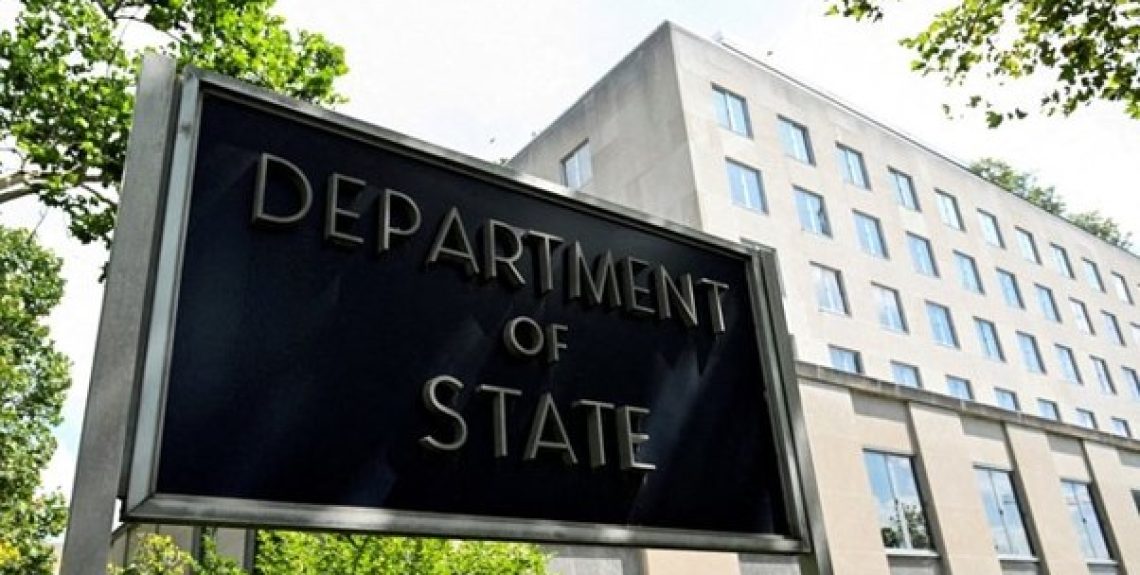
The US State Department’s Report to Congress on Washington’s policy in the Western Balkans outlines a shift in US engagement in the region. While this reframing had been gradually taking shape over the years, the Trump administration has now finalised this process. 
The document highlights several priorities, chief among them the need to foster regional stability, a key prerequisite for the US, and “mutually beneficial” partnerships. This translates into upholding the Dayton Agreement in Bosnia and Herzegovina and encouraging the normalisation of relations between Serbia and Kosovo, alongside efforts to deepen regional NATO integration.
In this perspective, Washington aims at supporting the transition of regional partners from security consumers to security providers by empowering local actors, pushing countries to meet NATO capability targets, and encouraging regional cooperation through platforms such as the US-Adriatic Charter. Countering security threats is conceived as a further pillar. Russia’s interference, leveraging ethnic grievances and political divides, is considered among the main threat vectors, in parallel with Chinese influence targeting weak governance and expanding investments in the region and local criminal networks, identified as a direct threat to both regional and US security. The explicit link between Balkan organized crime and Western Hemisphere cartels (Cártel de Sinaloa, Cártel de Jalisco Nueva Generación-CJNG, Cártel del Noreste-former Los Zetas, La Nueva Familia Michoacana-LNFM, Cártel del Golfo, Cárteles Unidos, Mara Salvatrucha–MS-13, Tren de Aragua) is new as international policy feature and shows the reach of these criminal organisations at least at transatlantic level (some of them have global reach). On the commercial side, Washington seeks to expand trade agreements and market access for US companies, while pursuing investment in infrastructure projects across strategic sectors such as energy and transport. 
Reflecting the broader US approach to Europe, the report makes explicit that regional policy is no longer about “rescue or reconstruction” and signals a move away from what Washington sees as an overreliance on US engagement. Resources are thus redirected toward measurable results serving US economic and strategic interests, while stepping back from a role of sole security provider. Overcoming a nation-building approach, Washington appears more focused on promoting US interests than addressing regional tensions and political divides, expecting European partners and Allies to “advance the burden-sharing”.

Share on

Archive

JANUARY

FEBRUARY

MARCH

APRIL/1

APRIL/2

MAY

JUNE

JULY

AUGUST

SEPTEMBER

OCTOBER

NOVEMBER

DECEMBER


JANUARY

FEBRUARY

MARCH

APRIL

MAY

JUNE

JULY

AUGUST

SEPTEMBER

OCTOBER

NOVEMBER

DECEMBER

JANUARY

FEBRUARY

MARCH/1

MARCH/2

APRIL/1

APRIL/2

MAY/1

MAY/2

JUNE

JULY

AUGUST

SEPTEMBER

OCTOBER

NOVEMBER

DECEMBER

JANUARY

FEBRUARY

MARCH

APRIL

MAY

JUNE

JULY

AUGUST

SEPTEMBER

OCTOBER

NOVEMBER

DECEMBER

Subscribe to our newsletter

Newsletter