










“The spirit of our endeavour is, To strive, to seek, to find and not to yield”
Alessandro Minuto-Rizzo, President
Menu
SEARCH
Serbia, China: a risky security diversification
BALKANS & BLACK SEA
Source: bloomberg.com
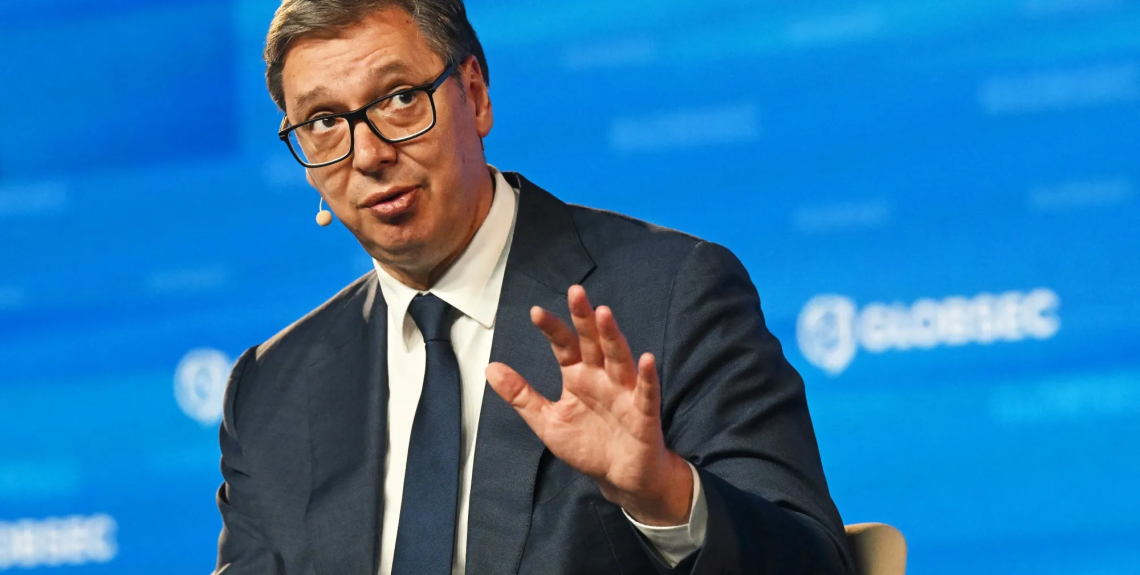
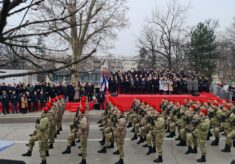
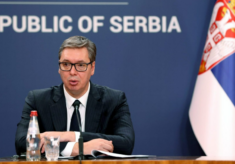
In July 2025, the Serbian Armed Forces performed a joint trained exercise with the People’s Liberation Army in northern China’s Hebei Province. This episode marked the latest development in the increasingly deep cooperation between Belgrade and Beijing, spilling over political and economic ties and encompassing the security and defense spheres. Along similar lines, in May 2025 Serbian President Aleksandar Vučić publicly corroborated its loyalty to Russia by taking part in the Victory Day parade in Moscow. Meanwhile, Serbia has continued, at least rhetorically, to reaffirm its commitment to NATO and EU adhesion. This approach is justified by the country’s declared military neutrality, a concept enshrined in its National Security Strategy.
Belgrade’s strategy of diversifying its security partnerships and military procurement, engaging simultaneously with Western countries, Russia, and China, constitutes a double-edged sword. On the one hand, it has enabled the Balkan region’s main power to access advanced military technologies and weapon systems. On the other hand, this approach creates logistical and operational constraints, compromising the assets’ interoperability. Moreover, although diversification reduces dependence on a single market, it also risks politically isolating Serbia, as its current stagnation in the EU accession process illustrates.
Recently, NATO Secretary General Mark Rutte cautioned against overlooking the threats posed by China’s military buildup, but also affirmed Serbia’s sovereign right to participate in the military drills. The current context of increasing strategic competition will likely undermine Belgrade’s objective of maintaining a balance between opposing spheres of influence, decreasing its room of manoeuvre. At the same time the effects of the US National Security Strategy require careful consideration in the region and the Eurasian region.
By Elena Potitò, researcher on NATO and EU CSFP, enlargement, conflict prevention and resolution.
We use cookies to ensure that we give you the best experience on our website. If you continue to use this site we will assume that you are happy with it.