The Russian decision to halt the flow of Kazakh oil to Germany through the Druzhba pipeline since the 1st of May will increase the vulnerability of German and European consumers, especially in the current scenario of instability and open conflict in the Middle East, which undermines the regularity of oil transit crossing the Hormuz Strait. Even if Moscow has declared that the suspension is temporary and motivated by “a lack of technical capability” following the attacks on Russian energy infrastructure (“Kazakhstan won’t reduce oil production due to problems with Druzhba pipeline”, Kaz TAG, April 22, 2026), this decision consistently erodes Astana’s efforts to promote an efficient strategy of diversification of energy exports.
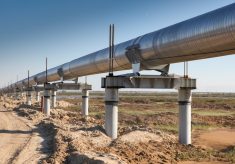
After nearly 35 years of independence, Kazakhstan currently remains heavily dependent on pipelines crossing Russian territory (the Caspian Pipeline Consortium (CPC) and the Uzen-Atyrau-Samara (UAS) – to export more than 80% of its crude oil. Among post-Soviet Central Asian states, Kazakhstan holds the largest oil reserves (30 billion barrels of oil). After national independence in 1991, former President Nursultan Nazarbayev promoted a policy to open the national energy sector to international oil companies, thus significantly increasing domestic crude oil production, which amounted to 1,5 million barrels of oil per day in 2024, almost all allocated for export (US EIA, Regional Analysis Brief: Caspian Sea, February 2025).
Despite Astana’s strategy to diversify energy export routes, Kazakhstan’s unbalanced dependence on the Russian pipeline system to export clearly outlines a condition of vulnerability that has worsened following the Russian invasion of Ukraine in 2022 and its implications for the regional energy scenario. Indeed, the Russian energy company Transneft’s decision to halt the transit of Kazakh oil through the CPC pipeline more than three times since February 2022 (alleging technical problems), has emphasised the need for Astana to look for alternative export routes, strengthening existing options – namely the Sino-Kazakh oil pipeline and the Trans-Caspian route – which will be necessary to deliver the expected increase in oil production from Tengiz and especially Kashagan (M. Assenova, Kazakhstan Seeks New Energy Export Routes, Eurasia Daily Monitor, August 18, 2023).
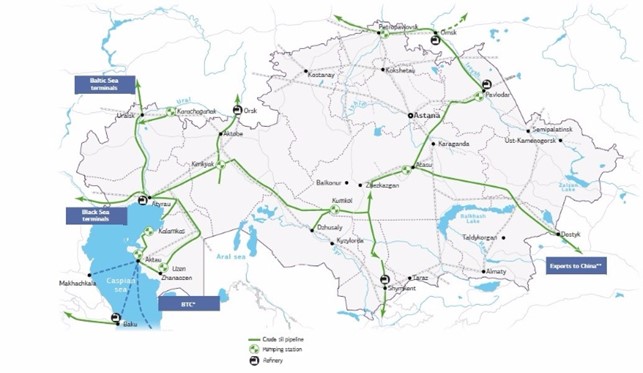
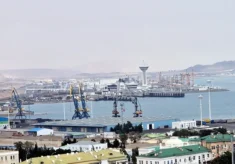
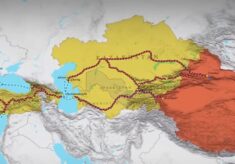
In order to further develop alternative oil export routes, Kazakhstan is strongly interested in revitalise the “old” project to create the Trans-Caspian Oil Transport System (TCOTS), aimed at exporting Kazakh oil not only by tankers (which have limited capacity) but also by building an underwater oil pipeline in the Caspian Sea to link the Kuryk oil terminal to Baku in Azerbaijan, and then shipping oil through the Baku-Tbilisi-Ceyhan (BTC) pipeline to European markets. Despite the realisation of the BTC oil pipeline in 2005, geopolitical constraints linked to the legal status of the Caspian basin have concretely hampered the possibility for Astana to fully exploit this westward export route. As a matter of fact, Russian and Iranian opposition to the construction of an underwater pipeline linking the two shores of the Caspian Sea (on alleged environmental grounds) has concretely limited Kazakhstan’s oil export options, pushing Astana to use tankers to deliver oil to the port of Baku to supply the BTC pipeline.
The opportunity to export oil to Germany has represented a significant success in Kazakhstan’s energy strategy, supplying the leading economy in the European Union and envisaging further expansion of this cooperation. In early April, Kazakh Energy Minister Yerlan Akkenzhenov declared that oil supplies through the Druzhba pipeline rose from more than 1 million tons in 2023 to 2,1 million tons in 2025, while the 2026 target is to reach 2.5 million tons (“Kazakhstan Plans to Supply 2.5 Million Tons of Oil to Germany in 2026”, The Astana Times, April 9, 2026).
However, it should also be highlighted that this opportunity has been a strategic consequence of the EU’s political decision to halt oil imports from Russia, thereby diversifying energy suppliers. The current geopolitical scenario, however, may impose new shifts: in fact, after blocking Kazakh oil through Druzhba, Moscow has resumed oil flows to the EU using the same pipeline, thus affecting both the diversification strategies pursued by Astana and Brussels.