“The spirit of our endeavour is, To strive, to seek, to find and not to yield”

Alessandro Minuto-Rizzo, President

Cholpon Ata Declaration: Moving Towards Strategic Cooperation Between Central Asia and Azerbaijan

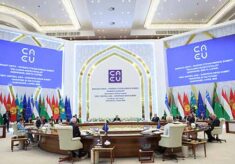
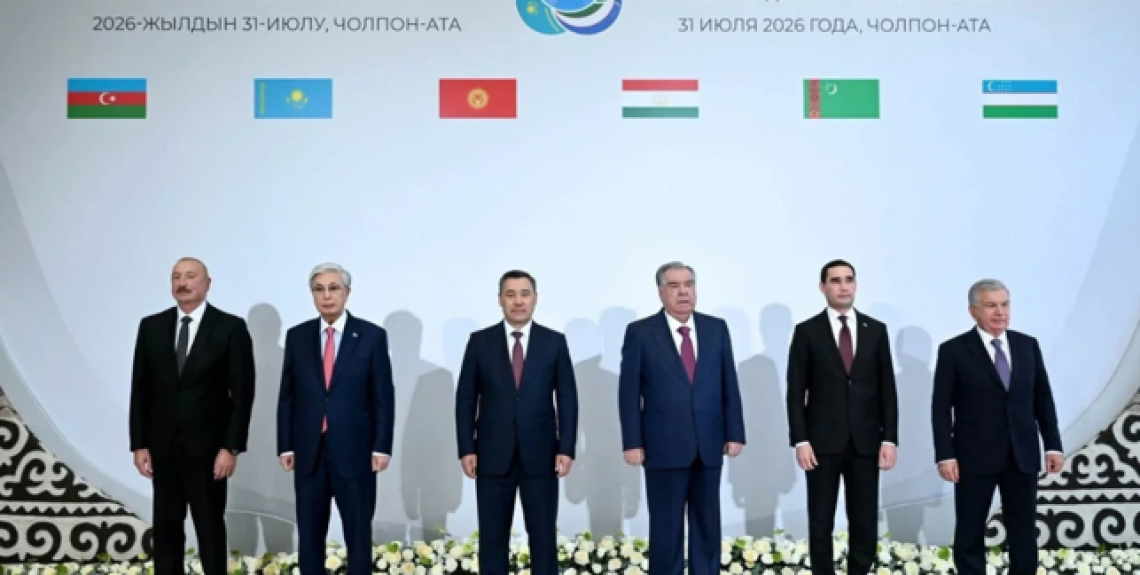
Source: Kabar News Agency.
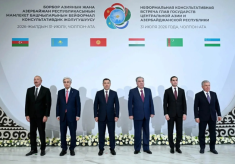
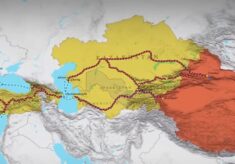
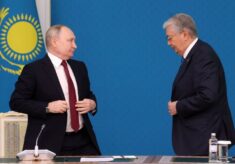
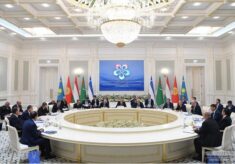
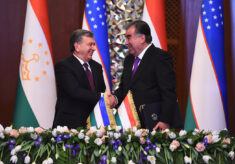
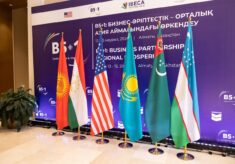
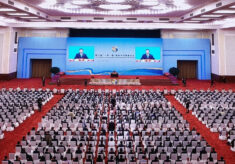
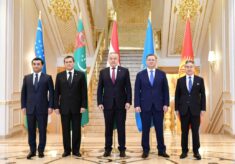
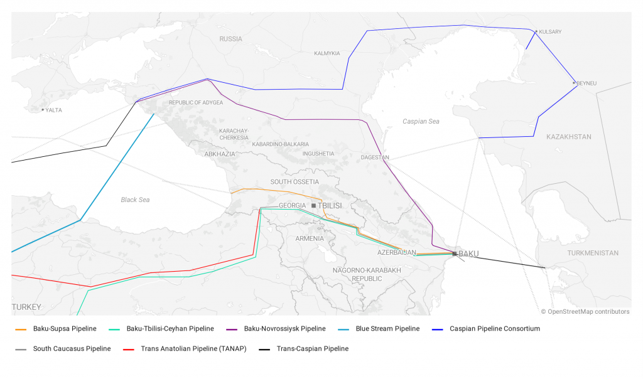
At the end of July, the leaders of the five Central Asian states and Azerbaijan attended an informal consultative meeting of the heads of state in Kyrgyzstan, confirming the long-term credibility of this format of regional dialogue. Indeed, the eighth official consultative meeting of the Heads of State of Central Asia and Azerbaijan will take place at Avaza (Turkmenistan) in early October, but this informal gathering was an interesting opportunity to further calibrate their regional policy agenda. Moreover, for the first time Azerbaijan attended the meeting as a full-fledged member of this format following its admission at the consultative meeting last year, potentially expanding the geographic boundaries of the framework from C5 to C6 (“Central Asian states & Azerbaijan create roadmap for cooperation”, EurasiaNet, August 3, 2026). According to US, Swiss and Azeri think-tanks this format is part of the Greater Caspian Region.
Source: Geopolitics Prime; https://t.me/geopolitics_prime/71824.

An energy-centred vision of the Greater Caspian Region in 2020. Source: Atlantic Council.
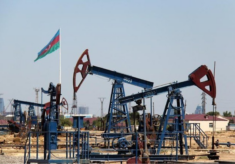
The signing of the Cholpon Ata Declaration (whose official text is not available) has represented the most significant outcome of this meeting, expressing the joint commitment of the six heads of state to strengthen the political dimension of regional cooperation, as the leaders aim to expand cooperation beyond trade to include not only trade but also connectivity (transport and logistics) and energy, which appear to be the main strategic priorities to promote regional cooperation as well as the main areas of interest for external actors.
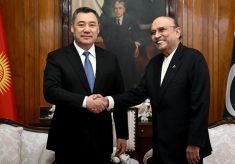
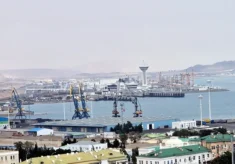
From this geopolitical perspective, Azerbaijan’s inclusion in this regional cooperation framework could create opportunities to advance connectivity and energy projects linking the shores of the Caspian Sea, thereby creating an east-west multimodal route (combining maritime and land transport) connecting Asian and European markets, namely the Middle Corridor project (R. Cutler, “Central Asia and Azerbaijan Extend Cooperation Across the Caspian”, Times of Central Asia, August 11, 2026). Kyrgyz President Sadyr Japarov highlighted that the declaration reflects the high level of mutual trust between the Central Asian states and Azerbaijan, their commitment to the principles of peace, good neighbourliness and sustainable development, as well as their desire to further expand regional cooperation (“Central Asia and Azerbaijan: Presidents sign Cholpon-Ata Declaration”, Kabar KG, July 31, 2026).
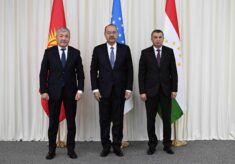
Overall, the Cholpon Ata Declaration represents another concrete step to cement this new era of cooperation based on political dialogue and shared interests among Central Asian states and Azerbaijan, given its geographical position as an energy and logistics hub as well as emerging investor in the region: during the meeting, Azerbaijan and Kyrgyzstan signed agreements covering transport, energy and trade, including the expansion of the Kyrgyz-Azerbaijani Development Fund from $100 million to $200 million, while Uzbek President Shavkat Miromonovich Mirziyoyev and Kyrgyz President Sadyr Japarov upgraded their relations by signing an allied relations treaty and other agreements on trade, investment, and cultural cooperation (O. Fisk, “When Is a Central Asian Leaders Summit Not a Summit?”, The Diplomat, August 12, 2026).  
Furthermore, both presidents paid particular attention to two strategic projects which will enhance bilateral cooperation while also potentially contributing to regional development: the China-Kyrgyzstan-Uzbekistan railway corridor will open new opportunities to reach international markets, as a vital infrastructural component of the Middle Corridor architecture, while Uzbek and Kazakh involvement in developing Kambarata hydropower plant demonstrates a promising approach based on mutual understanding.
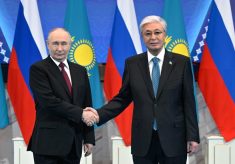
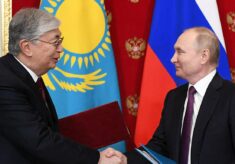
The upcoming official consultative meeting of the Heads of State will further deepen this regional cooperation format moving towards the creation of a common political agenda. Kazakh President Tokayev, on the one hand, already proposed to identify clear benchmarks to implement the Treaty of Friendship, Good-Neighbourliness and Cooperation for the Development of Central Asia in the Twenty-First Century.
On the other, all the actors supported the former initiative in different ways: only Kazakhstan, Uzbekistan and Kyrgyzstan originally signed the document proposed at the consultative meeting in 2022, while Tajikistan and Turkmenistan joined in the last two years. Azerbaijan’s potential inclusion could pave the way for transforming the six countries into a single geopolitical and geoeconomic space, as the Azerbaijani President stated after signing the Cholpon Ata Declaration (R. Cutler, “Central Asia and Azerbaijan Extend Cooperation Across the Caspian,” Times of Central Asia, August 11, 2026).

Share on

Archive

JANUARY

FEBRUARY

MARCH

APRIL

MAY

JUNE

JULY

AUGUST

SEPTEMBER

OCTOBER

NOVEMBER

DECEMBER

Subscribe to our newsletter

This field is required.
Please enter a valid email address.
This field is required.

In the first field, enter the international prefix (e.g. 0039 or +39), while in the second field, enter the mobile number without the prefix.

I consent to have this website store my submitted information so they can respond to my inquiry after reading Privacy Policy
You must accept the terms to proceed.