


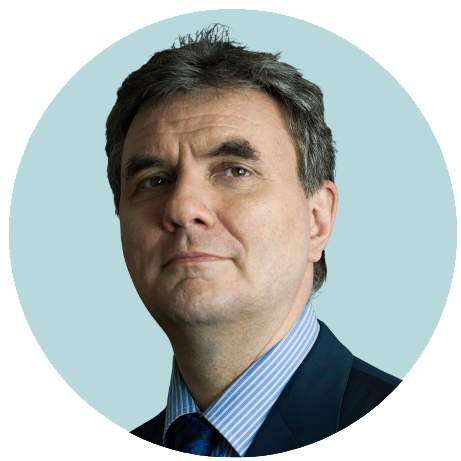
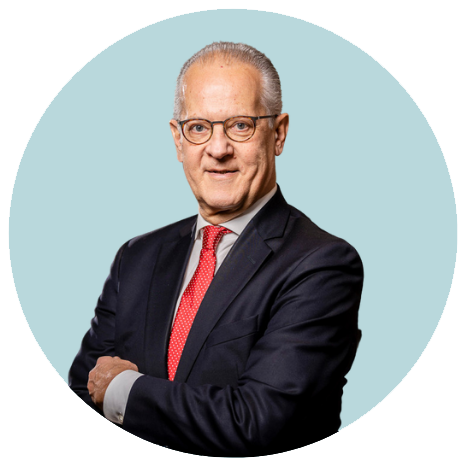




Alessandro Minuto-Rizzo | President
Alessandro Politi | Director
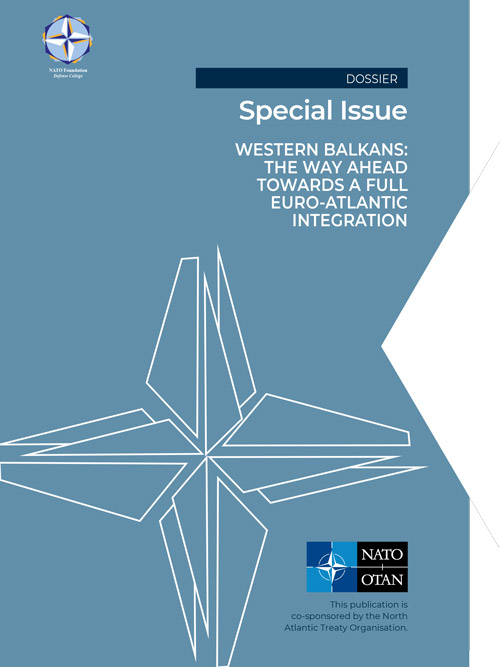
These web page and Dossier are co-sponsored by the North Atlantic Treaty Organisation.
Alessandro Minuto Rizzo President
Alessandro Politi
Ivan Vejvoda
A war happened in Europe at the end of the 20th Century. A war that should never have happened on a continent that was bred in the post-World War II period under the slogan “Never Again”. And yet 30 years ago in 1991 a war began in Europe in one country. Yugoslavia, more precisely the Socialist Federative Republic of Yugoslavia (SFRY) disintegrated and fragmented, through a bloody disastrous self-implosion. One state that became seven states.
Gentiola Madhi
Three decades after the fall of communism, Western Balkans’ democratization process is still going through a rollercoaster ride and the prospects remain weak. The establishment of formal democratic institutions and procedures is constantly challenged by abuses of power, conflicting narratives, growing scepticism and reform stagnation. The deeply-rooted problems cannot be overcome overnight and the preservation of the status quo no longer provides stability to the region.
Valbona Zeneli
After more than three decades of transition and a triple dip economic recession, economic security remains the main challenge in the Western Balkans. Unemployment, poverty, corruption, and brain drain are the main challenges that threaten the everyday security of average citizens in the region. Suffering from a lack of competitiveness and dangerous public debts, the current Covid-19 crisis has further exacerbated existing structural problems, deteriorating people’s social and economic conditions, and threatening hopes of future convergence with western advanced economies.
Arne Sannes Bjørnstad
If Western Balkans are to achieve stability and sustainable economic progress, we must support the development of a strong civil society. The transformation from the Socialist and authoritarian regimes of last century to mature liberal democracies is not yet completed in the region. To strengthen the positive developments and prevent backsliding, the checks and balances must be reinforced and supported. Civil society is having a vital role in moving the transformation forward.
Silvia Maretti
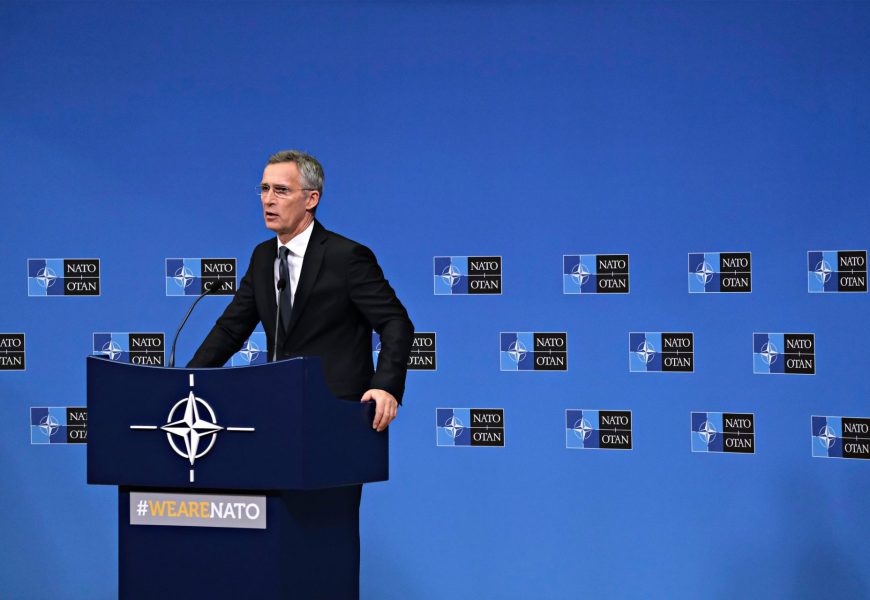
Quote by the NATO Secretary General Jens Stoltenberg, during his speech given in front of the United States Congress on 4 April 2019, in the occasion of the 70th Anniversary of the signature of the North Atlantic Treaty: “Time and again, Europe and North America have served together under the same flag. For the same cause of freedom and democracy. Deterring the Soviet Union. Bringing stability to the Western Balkans. Fighting terrorism in Iraq and in Afghanistan. Changing as the world around us changes. As we look together towards a more unpredictable world, we continue to stand shoulder to shoulder”.
Michela Matuella
The Western Balkans region is an integral part of our continent; we share the same history and the same culture. It is our firm conviction that the reunification of Europe, which started with the great enlargement in 2004, will only be completed once the entire Western Balkans region is inside the European Union. The political and economic logic that underpins the European Union applies equally to the Western Balkans. Economically the region is already very closely linked to the European Union.
Chair
George C. Marshall European Center for Security Studies
Garmisch-Partenkirchen
Chair
George C. Marshall European Center for Security Studies
Garmisch-Partenkirchen
Special Representative for the Western Balkans
Royal Ministry of Foreign Affairs
Oslo
Special Representative for
the Western Balkans
Royal Ministry of Foreign Affairs
Oslo
Program Officer
Western Balkans & South East Europe,
Engagements Section,
Public Diplomacy Division, NATO HQ
Brussels
Program Officer
Western Balkans & South East Europe, Engagements Section,
Public Diplomacy Division, NATO HQ
Brussels
Head of Unit
Directorate General for Neighbourhood
and Enlargement Negotiations,
European Commission, European Union
Brussels
Head of Unit
Directorate General for Neighbourhood
and Enlargement Negotiations,
European Commission, European Union
Brussels
This website uses cookies to enhance your experience. Some are essential for site functionality, while others help us analyze and improve your usage experience. Please review your options and make your choice.
If you are under 16 years old, please ensure that you have received consent from your parent or guardian for any non-essential cookies.
Your privacy is important to us. You can adjust your cookie settings at any time. For more information about how we use data, please read our privacy policy. You may change your preferences at any time by clicking on the settings button below.
Note that if you choose to disable some types of cookies, it may impact your experience of the site and the services we are able to offer.
Some required resources have been blocked, which can affect third-party services and may cause the site to not function properly.