“The spirit of our endeavour is, To strive, to seek, to find and not to yield”

Alessandro Minuto-Rizzo, President

Ripple effects

Source: www.apnews.com
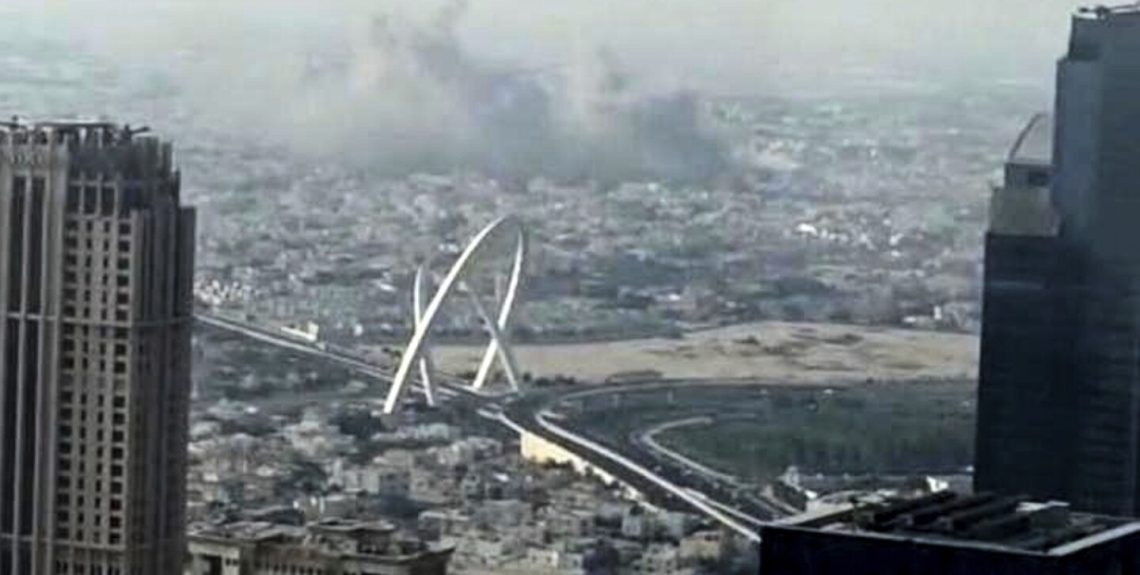
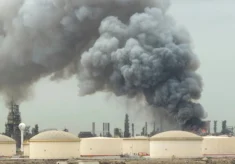
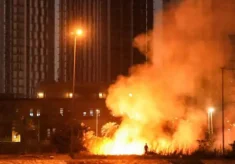
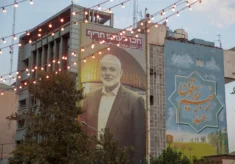
The airstrike carried out by Israel on Doha on the 9th of September 2025 represents a watershed moment for Gulf countries and raises serious questions about the security of the sub-region. While the whole Middle East has been engulfed in a seemingly never-ending cycle of violence ever since the terrorist attack carried out by Hamas on 7 October 2023, the main assumption of the petromonarchies has been that the vital threat to their security would have come from the East. For a long time, Gulf capitals have perceived Iran as a destabilising actor, a belief corroborated by its proxy strategy and confrontation with Israel that came out into the open in the latest turn of events.
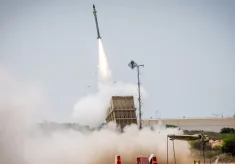
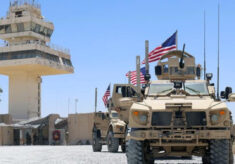
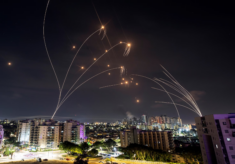
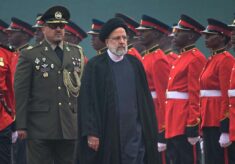
Qatar itself has been struck by Teheran just a few months earlier (23rd of June 2025) when missiles were launched at the al-Udeid airbase that hosts the US forces, including the headquarters of the Central Command. Most were intercepted after Iran pre-emptively warned Qatar of the incoming strike, but bilateral relations soured after the attack due to Qataris diplomatic protests and recriminations. The state of tension has not prevented the Iranian President Masoud Pezeshkian from attending the extraordinary summit of the Arab-Islamic countries held in Doha on 15 September to respond to the Israeli strike, confirming that, in such volatile environment, the enemies of yesterday can quickly become more friendly tomorrow.
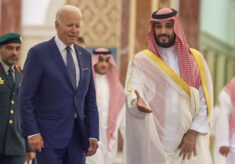
The operation of the Israeli Air Force against Hamas has again changed the calculus in the Gulf at a very critical moment. Right now, Gulf capitals have not only to take into account a government striking targets in neutral or friendly countries; they have also to deal with the lack of commitment of the USA, the main security partner. While previous incidents targeting Saudi Arabia and the UAE in 2019 and 2022 have already shown a lack of resolve in Washington, the current administration has very narrowly defined interest in the area, leaving belligerent allies to shape their own regional projects.
It is just after his visit in Jerusalem, where he reaffirmed US full support to Israel, that Secretary of State Marco Rubio landed in Doha, where he made appropriate declarations to what remains nonetheless a Major Non-NATO Ally (MNNA), that was mediating to obtain another ceasefire in the Gaza Strip. Rubio also announced an enhanced defence cooperation agreement with Qatar, in a visible effort to control the damage and mend a credibility in shambles. Time will tell if this agreement will become true.
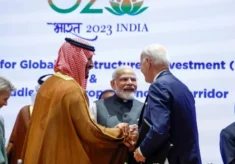
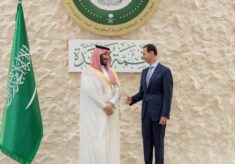
The ripple effects may include putting into hold or question the recent gains of the Abraham Accords, once intended to convene Israel and its new Arab friends. In the meanwhile, Gulf capitals are also looking for reliable security partners. A mutual defence pact between Pakistan and Saudi Arabia has quickly been announced, the new non-alignment policy of Riyadh inspiring its most recent initiatives. The effort, however, risks reinforcing minilateralism as the main common trend of a fragmented order, resulting in the creation of regional and cross-regional blocs.

Share on

Archive

JANUARY

FEBRUARY

MARCH

APRIL

MAY

JUNE

JULY

AUGUST

SEPTEMBER

OCTOBER

NOVEMBER

DECEMBER

JANUARY

FEBRUARY

MARCH

APRIL

MAY

JUNE

JULY

AUGUST

SEPTEMBER

OCTOBER

NOVEMBER

DECEMBER

JANUARY

FEBRUARY

MARCH

APRIL

MAY

JUNE

JULY

AUGUST

SEPTEMBER

OCTOBER

NOVEMBER

DECEMBER

Subscribe to our newsletter