







“The spirit of our endeavour is, To strive, to seek, to find and not to yield”

Alessandro Minuto-Rizzo, President

History repeating

Source: www.timesofisrael.com
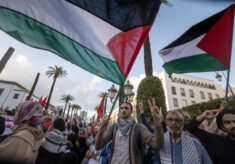
Sensitivities to the Palestinian cause vary deeply in the Arab world and nowhere is this more evident than in North Africa, where the Abraham Accords have deepened the regional divide between countries that have normalised relations with Israel and those firmly opposed to establishing diplomatic ties with Tel Aviv. In both cases the gap between the political leadership and the public opinion has grown steadily ever since the start of Israel’s war on Gaza, while political imperatives and economic necessities frequently constrain the show of solidarity to the plight of the Palestinian people.
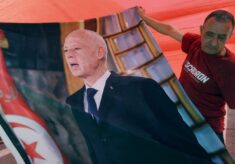
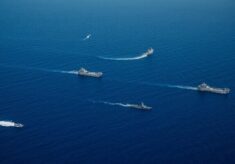
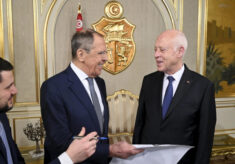
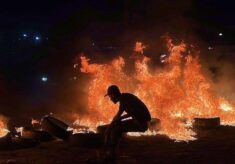
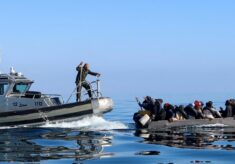
Caught between these two opposing forces, Tunisia represents a very peculiar case among the countries rejecting diplomatic normalisation with Israel. A series of unfortunate events has increasingly put the Maghreb country under the spotlight, stressing all the discomfort of President Kais Saied and his administration in dealing with the Palestinian issue. The incidents onboard the Family Boat and Alma ships, part of the Global Sumud Flotilla early this month are just a case in point: both struck by incendiary devices likely fired from drones, they were treated differently by authorities.
The attacks (which the organisers blamed on Israel) have caused huge embarrassment to the Garde Nationale, forcing it to backtrack after an initial statement speaking of an accident and admit an orchestrated assault which is still under investigation. The ships of the flotilla were moved from the Sid Bou Said port to Bizerte, home to the Sidi Ahmed airbase and the Land Force Command of the Tunisian army. The presence of the military was intended to deter further on the flotilla, whose journey to Gaza had been repeatedly postponed due to security reasons.
Israel’s threats to halt the shipment of humanitarian aid raise concerns of a repeat of the Freedom Flotilla incident in 2010, when the Israeli Defence Force (IDF) boarded the Mavi Marmara ship killing nine activists and poisoning relations with Türkiye. Further attempts to breach the ongoing naval blockade have been successfully thwarted by the IDF, most recently in July and August 2025. During the same period, the Sumud Land Convoy, which aimed to reach the Rafah border crossing from Tunisia, was intercepted by authorities in eastern Libya, due to Cairo’s objections.
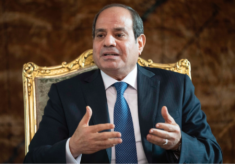
Heavily reliant on US military assistance and EU financial support, Egyptian President Abdelfattah al-Sisi cannot afford to alienate the support of his Western backers over the divisive but popular Palestinian issue. The same goes for Saied, who must have watched with concerns the images of the IDF’s attack on Doha, Qatar, that have rattled the whole region. The raid against Hamas on 9 September 2025 was reminiscent of Operation Wooden Leg carried out by Tel Aviv against the leadership of the Palestinian Liberation Organisation (PLO), exiled in Tunis in 1985.
While unconfirmed rumours from Israeli sources suggest negotiations involving Iran to relocate Hamas to Tunis, the general impression is that history keeps repeating itself in this part of the world. The use of the Palestinian cause as a trump card to rally falling public support could easily prove counterproductive when facing an unrestrained Israel intent on reshaping the Middle East. As the flotilla finally set sail for Gaza, Saied immediately adopted a low profile, skipping the Arab-Islamic summit in Doha to respond to Israel’s aggression and dispatching his Foreign Minister, Mohammed Ali Nafti, instead.

Share on

Archive

JANUARY

FEBRUARY

MARCH

APRIL

MAY

JUNE

JULY

AUGUST

SEPTEMBER

OCTOBER

NOVEMBER

DECEMBER

JANUARY

FEBRUARY

MARCH

APRIL

MAY

JUNE

JULY

AUGUST

SEPTEMBER

OCTOBER

NOVEMBER

DECEMBER

JANUARY

FEBRUARY

MARCH

APRIL

MAY

JUNE

JULY

AUGUST

SEPTEMBER

OCTOBER

NOVEMBER

DECEMBER

Subscribe to our newsletter