“The spirit of our endeavour is, To strive, to seek, to find and not to yield”

Alessandro Minuto-Rizzo, President

The diplomatic battle for the Western Sahara

Source: The New Arab.
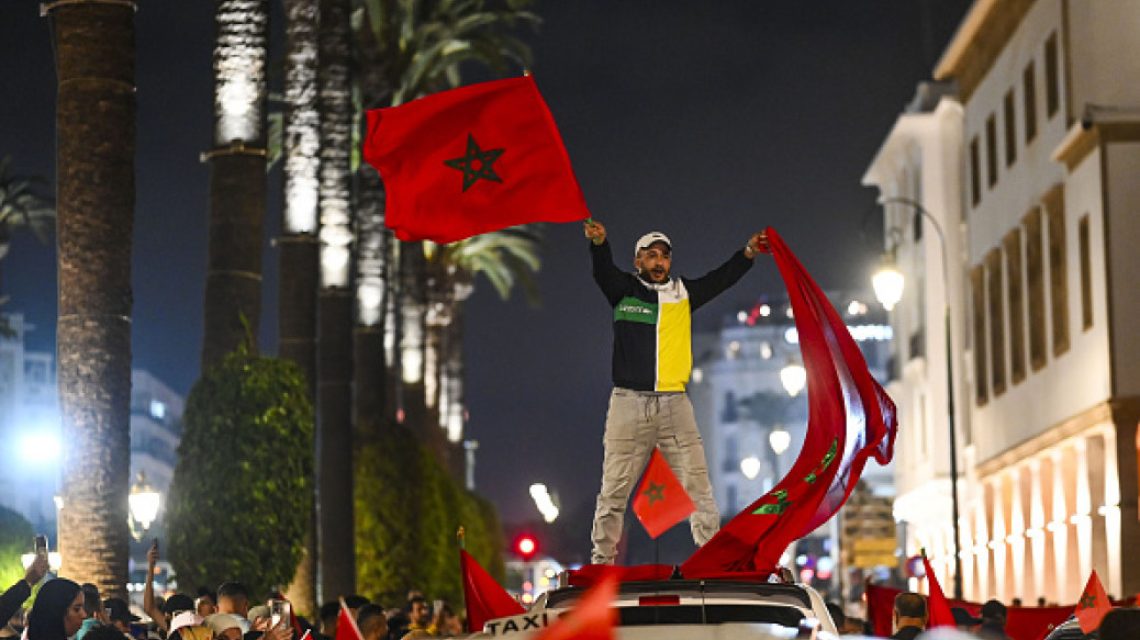
The decades-old dispute over the non-self-governing territory of Western Sahara marked a turning point on 31 October 2025, when the UN Security Council (UNSC) voted to renew the mandate of the UN Mission for the Referendum in Western Sahara (MINURSO). The mission, whose French acronym stands for Mission des Nations Unies pour le Référendum au Sahara Occidental, was renewed for one additional year. The adoption of UNSC Resolution 2797 (2025) was hailed as a success in Morocco, as it implicitly recognised Rabat’s claims over the disputed territory that date back to the decolonisation era.
For the first time, the resolution makes an explicit reference to the 2007 Autonomy Plan proposed by Morocco as a basis for settling the dispute. The plan offers Western Sahara self-government under Moroccan sovereignty. This would lead to the establishment of local legislative, executive, and judicial authorities for the Sahrawi, while Rabat would retain control over defence, foreign affairs, and religious matters. While the details of the plan still need to be finalised, it is significant that the resolution received 11 votes in favour, while three UNSC members (China, Pakistan and Russia) unsurprisingly abstained.
Source: UN.
Support for Morocco’s position on Western Sahara has gained momentum, particularly among Western states. Since US President Donald Trump’s recognition of Rabat’s sovereignty over the disputed territory (in exchange for Morocco’s inclusion in the Abraham Accords) in 2020, the traditional neutrality and deference to the UN principles of self-determination have gradually given way to the reality on the ground. In control of over 80% of Western Sahara (while the remaining 20% beyond a military defensive Moroccan berm remains in the hands of the Algeria-backed Polisario Front), Morocco has received the endorsement of its autonomy proposal from several European states.
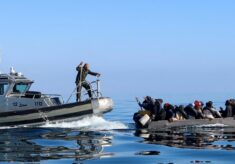
Under pressure due to the increased flow of migrants along the Western Mediterranean Route, Spain has been quick to support Morocco’s autonomy plan. Madrid has recently been followed by two permanent members of the UNSC, France and the United Kingdom, while another European heavyweight, Germany, considers autonomy the most serious and credible basis for resolving the longstanding dispute over Western Sahara. Italy has some reservations in principle and energy links with Algeria.
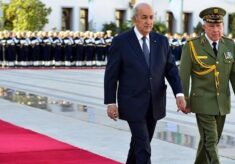
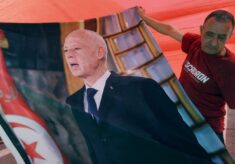
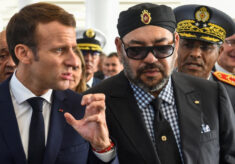
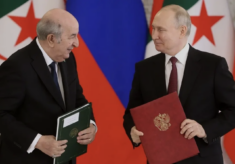
In its final year as a non-permanent member of the UNSC, Algeria did not take part in the vote on Resolution 2797 (2025). It also did not respond to Morocco’s olive branch following King Mohammed VI’s call on President Abdelmadjid Tebboune to engage in a sincere and fraternal dialogue to overcome the ongoing Maghreb divide. The wording of the resolution (which mentions the 2007 Autonomy Plan as a basis for negotiations, not the basis) certainly brought some relief, as did the renewal of MINURSO’s mandate, on which several US foreign policy circles had expressed reservations.
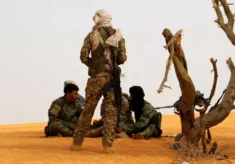
For its part, Algiers may feel that it has temporarily managed to fend off a diplomatic push that threatened its regional interests. As for the Polisario, it rejected Resolution 2797 (2025), insisting on the necessity of allowing the Sahrawi people to have the final say through a referendum. New attacks carried out in early November in the region of Guelta Zemmur against Moroccan military positions, claimed by the group, show that it may be too early to celebrate a diplomatic victory at the UN while the real settlement for Western Sahara will take its time.

Share on

Archive

JANUARY

FEBRUARY

MARCH

APRIL

MAY

JUNE

JULY

AUGUST

SEPTEMBER

OCTOBER

NOVEMBER

DECEMBER

JANUARY

FEBRUARY

MARCH

APRIL

MAY

JUNE

JULY

AUGUST

SEPTEMBER

OCTOBER

NOVEMBER

DECEMBER

JANUARY

FEBRUARY

MARCH

APRIL

MAY

JUNE

JULY

AUGUST

SEPTEMBER

OCTOBER

NOVEMBER

DECEMBER

Subscribe to our newsletter