“The spirit of our endeavour is, To strive, to seek, to find and not to yield”


Alessandro Minuto-Rizzo, President

Monthly Journal

February 2026

International Press Review

The most relevant events of the area through international sources

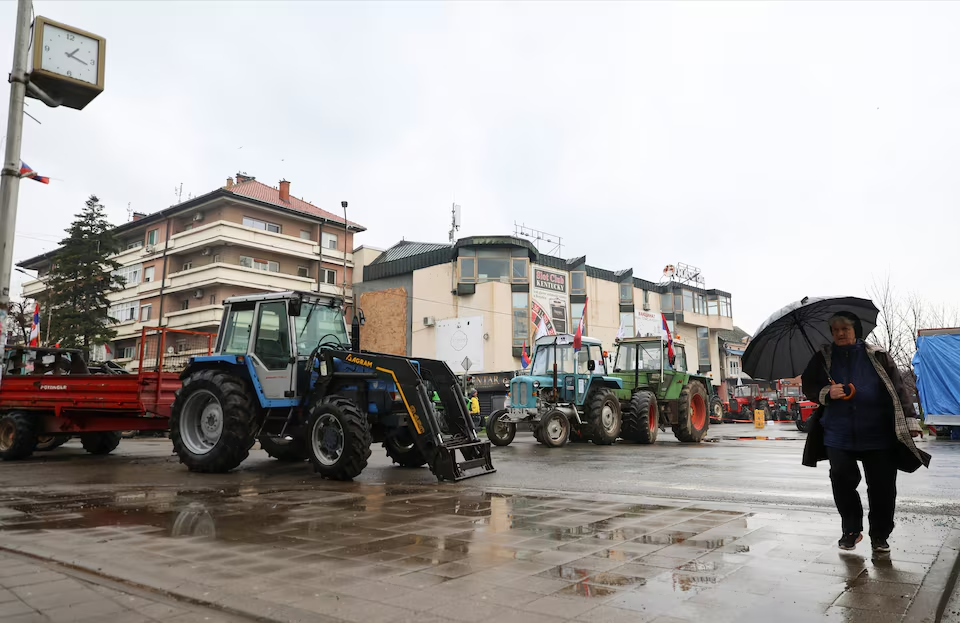
Serbian farmers block roads, asking for subsidies
Reuters
Thousands of Serbian farmers blocked roads across dozens of locations in February, demanding higher subsidies, swift payments for their products from major companies, and protection from cheap agricultural imports, particularly milk and pork. The protests, spreading from the southwest, reflect growing frustration over unsustainable prices and collapsing farm incomes. Farmers insisted the blockades would continue until concrete support measures were enacted. The movement overlaps with broader anti-government protests, with some demonstrators calling for President Vucic’s resignation. Agriculture remains a vital sector in Serbia.
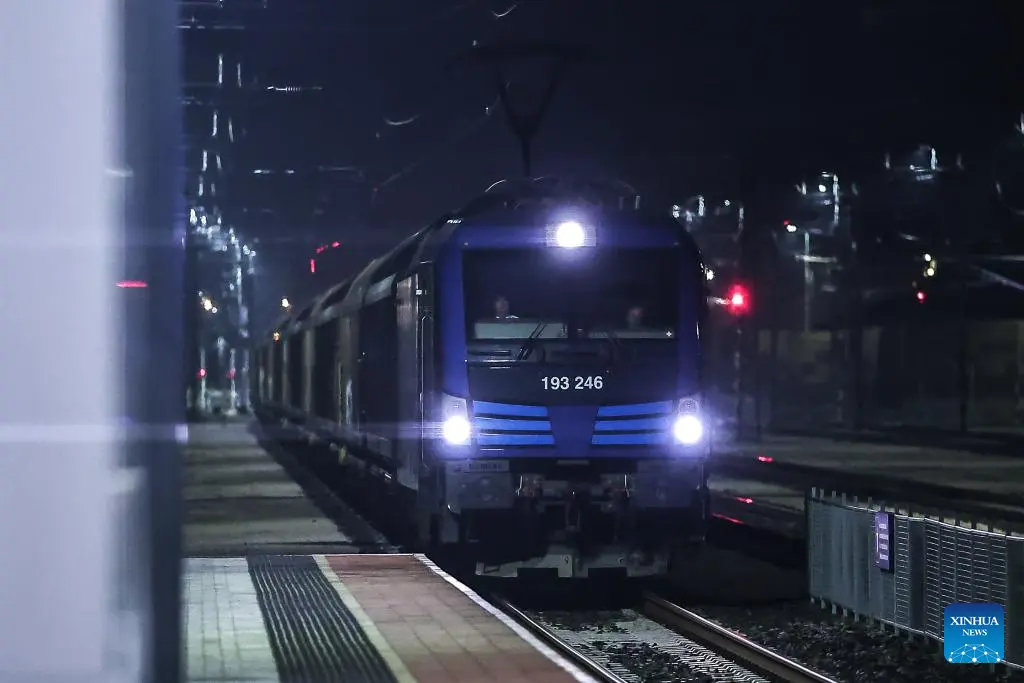
“Chinese” high-speed railway Belgrade-Budapest starts operating
Xinhua
Freight traffic resumed on the Hungarian stretch of the new Budapest-Belgrade railway, a flagship Belt and Road Initiative project linking Hungary and Serbia. The 158,6 km electrified line, co-built by China Railway Group and Hungarian firms, is designed for both freight and passenger services, with speeds up to 160 km/h. This marks the first integration of Chinese railway standards with EU interoperability regulations. The Serbian section became fully operational in 2025. The new line will cut travel time between the two capitals from eight to three and a half hours, enhancing regional trade and connectivity.
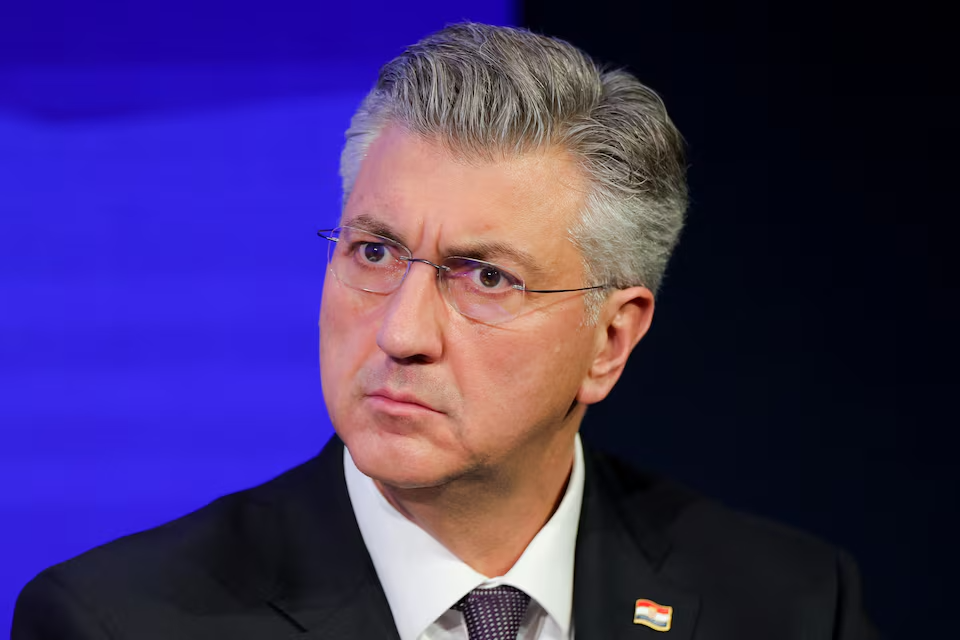
Croatia to supply oil to Hungary and Slovakia
Reuters
Croatia pledged to help Hungary and Slovakia providing oil supplies via the Adria pipeline, following damage to the Druzhba route, reportedly caused by a Russian drone strike. Prime Minister Andrej Plenković confirmed Zagreb is in talks with Budapest, Bratislava, and the European Commission, noting the pipeline’s 15-million-tonne annual capacity can fully meet both countries’ needs. While legal questions remain overusing Russian crude, operator Janaf has already begun unloading non-Russian oil for Hungarian refiner MOL, with seven additional shipments expected by April.
Source: ANSA (Photograph)
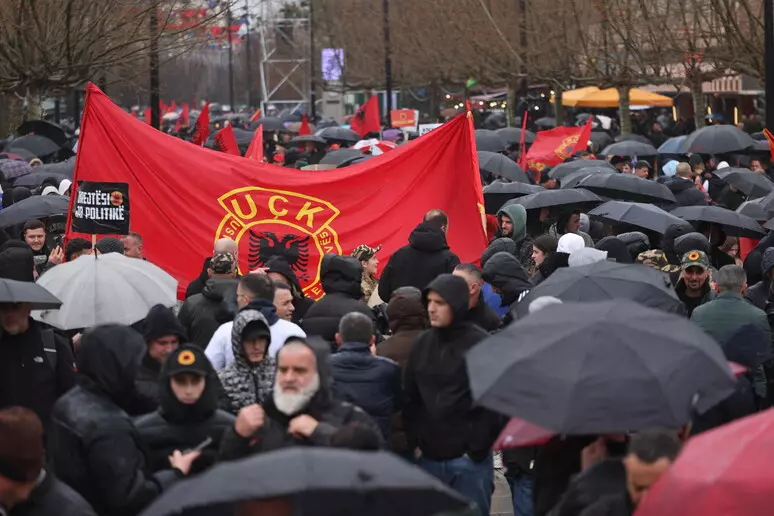
Tens of thousands in Kosovo protest for KLA and Thaci
AFP
Tens of thousands of people marched through Pristina to protest the war crimes trial of former Kosovo president Hashim Thaçi and other ex-KLA figures at the Kosovo Specialist Chambers in The Hague. Organisers linked to Thaçi’s party said turnout could exceed 200.000, with President Vjosa Osmani joining the rally. The court had been hearing closing statements for more than a week in February, the final phase before judges withdrew to reach a verdict. Thaçi and three co-defendants faced charges of war crimes and crimes against humanity over alleged killings, torture and other abuses during the 1990s conflict. Prosecutors sought 45-year prison sentences for each.
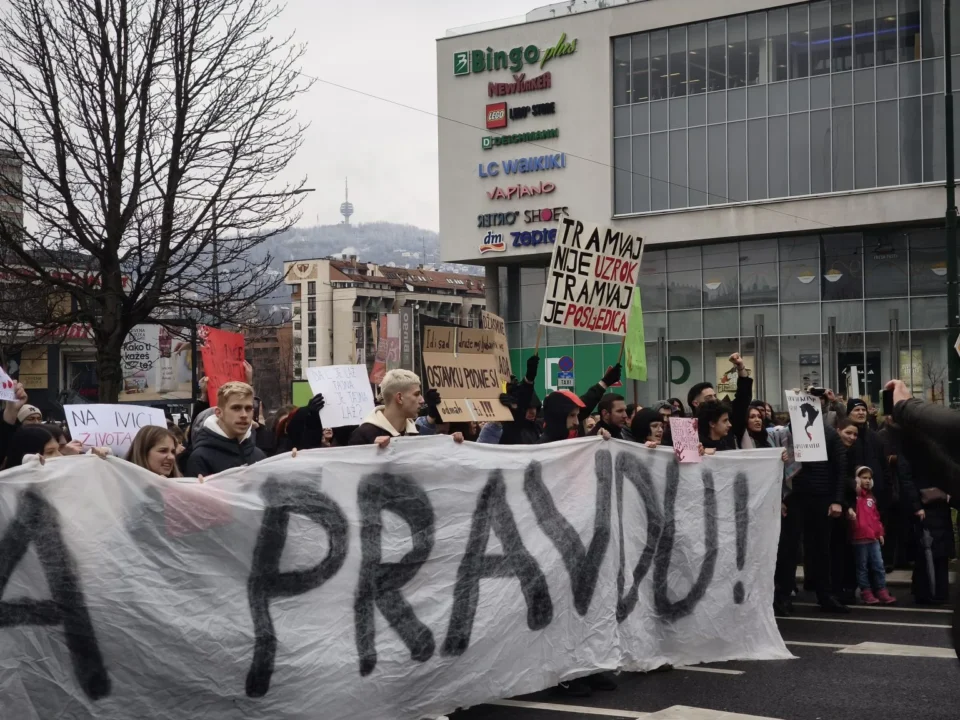
Fatal tram accident leads to protests in Bosnia
European Western Balkans
Sarajevo saw a series of large civic protests, led by students, after a 12 February tram accident killed a young man and injured four others. Demonstrators blocked the main street, chanting for justice and carrying banners accusing the system of failing young people. Protesters called for urgent safety upgrades, merit-based appointments to vacant posts in relevant institutions, clearer criteria for social assistance, and a budget review to prioritise vehicle maintenance and modernisation. They also demanded the publication of a plan identifying those responsible. The rally was backed by the University of Sarajevo Union, the Student Parliament and unions.
Source: Balkan Insight (Photograph)
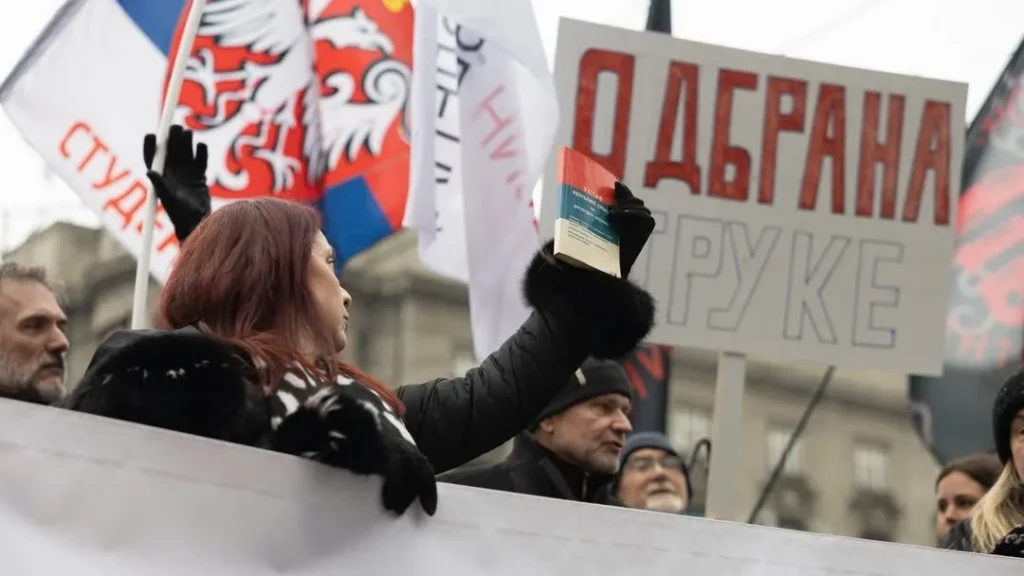
Lawyers strike against controversial reform of justice in Serbia
AFP
Serbia’s Bar Association launched a three-day strike to protest newly adopted judicial reforms that the EU warned could undermine court independence. Participating lawyers said they would not appear before courts, prosecutors or other authorities, except in cases involving minors or detention decisions. Critics argued the changes weakened safeguards for judges and prosecutors and were pushed through parliament late last month without public debate or consultations, including with the Council of Europe’s Venice Commission. The Bar Association urged the laws to be annulled, while EU officials signalled Serbia’s financial support could be reconsidered if the reforms were not rolled back.
Source: Balkan Insight (Photograph)
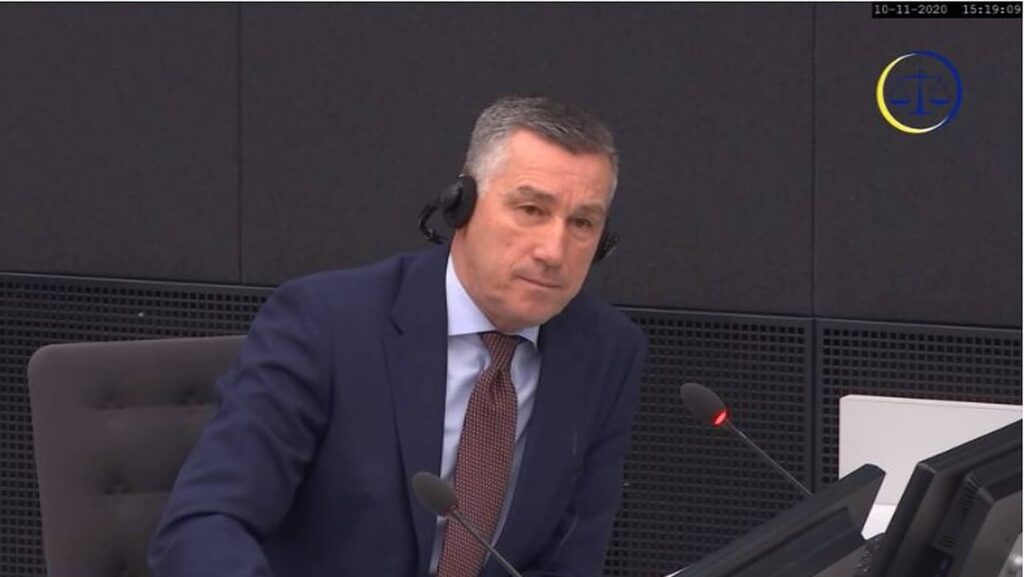
Prosecution asks 45 years of jail for Thaci, Veseli et al.
Anadolu
Prosecutors at the Kosovo Specialist Chambers in The Hague sought 45-year prison sentences for former Kosovo president Hashim Thaçi, Kadri Veseli and two former senior KLA figures as closing arguments opened in their war crimes and crimes against humanity trial. The Specialist Prosecutor’s Office said Thaçi, Kadri Veseli, Rexhep Selimi and Jakup Krasniqi bore individual and command responsibility for abuses at KLA-run detention sites in Kosovo and Albania during and shortly after the 1998–99 conflict. The indictment alleged 102 killings as well as unlawful detention, torture and persecution. Prosecutors said the case did not target the KLA as an organisation and that membership alone was not grounds for conviction. The four, indicted in 2020 and detained in The Hague since their transfer, pleaded not guilty.
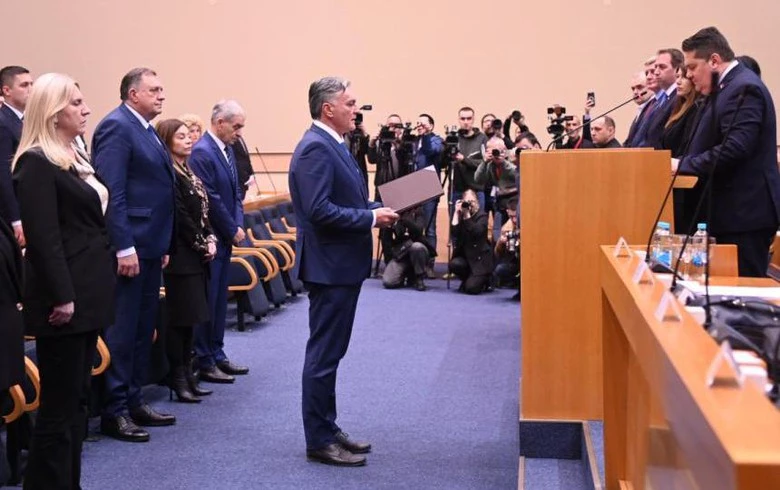
Karan new president of Republika Srpska
SeeNews
Sinisa Karan, an ally of ousted Bosnian Serb leader Milorad Dodik, took office as president of Republika Srpska after the entity parliament confirmed his election. Karan won the presidential election following a partial rerun in early February, taking 50,54% based on combined results from the November 2025 vote and repeat polling on 8 February. The re-vote was held at 136 polling stations in 17 districts after Bosnia’s Central Election Commission flagged irregularities in the snap ballot. Karan was set to serve until the next general elections, due in October. Republika Srpska is one of Bosnia and Herzegovina’s two entities, alongside the Federation of Bosnia and Herzegovina.

The Insight Angle

Insight Angle

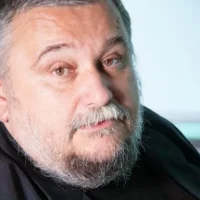
Davor Gjenero

Davor Gjenero is a political scientist and independent political consultant, and one of the Balkans’ most authoritative political commentators. He focuses on political and party systems, electoral legislation, and policies to protect human and minority rights. He is frequently quoted by leading media outlets across the region and internationally. He previously served as an associate at the Faculty of Political Science in Zagreb and as an adviser to Croatia’s Ministry of Foreign and European Affairs.

The Western Balkans increasingly looks like it is entering an arm build-up: from Croatia’s large-scale military modernisation to Serbia’s rearmament and, more recently, Kosovo’s acquisitions of drones and other military equipment from Turkey and the USA. How should we interpret this trend? Is it primarily a reflection of the broader global surge in defence spending, or does it point to more troubling dynamics given the region’s recent history of conflict?
Although Croatia has been a member of NATO since 2009, it is only now reaching the agreed standard of allocating 2% of GDP to defence and plans to reach 3% by 2030, in line with NATO’s efforts to increase defence spending. It first came close to the 2% target in 2021, when a fleet of second-hand Rafale multi-role fighter jets was purchased. At that time, defence spending was 1,97%, but by 2022 it had already fallen to 1,79%, and by 2003 to 1,75% of GDP.
Croatia has aligned its defence policy with NATO’s defence policy, participating in NATO operations such as KFOR in Kosovo, Sea Guardian in the Mediterranean, and Enhanced Vigilance in the East of the Alliance.
Croatia does not see itself as part of the ‘Western Balkans region’ in either a political or economic sense and does not direct its public policies towards that area. That is why interpreting the modernisation of its defence system as part of a trend in the Western Balkans is a misnomer. Croatia’s armament is taking place within the NATO Alliance and with the help of European funds from the European Defence Fund and the SAFE mechanism, and within the SAFE mechanism Croatia is carrying out joint procurement of weapons with several European countries in three projects (howitzers, tanks, heavy trucks). Likewise, in an alliance with several European countries, Croatia is developing defence drones. All these procurements are focused on the common defence policy of the EU and NATO, and not on the Balkan context.
The impetus for the growth of defence spending in Croatia is global: first, Russia’s invasion of Ukraine, and then the announcement of the US withdrawal from ensuring Europe’s security.
On the other side, Serbia is not a member of NATO, nor does it intend to become one, and its European integration has been halted, despite formally opened accession negotiations. Unlike Croatia, Serbia was already allocating more than 2% of GDP to defence in 2023, and in the meantime this percentage has risen to around 2,6%. Serbia’s military purchases are not related to the European or Euro-Atlantic context but are aligned with its national defence policy. Despite the passive-aggressive, nominally peaceful rhetoric, Serbia has in several situations clearly demonstrated its military strength. In crisis situations in Kosovo, Serbia demonstrated its military capabilities, for example through army movements, the scrambling of fighter jets and the use of drones. The fact that it never punished the participants in the terrorist operation in the village of Banjska in the north of Kosovo in the autumn of 2023, and that the group’s alleged links with the Serbian Army (its training and arming) were not investigated, indicates that the risk of future escalation of security relations in the Western Balkans is linked to Serbia. This is evidenced by Serbia’s un-investigated connection with the attacks on KFOR in the north of Kosovo in May 2023.
Serbia’s rearmament is also connected with the concept of the Serbian world, which is the latent regional policy of the regime in Belgrade. In the same way, Serbia has never really condemned Russia’s invasion of Ukraine, does not participate in the system of sanctions against Russia (unlike the EU), and politicians in Serbia publicly talk about the establishment of a new paradigm, a multipolar world, whereby the Balkans would no longer be in the sphere of influence of the collective West. In this narrative, with Russian support and the realisation of Serbia’s military goals in the Western Balkans (Kosovo, Montenegro, the entity in Bosnia and Herzegovina, and perhaps parts of Croatia), these could become Serbia’s military goals.
The arming of Kosovo is only symbolic, and it is visible to the public because of Serbia’s interests, as it creates the appearance of a military danger for Serbia and a justification for further arming by Serbia. Kosovo’s goal is to get closer to the European Union and NATO.
 
Croatia, Albania and Kosovo have recently moved to deepen defence cooperation, prompting sharp reactions in Serbia. Belgrade has described this as a “military alliance” directed against it. How credible is that claim, and how should these initiatives be assessed in terms of regional security and deterrence?
There is no military alliance between Albania, Croatia and Kosovo. In fact, the Declaration on Military Cooperation, signed in Tirana in March this year, explicitly states: “It does not create any new international or intergovernmental legal obligations between the states, nor does it affect existing obligations with other states.”
The idea of military cooperation is linked to the concept of joint military procurement, but also to the idea of strengthening the southern wing of NATO. By increasing the scale of procurement, Croatia wants to open a niche for its military industry, but its priority goal is to strengthen the European and Euro-Atlantic identity of the Western Balkans.
Albania is a NATO member that has significantly accelerated its accession negotiations with the EU and has the ambition to complete the negotiations by the end of 2027 and join the European Union by the end of 2029. Kosovo is blocked in the process of joining the EU and NATO; it has not even managed to achieve membership in the Council of Europe, and Croatia strongly supports the efforts of the Kosovo authorities to steer their country towards NATO and EU membership.
From a defence policy perspective, Croatia has an interest in moving the external border of the EU and NATO as far away from its borders as possible. When it comes to supporting Kosovo in building its Euro-Atlantic identity, Albania was a natural partner. Unfortunately, after the change of government in August 2020, Montenegro called into question its NATO identity and credibility by jeopardising classified information obtained through exchanges with NATO members and opening a niche of influence for Russian intelligence services, and for the Serbian intelligence service, which, in addition to acting in the interests of its own state, also acts as an intermediary for Russian services. There is also a possibility that Bulgaria, as a NATO member, will join this cooperation in the future.
The aggressive rhetoric of the Belgrade regime related to the Declaration of the Three States on Military Cooperation (which it calls the Triple Pact) is linked to the internal situation in Serbia, the construction of an enemy, and the effort to explain the tendency towards the militarisation of society in Serbia. Kosovo itself is difficult to present to the domestic public as a security threat, and Albania cannot be presented as such either.
Since Croatia began to rebuild its armaments, and especially after the start of Russia’s invasion of Ukraine, Serbia has systematically presented Croatia as a state that is arming itself because it has ambitions to attack Serbia, even though Croatia’s military purchases in the previous period were smaller than those of Serbia. The reason for such aggressive rhetoric is that the regime is facing social pressures, instability, signs of declining support, and the fact that the current president, who completely controls all branches of government, will be serving his second five-year term next year. The rhetoric about the Triple Pact is intended for the domestic political public in Serbia and serves as a typical tool of homogenisation against an external enemy.
The Declaration on Military Cooperation of Albania, Croatia and Serbia did not stand out in any way from the system of collective security within the NATO alliance.
 
On EU enlargement, Montenegro and Albania appear best placed to join next, potentially widening the gap with Serbia, Bosnia and Herzegovina, Kosovo and North Macedonia. What would be the strategic and political benefits of adding two EU member states in the Western Balkans – and what risks or unintended consequences might follow from leaving the remaining four outside the Union for longer?
Despite the fact that Montenegro has a significant advantage in terms of the number of closed chapters in the pre-accession dialogue with the EU, and despite being generally seen as a leader in the accession process, and despite Albania’s serious problems with state and nation-building, it seems that Albania’s plan to conclude accession negotiations by the end of 2027 is more realistic than Montenegro’s plan to close twenty accession chapters this year.
Even if Montenegro were to close negotiations by the end of this year, the sword of parliamentary elections at the beginning of next year would still hang over the country, and given the social dynamics there, it is not certain that pro-European political options would secure a majority after the elections, or that the ratification of the Accession Treaty would proceed successfully by the end of 2028.
It is important that the Directorate-General for Enlargement is planning a new type of accession treaty that would incorporate protective mechanisms in the event of democratic regression and abandonment of the European and Euro-Atlantic political direction in Montenegro as a new member. However, since the end of last year, it has been obvious that the dynamics of the accession process have been significantly threatened by domestic political developments. This was evident after French reservations about closing the chapter on fisheries in agriculture, which were caused by the poor work of Montenegro’s Ministry of Agriculture, and the political dynamics that emerged around attempts to block the construction of a treatment plant on the Morača, on the edge of Podgorica, during the New Year holidays.
Montenegro’s problem, which could result in the blocking of accession negotiations, is that a pro-European coalition was not formed to lead the country through the accession process. Instead, a negotiated administration was established, consisting of the pro-European wing of the Montenegrin political arena and most parties advocating pro-Russian and Greater Serbian politics. Moreover, control of parliamentary procedure (the parliamentary speaker) is in the hands of pro-Russian forces. The crisis related to the treatment plant in Botun near Podgorica was used by pro-Russian forces to try to impose constitutional changes to advance the interests of the Serbian national community and the Serbian state in Montenegro, that is, to redefine the constitutional definition of the Montenegrin state.
The only way out of this crisis is for pro-European parties to come together and protect the policies implemented by the Ministry of European Integration and the Ministry of Foreign Affairs. There is no leadership from the prime minister and president that would ensure the creation of a European bloc able to contest parliamentary elections next spring and win and thus ensure the successful ratification of the Accession Treaty.
 
Serbia’s accession process remains stalled, while the country has faced more than a year of sustained protests. How do you assess the political situation in Belgrade today? Despite continued mobilisation on the streets, President Aleksandar Vučić has so far managed to retain control – do you see elections as a potential turning point, or are the underlying power dynamics unlikely to shift?
In an authoritarian system such as Serbia’s, which is not based on truly competitive parliamentary elections, elections cannot be the solution to the crisis.
There are no indications that the next elections would prevent the manipulation of voter lists, the importing of voters from other countries, primarily from entities in Bosnia and Herzegovina, or even open election theft. The regime increasingly restricts media freedom and the reach of the few remaining independent outlets.
The bigger problem, however, is that neither parliamentary democracy nor a transition from authoritarianism to a democratic order is possible without a strong democratic party infrastructure, and in Serbia the party system has disintegrated. Even the ruling Serbian Progressive Party (SNS) has disintegrated, which President Vučić is now trying to replace with a populist movement gathered around him personally. It is notable that after the crisis triggered by the death of 16 people in Novi Sad, the SNS government de facto fell. It had been led by the party president and top name on the SNS electoral list in the 2023 parliamentary elections, Miloš Vučević. The formal post of prime minister was taken over in April last year by Đuro Macut, who is not an SNS member but is among the initiators of Vučić’s populist movement. From the standpoint of a parliamentary system, it therefore appears that the SNS has already lost power in Serbia.
The student movement generated social dynamism over the past year, and it continues to some extent this year, but it is clear that Vučić’s authoritarian rule has consolidated, the repressive apparatus has been strengthened and is fully under the President’s control, and the prosecution and judiciary are being completely subordinated, despite EU warnings about regression in the rule of law.
Serbia – without a relevant parliamentary opposition, without a clear pro-European orientation among a significant part of the electorate, without free media, and without the rule of law – offers no prerequisites for a peaceful transfer of power, nor for a transfer of power in general. Everything points instead towards the establishment of a hybrid regime, only one step away from what Aleksandar Lukashenko has been doing recently, advocating dictatorship as the preferred form of government in a sovereign state.
On the other hand, it is also clear that within the framework of the Three Seas Initiative, European infrastructure projects have been encouraged that would allow Serbia (but also North Macedonia) to remain outside European integration, through the construction of the Via Carpathia transnational highway network, which connects Thessaloniki with Bulgaria, Romania, Hungary and further to the Baltic states.
 
Finally, the Serbia–Kosovo dialogue remains central to long-term regional stability. With Vučić still in power in Belgrade and Albin Kurti back in Pristina, is there any realistic prospect of a durable settlement in the foreseeable future? If so, what kind of outcome – practical normalisation, mutual recognition, or another framework – seems most plausible?
Albin Kurti can be a problem for negotiators because he behaves unorthodoxly and unpredictably, but substantively, as a representative of the political majority of Kosovo Albanians with a strong pro-European and Euro-Atlantic profile, he does not represent a problem.
The framework of the dialogue between Serbia and Kosovo is set by the Ohrid Agreement: a clearly defined path that links Serbia’s European perspective with de facto recognition of Kosovo’s independence, thus opening Kosovo’s European perspective. In practice, the dialogue is a technical process by which, on the one hand, institutional protection mechanisms for the Serbian minority in Kosovo would be built and, on the other, it would ensure the peaceful transfer of powers and responsibilities from the institutions that Serbia still controls in Kosovo to the institutions of the state of Kosovo.
The problem with the Serbia–Kosovo dialogue is that President (soon to be prime minister) Vučić is building a hybrid regime in Serbia like Vladimir Putin’s, and Serbia no longer has any ambition to join the European Union.
Belgrade’s offer to the EU boils down to Serbia being accepted into the Union without reforms and without alignment with the acquis Communautaire, even with limited membership without veto rights. This is not a serious political option, but it indicates that the EU’s key motivational lever for influencing Serbia has been lost. Despite occasional tactical mistakes by Kurti’s administration, the EU retains mechanisms of influence over Kosovo to ensure it develops as an integrated, pluralistic society. In the current situation, it therefore seems necessary to set realistic goals and give up the illusion that it is possible to link Serbia’s accession dialogue with the launching of Kosovo’s accession process.
The Key Story

Strategic trends 

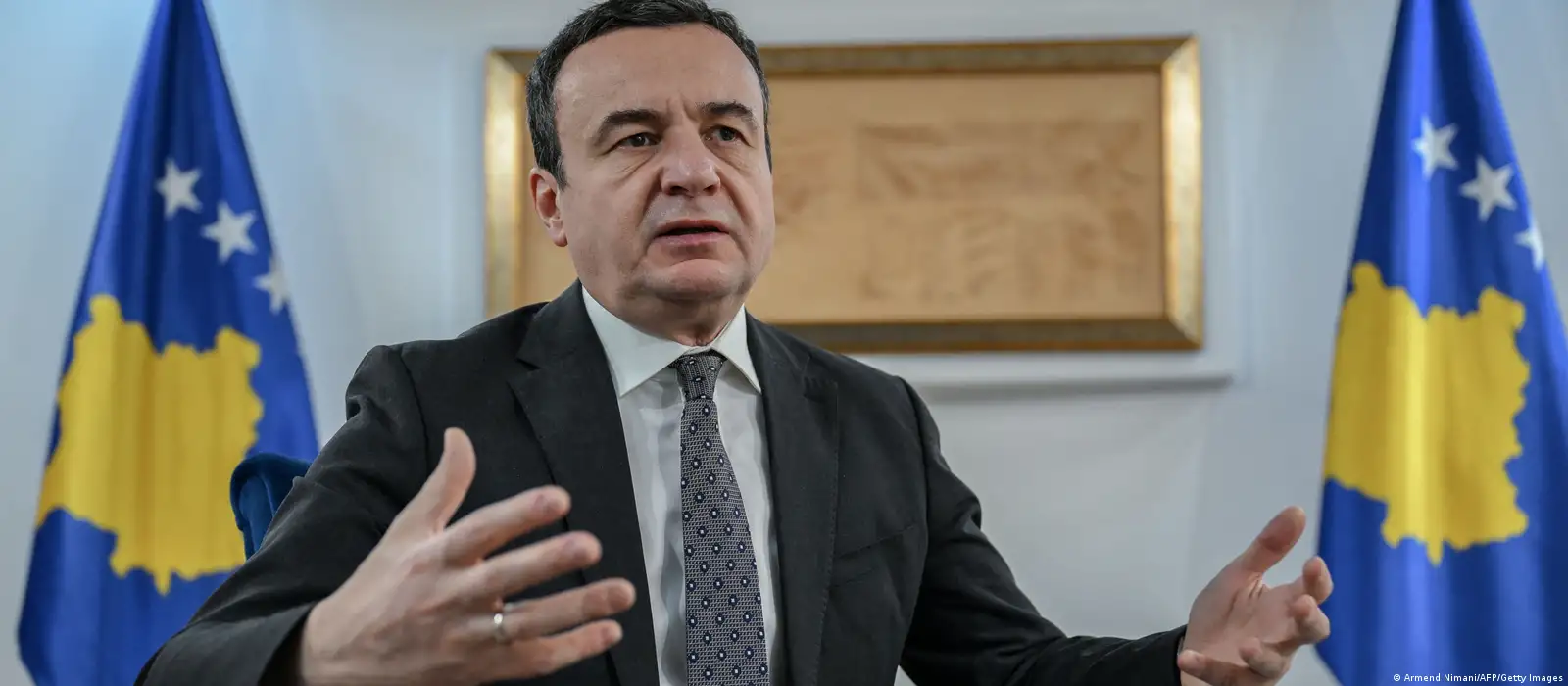
Source: DW.com (Photograph)

Kosovo gets a new, old government at record speed, but a fresh crisis might loom

In a surprising development, Kosovo formed a new government in February, apparently bringing to an end a year-long political and institutional crisis that had serious repercussions at home and in Pristina’s international relations. However, difficulties in electing a new President of the Republic could yet rekindle instability.
On the 9th of February, following repeated postponements and a recount prompted by polling irregularities, the Central Election Commission confirmed the final outcome of Kosovo’s 28 December parliamentary vote. The early election delivered a clear victory for Albin Kurti’s Self-Determination Movement (LVV), which secured just over half of all ballots cast, enough to govern without a full coalition, relying only on the support of minority-party representatives.
Two days later, on 11 February, the newly elected Assembly was sworn in and swiftly moved to end months of institutional paralysis by installing a new cabinet. At record speed, Kurti was confirmed as prime minister, with his government backed by 66 deputies.
Kurti’s new cabinet (the third formed under the Vetëvendosje leader) signalled that defence and economic growth would sit at the heart of its agenda. Speaking to MPs ahead of the confidence vote, he said the government intended to deepen partnerships with Western allies and earmark €1 billion for defence over the next four years. He also pledged to bring an ammunition plant into operation, expand Kosovo’s domestic defence-industrial base and develop locally produced combat drones.
Alongside the security push, Kurti presented a broader programme centred on social and infrastructure spending, with additional commitments on welfare, education and public works. He argued that recent years had already brought tangible gains, pointing to stronger business performance and higher living standards, including wage rises and increased child benefits.
On relations with Serbia, he promised to re-engage in the EU-facilitated dialogue, insisting it should be framed around mutual recognition between two sovereign states.
While withholding support from the incoming cabinet, the main opposition forces nevertheless signalled a willingness to work with the government on matters of national importance. Both the Democratic Party of Kosovo (PDK) and the Democratic League of Kosovo (LDK) said they would back cross-party understandings where these served the public interest. PDK leader Bedri Hamza told Kurti that seeking common ground should be seen not as weakness but as an expression of state responsibility, adding that his party would support arrangements that advanced Kosovo’s interests without diluting core national priorities. LDK chief Lumir Abdixhiku struck a similar note, saying his party was prepared to cooperate institutionally in the Assembly on major issues.
The new administration in Pristina also drew an encouraging response from the European Union. Immediately after the confirmation of Kurti, EU foreign policy chief Kaja Kallas urged the incoming authorities to press ahead rapidly with reforms that had largely ground to a halt during the 2025 political crisis. She argued that moving quickly would be the most effective way for Kosovo to unlock EU assistance valued at hundreds of millions of euros and to advance its European integration agenda.
Kallas also called for fresh impetus in the EU-brokered dialogue with Serbia, which had been stalled for months. Signalling readiness to re-engage at senior level, she said she was prepared to convene a high-level meeting in the near term – potentially bringing together Kurti and Serbia’s President Aleksandar Vucic for their first such encounter since September 2023.
However, there is also a more pessimistic side of the story, as an uncertain and potentially destabilising chapter still looms: Kosovo is indeed facing a stark choice between electing a new President of the Republic before a constitutional deadline or being pushed back into another round of early parliamentary elections. By late February, parties had failed to agree on a compromise candidate, and even the prospect of re-electing the incumbent, Vjosa Osmani, who had already declared her intention to seek a second five-year term, did not reach cross-party backing.
Under the constitutional deadline, the Assembly had to choose a president by the 4th of March to avert a snap vote. While Vetëvendosje had moved quickly on several priority decisions in recent weeks, Kurti had not yet signalled whom he would support for the presidency. Relations between the prime minister and Osmani, once close in 2021, appeared markedly cooler, complicating any straightforward endorsement.
Crucially, electing a head of state required a two-thirds quorum, obliging the government to secure the attendance of opposition MPs. With time running short and positions still hardened, the risk of renewed political paralysis – and a return to the polls – continues to grow.

Further News and Views

Serbia increasingly concerned about military cooperation between Tirana, Pristina and Zagreb
Sources: Kossev, Kosovo Online, EWB, N1, NIN
Deepening defence cooperation between NATO members Croatia and Albania and Kosovo has fuelled fresh tensions in the Balkans, with Serbia denouncing the initiative as a de facto military pact directed against Belgrade.
In March 2025, Albania, Croatia and Kosovo signed a joint declaration on defence cooperation. The text set out plans to deepen collaboration on defence and security industries, boost interoperability through joint training and exercises, strengthen resilience against hybrid threats and enhance strategic security, while also backing partners’ Euro-Atlantic integration.
The partnership gathered further pace in early 2026, when two senior-level meetings – bringing together officials from the defence ministries and the armed forces – advanced work on concrete programmes. Among the key engagements was a meeting between Albania’s Chief of the General Staff, Arben Kingji, Croatia’s Chief of the General Staff, Lieutenant General Tihomir Kundid, and Kosovo Security Force Commander Bashkim Jashari, who discussed plans for specific trilateral exercises in 2026 and beyond.
From the outset, however, the declaration drew sharp criticism from Belgrade. Serbian officials argued that the arrangement undercut regional stability and amounted to a direct provocation and security threat to Serbia. After the last developments in February, Petar Petkovic, head of Serbia’s Office for Kosovo, said that while Albania and Croatia were free – as sovereign NATO members – to pursue defence cooperation as they saw fit, Kosovo’s participation in any formal security framework was unacceptable.
He argued that involving Pristina ran counter to broader regional interests and violated UN Security Council Resolution 1244, describing the move as a deliberate provocation and an attack on Serbia’s core state and national interests.
Serbia and Albania propose EU entry without veto and commissioners
Sources: Vreme, Beta, BalkanWeb
Serbian President Aleksandar Vučić and Albanian Prime Minister Edi Rama co-authored an op-ed in Germany’s Frankfurter Allgemeine Zeitung calling for the rapid integration of prepared Western Balkan candidates into the EU’s common market and the Schengen area, even before full membership.
They argued that enlargement had historically strengthened democracy, stability and prosperity, but noted that no new state had joined since 2013, attributing the slowdown to complex EU circumstances rather than only weak engagement by candidates.
The two leaders acknowledged what they described as legitimate concerns among EU publics and governments about whether a larger Union could remain effective and politically cohesive. They said they had experienced how easily accession progress could be blocked by unanimity and domestic political calculations within member states. Waiting for the EU to complete internal reforms before advancing enlargement, they warned, would effectively shut the door, leaving rhetoric to replace action and risking instability in a more dangerous geopolitical environment.
Vučić and Rama proposed accelerated economic and mobility integration that would deliver tangible benefits to citizens and bolster the EU’s economic and strategic position, while avoiding institutional strain. They offered to sacrifice veto rights and did not seek commissioners or parliamentary seats, arguing this would make it easier for EU leaders to back faster enlargement as a mutually beneficial investment that also reinforced peace and unity in Europe.

EU - NATO

US pressed NATO to curb mission in Kosovo, Politico claims
Sources: Politico, Kosovo Online, B92
US officials under President Donald Trump had pushed NATO to reduce overseas activities, including ending the alliance’s training and advisory mission in Iraq and the KFOR mission in Kosovo, according to four NATO diplomats cited by POLITICO.
Washington had also urged scaling down the NATO-led Kosovo Force (KFOR) and sought to limit formal participation by Ukraine and Indo-Pacific partners at NATO’s July summit in Ankara. The drive reflected a White House push to refocus NATO as a strictly Euro-Atlantic defence pact and roll back crisis-management missions, global partnerships and values-based initiatives criticized by Trump and his political base.
Diplomats said early-stage discussions on winding down KFOR alarmed European allies, given the mission’s role in stabilising Kosovo since 1999. Analysts warned a drawdown could raise risks of escalation in northern Kosovo and have wider knock-on effects in the Western Balkans.
NATO, however, said there was no timeline for ending either mission, which remained needs-based and subject to periodic review, and noted that any start or end decision required unanimous approval by all Allies.

ECONOMICS

Western Balkans: growth decelerates to 2,5% in 2025, recovery expected
Source: EBRD
The EBRD had projected growth across its economies to accelerate from an estimated 3,4% in 2025 to 3,6% in 2026 and 3,7% in 2027, revising its 2026 outlook up by 0,2 percentage points compared with September 2025. In its report ‘Resilient growth amid continued trade tensions’, it said geopolitical frictions and trade disputes had so far hit global trade less than expected, as supply chains adapted quickly and demand for AI-related products supported activity. It cautioned, however, that the full effect of US tariffs might still be pending, as imports were frontloaded earlier in 2025 ahead of anticipated increases.
For the Western Balkans, the EBRD said growth had slowed to 2,5% in 2025 due largely to weaker-than-forecast performance in Serbia but was expected to recover to 3,1% in 2026 and 3,5% in 2027, backed by major public investment and infrastructure projects. Serbia’s economy, after expanding 3,9% in 2024, was estimated to have grown 2% in 2025 amid global tensions and domestic political uncertainty, with declines in construction and energy partly offset by services and continued production of electric vehicles and tires.

Stefano Giantin

Journalist based in the Balkans since 2005, he covers Central- and Eastern Europe for a wide range of media outlets, including the Italian national news agency ANSA, and the dailies La Stampa and Il Piccolo. 

Archive

Subscribe to our newsletter

Newsletter