“The spirit of our endeavour is, To strive, to seek, to find and not to yield”


Alessandro Minuto-Rizzo, President

Monthly Journal

June 2025

International Press Review

The most relevant events of the area through international sources

Vucic in Odesa meets Zelensky, but doesn’t sign the final declaration
AP
Serbian President Aleksandar Vucic made an unannounced visit to Ukraine for a regional summit in Odesa, marking his first trip in Ukraine since taking office. While joining Southeast European leaders to discuss support for Ukraine, Vucic, however, declined to sign a joint declaration urging tougher sanctions on Russia. Maintaining Serbia’s traditionally close ties with Moscow, he cited references to sanctions as a key reason for abstaining. The visit came weeks after the Serbian President faced EU criticism for attending Russia’s Victory Day parade in Moscow alongside Putin.
US sanctions against Serbian energy giant postponed again
Reuters
The Trump administration postponed sanctions on Serbia’s Russian-owned oil firm NIS for a fourth time, extending the deadline to 29 July. The move followed months of diplomatic efforts by Belgrade. NIS, majority-owned by Gazprom Neft and Gazprom, runs Serbia’s only refinery, which covers most of the country’s oil needs. Sanctions could threaten crude supplies, as NIS imports 80% of its oil via Croatia, and petrol and diesel distribution. Earlier, Gazprom Neft transferred part of its stake to Gazprom to avoid penalties. The Serbian state holds nearly 30% of the company.
150.000 expected in Srebrenica for the 30th anniversary of the genocide
Sarajevo Times
The organising committee for the 30th anniversary of the Srebrenica genocide announced that preparations for this year’s ceremony have been successfully completed. Munira Subasic of the Mothers of Srebrenica organisation said around 40 events are planned in Bosnia and abroad, with expectations of over 150.000 participants. Families were encouraged to bury even partial remains to honour the victims in 2025. Committee president Hamdija Fejzic confirmed that five identified victims will be buried this year, with the possibility of more, pending family consent.
Source: Vreme
Belgrade to sign new contract for Russian gas in September
Beta
Srbijagas director Dušan Bajatovic announced that Serbia’s new long-term gas agreement with Russia is expected to be signed by 20 September, but delays are tied to EU-related legal and financial risks, including potential sanctions. Bajatovic stressed that the issue lies not in the content of the agreement but in how Serbia can meet EU demands, particularly regarding market liberalisation. Bajatovic warned that opening the gas market could lead to speculation, supply disruptions, and price hikes. Meanwhile, the EU is pushing for a gradual ban on Russian fuel imports by 2027, facing opposition from Hungary and Slovakia.
Source: e360.yale.edu
Kosovo to accept migrants deported from the US
CBS
Kosovo, the first European country to do so, has agreed to temporarily accept 50 third-country migrants deported by the US, responding to a request from the Trump administration. The move is part of a broad and controversial U.S. strategy to relocate irregular migrants living in the Unites States, whose countries of origin refuse to readmit them. Kosovo’s government confirmed it would cooperate under specific conditions and retain the right to screen candidates based on security criteria. The migrants are not Kosovar citizens and will stay only while arrangements are made for their return to their countries of origin, US media reported
Bosnia and Herzegovina finally adopts the ‘Reform Agenda’
European Western Balkans
After months of delay, Bosnia and Herzegovina adopted its Reform Agenda, unlocking access to the EU Growth Plan for the Western Balkans. EU Commissioner for Enlargement Marta Kos confirmed the move. The country was the last in the region to submit the document, after Albania, Kosovo, Montenegro, Serbia and North Macedonia, whose agendas were approved in October 2024. Pre-financing was disbursed to North Macedonia and Albania in March, to Montenegro in May and to Serbia in June 2025. Kosovo had yet to complete the necessary procedures for pre-financing.
Serbs divided on EU integration
NIN
A Cesid survey showed that 46% of Serbians would support EU membership in a referendum, while 44% would vote against. More than half of respondents saw no personal benefit from joining the EU. Most believed Serbia was advancing too slowly towards membership, with 47% convinced it would never join. The status of Kosovo was seen in Serbia as the main obstacle by 36%, followed by concerns overrule of law and democracy (27%), and Serbia’s refusal to impose sanctions on Russia (21%).
Montenegro headed towards EU accession by 2028: Polish President
Anadolu
Polish President Andrzej Duda, nearing the end of his mandate, expressed confidence that Montenegro could join the EU by 2028. Speaking alongside Montenegrin President Jakov Milatovic in Podgorica, Duda praised bilateral ties and addressed wider geopolitical concerns. The two leaders voiced hope for a diplomatic solution to the Israel-Iran conflict. Duda described recent US strikes on Iran’s nuclear sites as necessary, citing global security risks. Duda will leave office in August, succeeded by Karol Nawrocki, elected earlier this month.
Vucic says Serbia not ready to recognise Kosovo
Euronews
At the GLOBSEC Forum in Prague, Serbian President Aleksandar Vucic argued that EU accession is ultimately a political decision, not one based on merit. He said the EU’s emphasis on merit-based progress has never truly been applied. Vucic pointed to Serbia’s refusal to recognise Kosovo’s independence as the main barrier to EU membership, noting that while most EU member states have recognised Kosovo, Serbia continues to adhere to the UN Charter and Resolution 1244, which treats Kosovo as part of Serbia.
Military buildup in the Balkans accelerates
BNE Intellinews
Amid ongoing conflicts in Ukraine and the Middle East, Western Balkan states have quietly accelerated military build-ups. Croatia and Serbia have increased defence budgets, while Albania and Kosovo are strengthening their armed forces and launching defence production initiatives. Bosnia’s deteriorating security adds to regional unease. New military alignments are also emerging: Serbia has deepened ties with Hungary, while Albania, Kosovo and Croatia have formed a separate alliance, prompting concern in Belgrade. Both Croatia and Serbia plan to reintroduce conscription.

The Insight Angle

Insight Angle

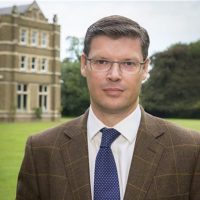
James Ker-Lindsay

James Ker-Lindsay is an academic and analyst specialising in conflict, peace, and security. Author of fifteen books, he has also worked extensively in government and policy. After starting his career at the Royal United Services Institute for Defence and Security Studies (RUSI), he served as a Senior Research Fellow and then as a Visiting Professor at the London School of Economics and has held a senior advisory role at the Foreign, Commonwealth and Development Office. He holds a PhD in International Conflict Analysis from the University of Kent. He currently runs a YouTube channel on international relations: http://www.youtube.com/JamesKerLindsay

In recent months, the Western Balkans have faced yet another wave of serious political and institutional crises. One of the most acute is unfolding in Serbia, where youth-led protests have continued for over six months since the tragedy in Novi Sad. Are you concerned about the situation in Serbia, and what are your expectations regarding a potential return to normalcy?
The protests in Serbia have been a significant development. Coming after the tragic collapse of the roof at the newly refurbished railway station in Novi Sad, Serbia’s second-largest city, they reflect the anger and exasperation many feel about corruption in the country. However, I think we also need to keep them in perspective, in several ways.
To start, I haven’t sensed that they pose an existential challenge to the government. It is very telling that the students have deliberately kept themselves separate from the political opposition, such as it is, in Serbia. Indeed, the protests seem to be as much against the political system in general as against the government.
Secondly, and related to this, the students don’t seem to have a clear plan of action. Additionally, I believe we need to be cautious in viewing the protests as a progressive, pro-European movement. Some of those protesting might be. However, it appears that others are, in fact, hard-line nationalists. It’s for all these reasons that many outside observers have been rather cautious about the protests, their purpose, and their significance.
 
Neighbouring Bosnia and Herzegovina is also becoming increasingly fractured, following a series of attacks on state institutions by the Bosnian Serb leadership in the wake of Milorad Dodik’s guilty verdict. Is it realistic to expect further escalation of tensions in the country, or even new pseudo-secessionist moves by Dodik? And how the Western powers should react to stabilise BiH?
Bosnia has been a perennial problem for Western policymakers. Although we saw considerable positive progress in the decade after the end of the war, including the creation of an integrated army, that progress started to stall from the mid-2000s. And for the last decade and a half, Bosnia has been mired in stagnation and increasing ethnic tensions. Although this can be attributed to a range of factors, including a fundamental lack of compromise and goodwill from all sides, the most significant burden of responsibility falls on Milorad Dodik, the Bosnian Serb leader. He has repeatedly stoked tensions in the country by threatening secession.
The critical thing to remember is that while he is a troublemaker, his threats essentially ring hollow. Secession is extremely difficult. The international community does not like parts of countries breaking away. Just consider Kosovo. Even with support from the United States, Britain, and France, it is still not recognised by half the international community and has been unable to secure UN membership. If Republic Srpska tried to break away, it would find itself isolated. I think it is essential, therefore, not to focus too much on this issue. By giving it greater significance than it deserves, it feeds tensions and fears within Bosnia. This then forces the Bosniaks to respond. Far better to work with Serbia to ensure that any attempted secession will be opposed by Belgrade.
That said, the one thing that does worry me is Hungary. Dodik has been building ties with Orban. This could prevent European unity on the issue. However, balanced against this, I think if a major crisis did erupt and Budapest tried to act as a troublemaker, the EU would find a way to circumvent it.
 
Meanwhile, the EU accession process appears to remain stalled, despite repeated promises from Brussels to accelerate it. At the most recent summit in Tirana of the European Political Community, discussions focused more on Ukraine and Moldova than on the Western Balkans. Do you believe the EU is genuinely committed to the region’s integration, or are we heading toward another five years of lost momentum under the new von der Leyen mandate? If yes, with which consequences?
Regrettably, the Western Balkans has fallen so far behind in EU accession. I recall that a decade ago, there was a widespread belief that Montenegro and Serbia would be full members by now. Montenegro was seen to be far advanced in its accession. And yet all that has disappeared.
I believe this is for several reasons. In part, it is based on the EU’s internal problems. Brexit caused a lot of issues. Meanwhile, we have seen the populist wave that has made enlargement more difficult for policymakers. But tied to this, there have also been concerns about whether the Western Balkans is ready to join. After Romania and Bulgaria, the EU aims to ensure that any new members are fully capable of meeting the club’s demands. For all these reasons, it is a problem with many causes.
The trouble is that it is a vicious circle. If the EU doesn’t show a genuine desire to take in the countries, there is little incentive for them to reform. And without reform, there is no desire to accept them. There needs to be a way to break this cycle. Indeed, I’d say it must be broken.
 
Finally, what is your view on the possibility that only Montenegro—and perhaps Albania—might join the EU by 2028–2030, leaving the rest of the region behind? Could this scenario seriously alienate public opinion in countries like Serbia, especially as support for EU membership continues to decline?
I have always thought that we should not tie countries together unless necessary. It is better to bring countries into the EU as and when possible. This is not only fair to the countries that make the required changes, but also sends a powerful signal that membership is possible when the conditions are met. In this sense, I think it makes sense to take in countries as and when they meet the conditions of the acquis communautaire, the EU’s body of laws.
As for Serbia, I would certainly like to see it join the EU. I don’t think we will have a truly stable Balkans until it does. And for what it is worth, I also think it should join NATO. I know that opinion polls show support is declining, but I think this is a complex issue shaped by numerous factors, including the war in Ukraine. Many Serbs are unhappy at what they see as double standards. This has also led to growing pro-Russian sentiment in the country, with all the problems this entails for regional security. This is a crucial issue that European leaders need to consider seriously, yet they have never done so. We desperately need a final settlement between Serbia and Kosovo, if only to perhaps start unlocking Serbia and bringing it on board as a full and constructive partner, rather than an awkward and problematic EU void at the heart of the Balkans.
In the meantime, the process of EU accession needs to continue, and it is vital to begin bringing in new countries, assuming they truly meet the conditions.


The Key Story

Strategic trends 

Serbian ammunitions to Ukraine, Moscow and Belgrade special relationship is shaken

The special relationship between Serbia and Russia — long seen as a point of tension for the European Union and the broader Western community, especially considering Belgrade’s declared aspiration to join the EU — seems to have sunk to a historic low in recent weeks, with potential serious consequences for the geopolitical scenario in the Balkans.
In a sharp and somewhat unexpected turn, Moscow has twice levelled accusations at Serbia, alleging that it has been supplying artillery ammunition to Ukraine through intermediaries in Eastern Europe. Russian officials have even gone as far as to suggest that Belgrade has betrayed its traditional ally — calling it, quite starkly, a “stab in the back”.
At the end of May, the Russian foreign intelligence service, SVR, made its first accusation against Serbia’s defence industry, alleging that it was sending weapons to Ukraine via countries members of NATO, such as the Czech Republic, Poland and Bulgaria, as well as through certain African states, whose names were not disclosed by Moscow. The stated aim of these weapons, according to Russia, was to cause harm to both Russian soldiers fighting in Ukraine and to civilians. Russian authorities went further, accusing individuals within the Serbian defence sector, along with those supporting them, of prioritising profit over loyalty, and of forgetting who their true friends and enemies were.
Then, towards the end of June, Moscow repeated its accusations, claiming once again that artillery ammunition had been supplied to Ukraine from Serbia, this time only through intermediaries based in Eastern Europe. It marked the second time in just one month that Russia had directly accused its longstanding ally in the Balkans. The Russian intelligence maintained that Serbian producers were fully aware of where their military goods would end up, and insisted that the weapons were being used against both Russian forces and civilians.
Serbian authorities appeared taken aback by the latest accusations, although it was not the first time that reports had surfaced suggesting that Serbian weapons and ammunition were making their way to Ukraine.
Already in 2023, The Guardian revealed that Serbia had either pledged to supply arms to Ukraine or had already done so, according to a leaked classified Pentagon document. One of the files, entitled “Response to Ongoing Russia-Ukraine Conflict”, assessed the stance of various European countries on military assistance and training. In it, Serbia was marked as having “provided or committed to provide lethal aid”, and was described as possessing both the “military ability” and the “political will” to do so in the future.
The following year, the Financial Times repeated the claims, reporting that Serbia had been quietly increasing its sales of ammunition to Western countries — supplies which ultimately contributed to Ukraine’s defence. This, despite Serbia remaining one of only two European nations that have refused to align with Western sanctions against Russia. According to estimates of Financial Times, Serbia’s indirect exports of ammunition to Ukraine, routed via third parties, had reached a value of approximately 800 million since the outbreak of the full-scale Russian invasion in 2022. President Aleksandar Vucic, when asked about the figure, acknowledged that it was broadly accurate, the daily reported. He described the matter as a commercial issue, maintaining that Serbia would not take sides in the war.
However, the latest developments, coupled with Russia’s open accusations, have placed Belgrade in a rather uncomfortable position. Serbia responded on both occasions by attempting to calm the criticism coming from Russia — a key ally for Belgrade, not least because Moscow supplies nearly all of Serbia’s gas but because, above all, Russia backs the Serbian stance against Kosovo’s independence.
Following the initial accusations from Moscow, Belgrade announced that Serbia and Russia agreed to carry out a joint investigation into claims that Serbian-made weapons had ended up in Ukraine. After Moscow reiterated that Serbian ammunitions are still ending up in Ukraine, Serbia claimed it has also moved to halt all ammunition exports, a decision taken by President Aleksandar Vucic personally. “We’ve halted literally everything, and we are supplying our army,” he stated at the end of June. Just hours after the president’s remarks, the Serbian Ministry of Defence announced that any future export of Serbian-made arms would require approval from the National Security Council as well as other relevant authorities.
The accusations from Russia that Serbia has supplied ammunition to Ukraine via third parties mark a historic low in their traditionally close relations and could have lasting consequences for Serbia’s geopolitical position.
Moscow’s public denunciation of Serbia as a “stab in the back” highlights the growing impossibility of Belgrade’s long-maintained balancing act between East and West. The crisis now places Serbia in an uncomfortable position, potentially risking Russian retaliation in key areas such as energy supplies and diplomatic backing on Kosovo. On the other and more positive side, the situation could push Serbia to gradually align more closely with the European Union, particularly if it wishes to keep its EU accession ambitions alive.
The coming months will be critical in determining whether Serbia can maintain its traditional policy of balancing or whether it will be forced to make a definitive strategic choice.

Further News and Views

Kosovo’s political stalemate continues
Sources: Balkan Insight, Kossev, Gazeta Express, Bloomberg
More than five months after Kosovo’s parliamentary elections, the country remained in political deadlock, with no new government and an Assembly still lacking its president, a prerequisite for starting the consultations for a new government. Despite the results being confirmed in March, repeated attempts to elect a speaker failed, stalling the formation of any governing coalition.
Since mid-April, the Assembly met almost 40 times, but each session ended in postponement, often within 48 hours. Vetevendosje, the party of the acting-PM Albin Kurti, which won the elections in February without winning an absolute majority, continued to support Albulena Haxhiu, outgoing minister of justice, for speaker, despite her repeated failure to secure enough votes, and later advocated for a secret ballot — an option which also lacked parliamentary backing.
President Osmani held multiple consultations with party leaders and minority representatives, but no breakthrough was achieved. Acting Prime Minister Kurti maintained that he could form a government once the Assembly was functional, standing by Haxhiu’s nomination. International partners urged all sides to prioritise governance over political disputes.
In late June, the Constitutional Court intervened, giving parliament 30 days to end the impasse.
Students’ protest in Serbia turns violent for the first time
Sources: BBC, Al Jazeera, Reuters
Some 140.000 people took to the streets of Belgrade in what became the largest protest in Serbia since March, as student-led demonstrations intensified calls for early elections. The protests, sparked by a deadly train station collapse in Novi Sad last November that killed 16 and was widely seen as a result of systemic corruption, have grown steadily since then. The 28 June rally saw central Belgrade flooded with demonstrators, with participants spilling into neighbouring streets. While police gave a far lower crowd estimate, independent observers confirmed the turnout as significantly higher. Students, who have been at the forefront of these actions, are continuing their months-long campaign of blockades and protests, demanding justice and institutional accountability. Unlike previous gatherings, which had remained largely peaceful, this demonstration descended into violence in the evening of the 28 of June. Riot police clashed with protesters, using batons and firing tear gas and stun grenades, after being attack by masked demonstrators.

EU - NATO

NATO’s Rutte confirms commitment to the Balkans
Sources: Vijesti, NATO, Insajderi
At the NATO summit held in The Hague, Secretary General Mark Rutte reaffirmed the alliance’s commitment to the Western Balkans, responding to questions about the region’s omission from the final declaration.
Rutte explained that the absence did not signal a shift in NATO’s stance and that the document was intentionally brief, aiming to focus on three core themes: defence production, increased spending, and continued support for Ukraine.
Addressing concerns directly, Rutte emphasised NATO’s ongoing presence in the Western Balkans through its peacekeeping mission KFOR in Kosovo and cooperation with EUFOR in Bosnia and Herzegovina. He pointed to his recent visits to the region and engagements with local leaders, including talks in Bosnia and Kosovo and a meeting with Serbian President Aleksandar Vucic in Brussels. He also underlined that NATO and the EU remained deeply involved in the region’s security and political stability.

ECONOMICS

World Bank slightly cuts GDP forecasts for the Balkans
Source: World Bank
The World Bank revised down its global growth forecast for 2025 to 2,3%, citing escalating trade tensions and policy uncertainty following the imposition of broad US tariffs. This marked a notable downgrade from the 2,7% forecast issued in January.
The Western Balkans are expected to see a slight slowdown, with GDP growth projected at 3,2% in 2025 before rising to an average of 3,6% in 2026–2027. Despite subdued euro area performance and persistent global trade policy risks dampening export prospects, domestic demand—particularly private consumption underpinned by strong real wage growth—is set to remain the key driver, notably in Kosovo, Montenegro, and Serbia.
The region’s close economic ties to the euro area leave it particularly exposed to weaker growth within the bloc, although Germany’s fiscal stimulus measures may soften the impact. Long-term prospects remain constrained by weak innovation performance, which continues to lag euro area standards.

Subscribe to our newsletter