What is likely to change in Hungary after the 2026 election, both domestically and in terms of Budapest’s broader political direction, including foreign policy?
I think what Peter Magyar calls a regime change is, in a sense, true. It is a kind of second regime change after 1989-90. Of course, one can debate which was more important – the fall of communism was internationally of enormous significance – but this time the fall of an illiberal populist system could also show other international actors that illiberal populism, even if it wins elections, does not necessarily last forever.
I hope the new government, with its overwhelming majority, will return Hungary to the norms and institutions of liberal democracy, and perhaps also renew them in a way that prevents illiberal populists from coming back. Regime change does not mean only institutional change, though that is very important. Magyar has a constitutional majority, so he can move very quickly – and he should, because the public mood can change in just a few months.
At the moment, there is a honeymoon period. His popularity has even grown since the elections, and that may continue for a while. But after a few months in government, people may become more dissatisfied, especially because of living standards and other issues.
Still, a lot can change in relation to the fight against corruption, public culture, political culture in general. The smear campaigns and propaganda machinery of the old regime may be abandoned, and Hungary could have a much more open-minded political discourse. Journalists may finally be able to do what they are supposed to do. Until now, around 90% of the media space was occupied by the government, and many of those people were propagandists rather than journalists. Now independent journalists may become critical of the new government too, as happens in a normal democracy. The hope is that Hungary will readjust to mainstream European norms.
On foreign policy, I think the same applies. The government’s pro-Russian stance will disappear. On Ukraine, I believe Magyar will adjust to the European mainstream, including the position of his political family, the European People’s Party. I see no reason for him to maintain an anti-Ukrainian stance. The anti-Ukrainian propaganda campaign has collapsed in Hungary; it never really worked. My prediction is that within half a year Magyar will show up in Kyiv, like other European leaders.
Who is really Peter Magyar? He emerged as a major challenger to Orban, but he came from Fidesz. Can we describe him as a sincere pro-European conservative, or how would you define him?
I would call him pro-European and pro-EU. Maybe he is not a federalist, but times have changed. He belongs to the mainstream. I am sure he is not Eurosceptic.
There may be some issues where he is more traditionally conservative, such as migration. On that, he may have specific positions, rather like the Polish centre-right government under Donald Tusk. But I do not think he will continue with anti-migration or anti-migrant rhetoric. There will be no more posters in Budapest attacking migrants. I think that is over.
I would describe him as a centre-right politician without very strong ideological positions. If I had to characterise him, I would say he is a moderate conservative, or even a liberal conservative, because most of his views are mainstream centre-right positions.
What stands behind him is a coalition of very different voters, who all wanted to get rid of Orban. That is why he became so strong in the election. All the other opposition parties evaporated, whether they withdrew or ran unsuccessfully. Anti-Orban voters who hated this regime after 16 years voted for him. This means his camp includes left-wing voters, centrists, liberals and more conservative people, though not extremists.
He is at the centre of this movement – not a coalition of parties, but a coalition of voters. One day, it may become more fragmented, and Hungary may have more pluralism. That is also part of the hope of this regime change.
At the moment, if Magyar wants to maintain this huge support for constitutional changes, he cannot be too conservative. His likely government also seems to show this more colourful, less ideological character. Even if he sometimes uses more conservative rhetoric than a liberal politician would, he will not ban Pride or attack LGBTQ communities. There are four Roma MPs in his ranks, so there may also be a much more positive rhetoric about minorities in Hungary.
Symbolically, there are already signs that this will be very different from Orban’s government. And if Hungary gets real competition in the economy, rather than proxies and oligarchs loyal to Orban, that will be a huge difference.
How hard will it be for Magyar to dismantle the power system Orban created over the past 16 years?
He has a very good starting point, partly because the whole Fidesz regime seems to be falling apart. Public television, and maybe even some very rich people who used to work for the regime, are now becoming more independent from it. That is one spontaneous development.
On the other hand, Magyar has a strong constitutional majority, so he can remove people from key positions including, perhaps, the president of the republic, whom he calls a puppet. With this majority, that may be possible.
There will be many debates. Fidesz will attack him and claim that what he is doing is unconstitutional and illiberal. Fidesz may suddenly start fighting for democracy. But for a while, people will not believe Orban. If the process takes too long, however, the mood may change. So, Magyar must move quickly.
Orban had strong international support, including from Trump and Meloni. What should we expect from him in the coming months? Will he disappear, or will he fight back?
He may disappear for the summer, but I am sure he will come back. There is very little chance that he will lose power inside Fidesz, though in politics one never knows after such a huge defeat. If he remains in control, which is more likely, he will come back and fight.
We do not know what will happen in four years. He may come back, just as Donald Trump came back. But internationally he will lose many friends. His dream of an illiberal international is now much further away than it was a year ago. Donald Trump is very unpopular in Europe, and Meloni has distanced herself from Trump. This whole illiberal conglomerate has become much weaker.
Orban was a pioneer and a hero for the extreme right. Now it is clear that everyone can be defeated. So it will not be easy for him. But it is too early to say he is out forever.
Magyar wants to introduce a law saying that if someone has served as prime minister for eight consecutive years, they cannot become prime minister again. But what if Orban one day wins a constitutional majority again? Hungary also needs electoral reform to prevent one party from gaining a supermajority in the future. Hopefully, this will be the last time.
However, even if Orban cannot become prime minister again, he could still use someone else as a puppet PM. That is a question for the future. I would be very cautious about saying he is gone forever. He is relatively young. Look at Trump: Orban still has many years for a possible comeback.
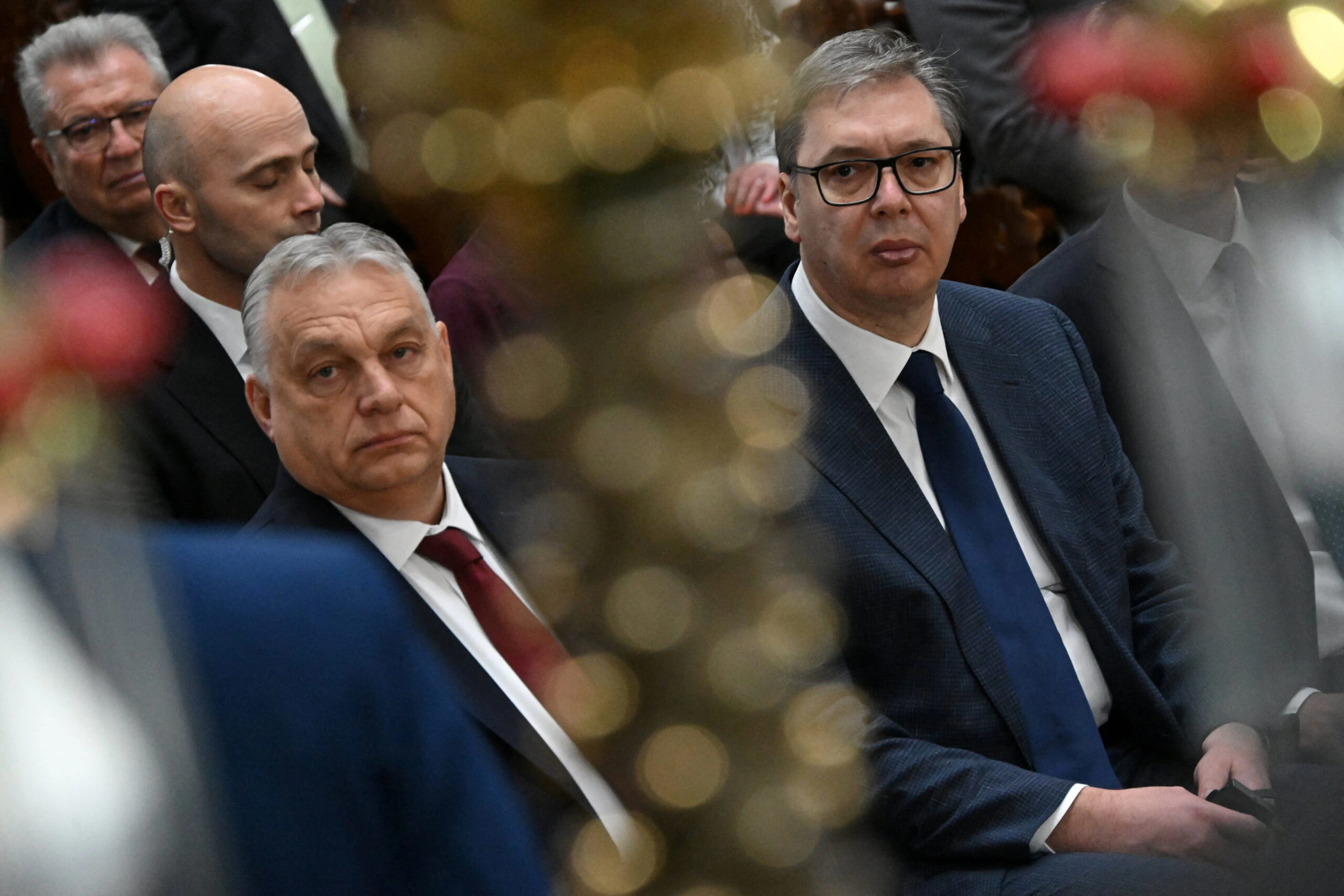
Orban was the closest EU leader to Vucic and Dodik in the Balkans. What changes do you expect Magyar to bring in relations with the Western Balkans?
Regarding the Balkans, this kind of political interference will stop. Magyar is not going to directly support Jansa, Vucic or their parties. But I think the Hungarian government will continue to speak in favour of EU enlargement for the Balkan countries. It will maintain pragmatic relations with Vucic, while probably developing friendlier relations with non-populist leaders.
Magyar has already said that geography is given (he was referring to Russia) and that Hungary should have pragmatic relations with Russia. I think he will also have that kind of relationship with Serbia and other countries. Why not have even friendlier relations where possible?
Magyar wants to strengthen Visegrad cooperation, perhaps even enlarging it with Austria. If that happens, and if he plays an important new dynamic role internationally, not only in domestic politics, he could build very good regional relationships. He might also send Nikola Gruevski, (the former PM convicted and escaped to Budapest, note of the author), back to North Macedonia, or elsewhere. That would show that he is a more liberal, but still strong, leader.