“The spirit of our endeavour is, To strive, to seek, to find and not to yield”
Alessandro Minuto-Rizzo, President
SEARCH
China and Russia continue vying for Central Asia
Central Asia
Source: newscentralasia.net
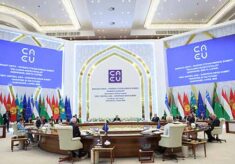
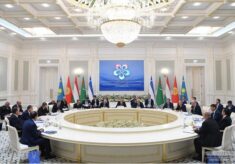
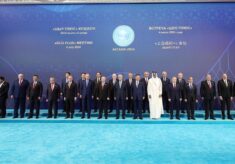
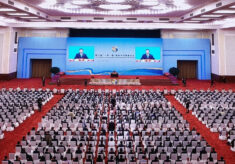
While the conflict in the Middle East is reshaping the global geopolitical landscape, in Central Asia China and Russia remain engaged in expanding their strategic influence in the region, preserving security relations, political dialogue and economic cooperation with the five Central Asian republics. From this perspective, President Putin’s visit to Kazakhstan and the meeting between Chinese President Xi Jinping and the Tajik head of state, Emomali Rahmon, reflect the shared need of the main regional powers and the Central Asian states to recalibrate their bilateral ties. Evidently these links are under the shadow of the recent Sino-Russian summit in Beijing (19-20th of May 2026), where interests, friendships, balances and balances were quite visible.
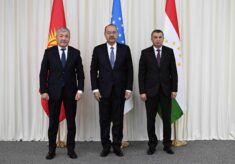
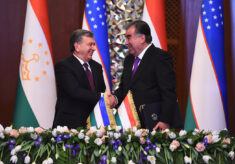
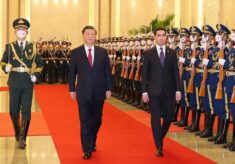
Tajik leader Emomali Rahmon paid an official visit to China on 11 May for a three-day state visit. Chinese President Xi Jinping warmly welcomed the Tajik president, upgrading bilateral relations through the Treaty on Permanent Good-Neighbourliness, Friendship and Cooperation and the Joint Statement on Deepening the Comprehensive Strategic Cooperative Partnership in the New Era. During the meeting, Beijing and Dushanbe signed 50 agreements that could generate up to $8 billion in investment. Providing stability and a favourable business environment to attract investment and financial support represents a key condition for improving the country’s economic development, gradually balancing its traditional reliance on Russia. Namely, Tajikistan is still a member of the Collective Security Treaty Organization and Moscow remains one of its leading trade and energy partners.
Rahmon also secured an assistance package worth $800 million from the Beijing-led Asian Infrastructure Investment Bank to implement major infrastructure projects in the country, including in the fields of energy, transport and road construction, water supply, digital and green technologies, and agriculture (“AIIB to allocate over $800 million to projects in Tajikistan”, Avesta Information Agency, 11 May 2026).
Given the strategic relevance of the Belt and Road Initiative for Beijing, Xi Jinping and Rahmon focused their joint efforts on strengthening security cooperation and regional stability in order to crack down on terrorism, separatism and extremism, the so-called “three evils” identified by the Shanghai Cooperation Organization when it was established in 2001 (Ministry of Foreign Affairs of the People’s Republic of China, President Xi Jinping Holds Talks with Tajik President Emomali Rahmon, 12 May 2026).
Potential instability along the Tajik-Afghan border and the need to preserve security in the Xinjiang region remain sensitive concerns for China, which decided to finance the construction of nine border facilities to improve patrols along the Tajik-Afghan frontier, while the authorities in Dushanbe denied the existence of a Chinese military facility in Gorno-Badakhshan (“China to Supply Tajikistan With Intelligence and Counterterrorism Equipment”, The Times of Central Asia, 2 June 2026).
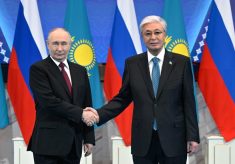
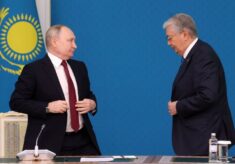
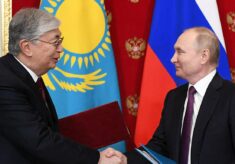
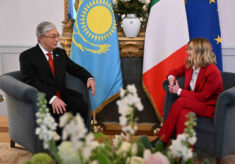
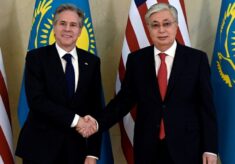
Cooperation on nuclear development was one of the key topics discussed during the Russian president’s visit to Kazakhstan at the end of May. Indeed, one year ago Astana commissioned the Russian energy company Rosatom to build Kazakhstan’s first nuclear power plant on the shores of Lake Balkhash. However, the estimated cost of the project ($16.4 billion) appears to be a significant burden for Russia, which is already engaged in a costly conflict with Ukraine (“Putin visit to Kazakhstan fails to clarify nuclear power plant financing issue”, Eurasianet, 29 May 2026).
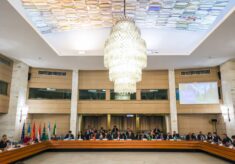
The main outcome of the meetings was the signing of a document on the “Seven Pillars” of friendship and good neighbourliness. Among these, the reference to a shared history and a shared border as a space of good-neighbourliness and cooperation could help downplay potential concerns related to a more assertive Russian policy, while the emphasis on “joint efforts to develop Eurasian integration” highlights the leading role of Russian-backed regional integration projects such as the Eurasian Economic Union and the CSTO (“Outcomes of Putin’s Visit to Kazakhstan: Nuclear Power Plant, Billions in Investments, and a Breakthrough in Autonomous Shipping”, News of Central Asia, 28 May 2026).
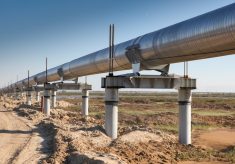
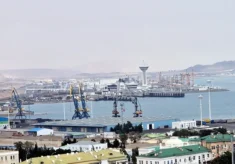
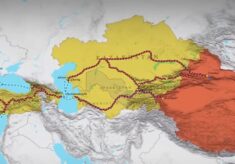
Kazakhstan’s commitment to preserving cooperation with Russia and supporting the economic and security integration projects promoted by Moscow must be reconciled with its enhanced dialogue with the EU and the USA, which have become increasingly attractive partners for Astana in pursuing its traditional multi-vector foreign policy. The Middle Corridor project, as well as the possibility of creating an alternative supply chain for critical minerals and rare earth elements extracted in Central Asia, could gradually erode Russia’s footprint in the region.
Share on
Fabio Indeo
PhD in Geopolitics. He is analyst and member of the Advisory Board at The Hague Research Institute and research fellow at the University of Siena. Moreover Indeo is geopolitical analyst for the Italian Institute for Asia.
This website uses cookies to enhance your experience. Some are essential for site functionality, while others help us analyze and improve your usage experience. Please review your options and make your choice.
If you are under 16 years old, please ensure that you have received consent from your parent or guardian for any non-essential cookies.
Your privacy is important to us. You can adjust your cookie settings at any time. For more information about how we use data, please read our privacy policy. You may change your preferences at any time by clicking on the settings button below.
Note that if you choose to disable some types of cookies, it may impact your experience of the site and the services we are able to offer.
Essential cookies and services enable basic functions and are necessary for the proper functioning of the website. These cookies and services do not require user permission according to GDPR.
This category includes all cookies, domains, and services that do not fall into the other specified categories or have not been explicitly categorized.