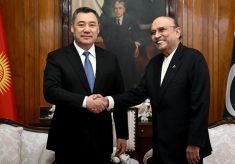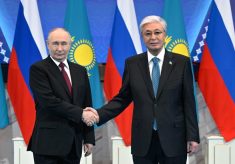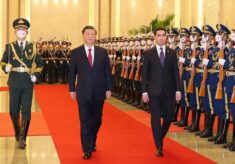
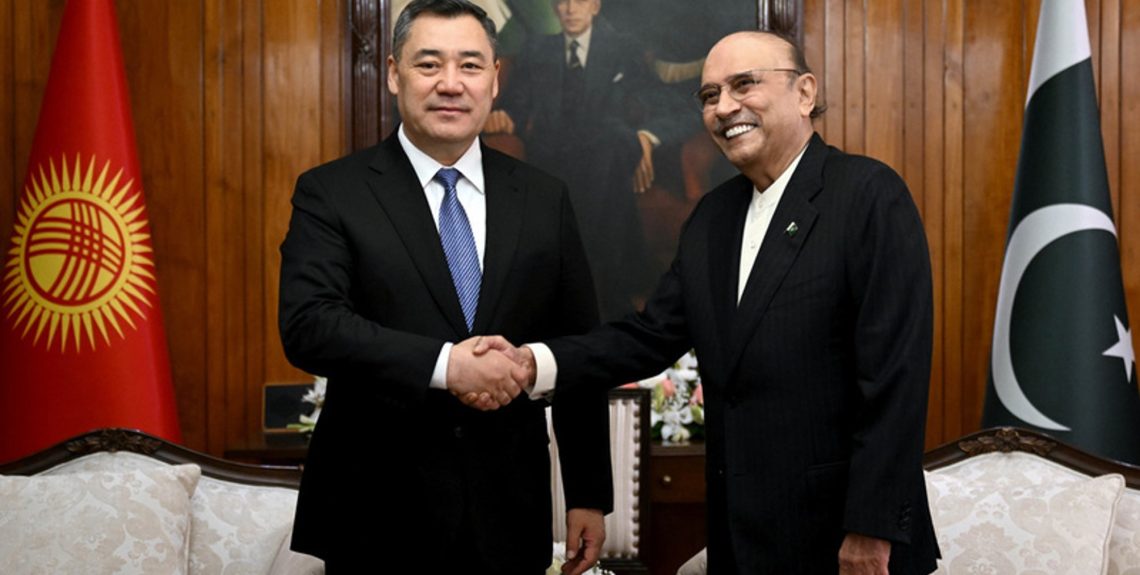
The official visit of the Pakistani President Asif Ali Zardari to Kyrgyzstan (the first by a Pakistani head of state in 21 years, 6th of July) represents another step in the reshaped geopolitical scenario in the region, within which new actors are emerging – or rather, are now committed to expanding political and economic ties in the region – with the aim at maximising their geographic position to progressively increase their visibility in Central-South Asia.
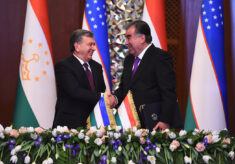
In the joint statement after the meeting, Kyrgyz President Sadyr Japarov and Pakistani President Zardari stressed that the geographical proximity and common historical heritage will provide the basis to build a strategic partnership between these countries, improving political dialogue, trade and investment cooperation (Official website President of the Kyrgyz Republic, “President Sadyr Japarov held talks with Pakistani President Asif Ali Zardari”, July 7, 2026): the two countries have also set a bilateral trade target of $200 million by 2027-2028 (“Kyrgyz-Pakistani trade turnover is planned to reach $200 million – expert”, OPEN KG, July 7, 2026).
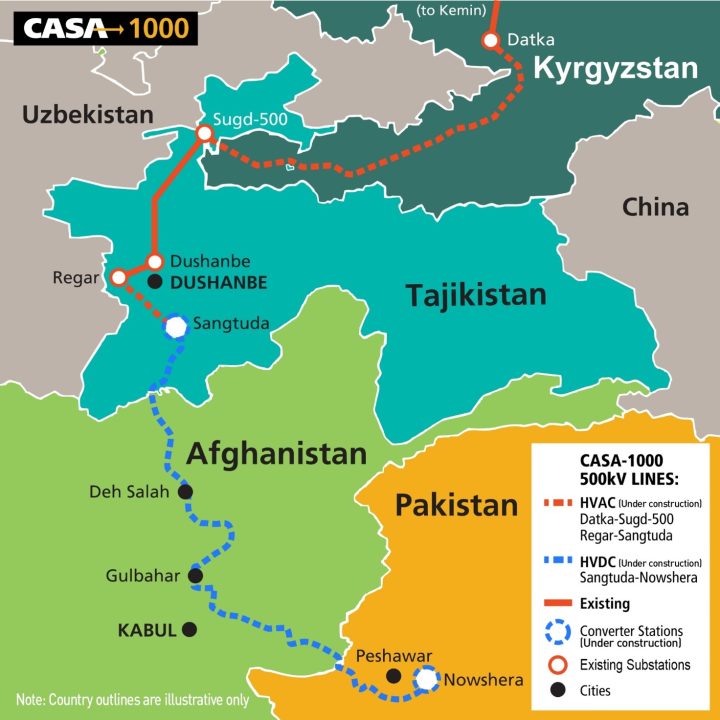
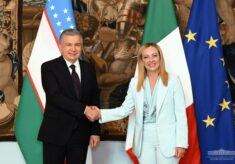
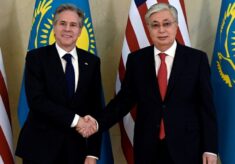
From Pakistan’s perspective, an improved cooperation and political dialogue with Kyrgyzstan along with the Central Asian republics will enhance Islamabad’s role as a new player in a geopolitical landscape traditionally dominated by other regional actors, as Russia and China. Building on the growing international legitimacy stemming from its mediation role in the Middle East conflict and the subsequent signing of the Memorandum of Understanding between the United States and Iran, Pakistan can further implement its “Vision Central Asia” policy, launched in 2021 and based on five pillars, namely political, trade and investment, energy and connectivity, security and defence, and people-to-people contacts (Prime Minister’s Office Islamic Republic of Pakistan, “Joint Declaration”, July 15, 2021). A clear geopolitical trend is emerging in the region driven by Central Asia’s willingness to bolster connections and intensify relations with Islamabad: in December 2025 Japarov visited Pakistan as well as Kazakh President Qasym-Jomart Tokayev and Uzbek President Shavkat Miromonovich Mirziyoyev in early 2026.
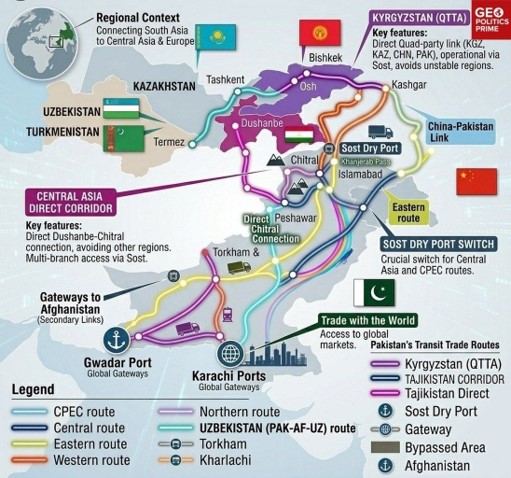
Pakistan could become the southern gateway of Central Asia, as a concrete option for these landlocked countries to successfully open an alternative route of export which will ensure access to the Arabian Sea and the Indian Ocean through the ports of Karachi and Gwadar, which benefits from massive Chinese investments as one of the most important terminals within the Maritime Belt and Road Initiative (H.A. Salam, “Zardari’s Rare Kyrgyzstan Visit Opens Pakistan’s Central Asian Route to the Sea”, The Caspian Post, July 22, 2026).
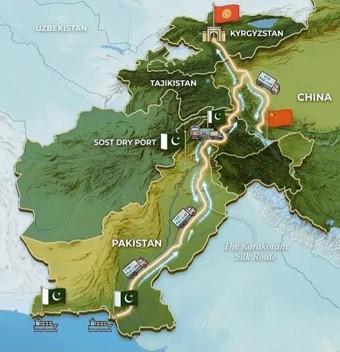
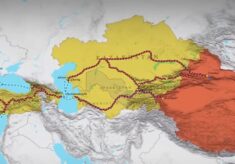
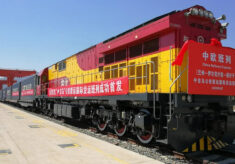
If Uzbekistan and Kazakhstan are interested in promoting trade corridors conceived to cross Afghanistan before reaching Pakistani ports, Kyrgyzstan aims to promote an alternative rail and road corridor to Pakistan which will bypass Afghanistan: in April, Bishkek’s government tested a pilot project which involved a single truck carrying goods from Kyrgyzstan to Karachi port in Pakistan using the Karakorum highway crossing China. The total length of the route is about 3.300 kilometres (from Bishkek the route runs through Torugart – Kashgar – Khunjerab – Islamabad – Karachi seaport) and appears safer compared to the transit in Afghanistan given the need for investment in infrastructure and the unresolved conflict between Pakistan and the Taliban.
For Kyrgyzstan this option represents a concrete opportunity to boost its economic independence through a transport corridor which will allow direct access to the international seaports (Ministry of Transport and Communication of the Kyrgyz Republic, “A new transport route on the Kyrgyzstan-China-Pakistan route has been successfully launched”, April 24, 2026), also considering that Bishkek is also committed to realise the China-Kyrgyzstan-Uzbekistan railway corridor by 2028, further allowing to overcome its condition of geographic landlocked status.