Despite the international tensions triggered by the escalating conflict in the Middle East, connectivity projects remain a key priority for the EU and the Central Asian republics to promote the development of resilient transit and energy corridors linking eastern and western markets. Among these projects, the Middle Corridor (or the Trans-Caspian International Transport Route, TITR) represents the most concrete option to fully engage Central Asian and Caspian countries in a framework of cooperation that emphasises their role as strategic hubs located in a region necessarily traversed by these alternative trade corridors.
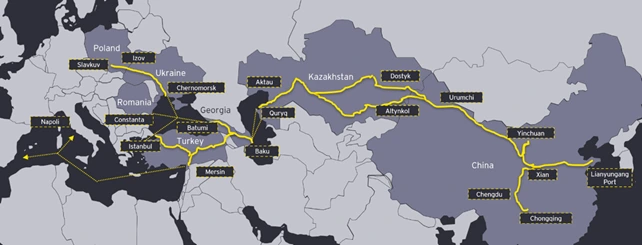
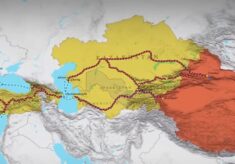
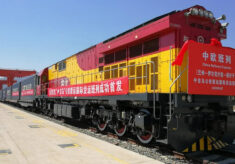
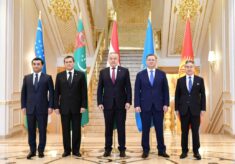
Ashgabat recently hosted a meeting of railway officials from Azerbaijan, Georgia, Turkmenistan and Uzbekistan to expand cooperation and promote the Middle Corridor. This initiative is conceived as a multimodal trade corridor (combining land and sea routes) that carries goods from Central Asia across the Caspian Sea, reaching European markets either by land (via the Turkish-Caucasian route) or by sea (from Georgian ports). The progressive involvement of Turkmenistan and Uzbekistan will contribute to the geographical diversification of this trade route, enhancing its strategic relevance as an alternative corridor to bypass Russian territory. Indeed, the European Commission originally identified Kazakhstan as the traditional linchpin on the eastern shore of the Caspian Sea, already crossed by railways and highways connecting the Sino-Kazakh border with the Kazakh Caspian ports of Aktau and Kuryk.
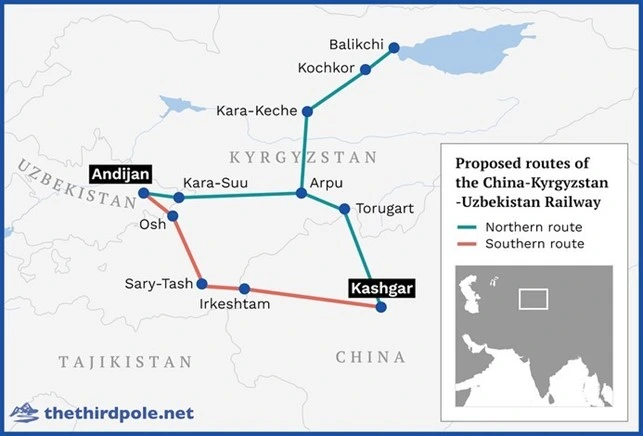
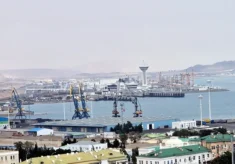
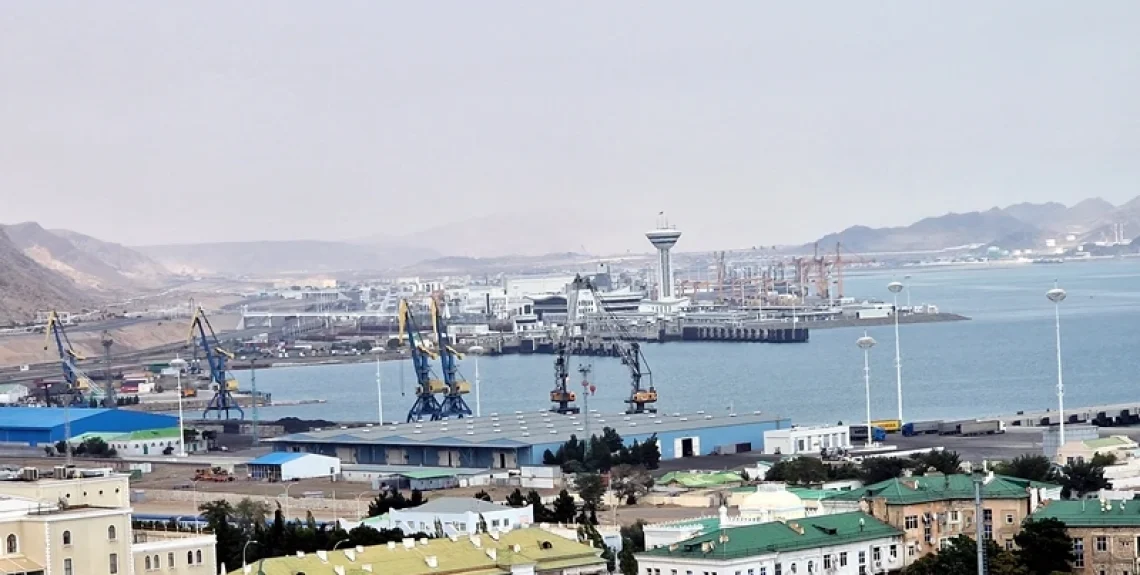
The project to open a southern branch of the Middle Corridor, within which the port of Turkmenbashi on the Caspian Sea will become the key hub, appears aimed at strengthening the connectivity architecture by offering a concrete transport alternative within this multimodal corridor. Uzbekistan is strongly committed to increasing its participation and role within the Middle Corridor, which would allow national goods to access international markets. In this perspective, Tashkent is betting on the realisation of the China–Kyrgyzstan–Uzbekistan railway, currently under construction and expected to be completed by 2028, which would provide a faster and shorter trade route connecting East Asia and European markets (V. Guliyev, Southern Branch of Middle Corridor Gains Eurasian Connectivity Momentum, Eurasia Daily Monitor, 17 March 2026).