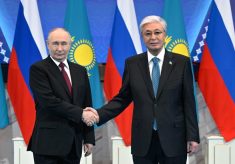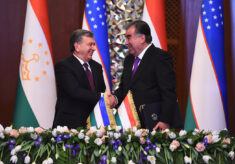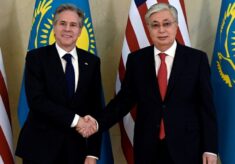
Kazakh President Tokayev’s visit to Pakistan in early February represents a milestone in relations between these Central Asian and South Asian states, sealed by the signing of a strategic partnership agreement intended to strengthen bilateral cooperation and lay the foundation for regional economic integration and stability.
Pakistani Prime Minister Shehbaz Sharif described the joint declaration as a historic moment in relations between two brotherly nations pursuing the common goal of peace, progress and prosperity, while the Kazakh president referred to Pakistan as a reliable and strategic partner (Pakistan Observer, Pakistan, Kazakhstan forge strategic ties, aim for $1bn trade in next one year, 3 February 2026).
This official visit marks a historic turning point in the Asian geopolitical landscape and a significant diplomatic rapprochement within the evolving multilateral system of international relations. The two nations share deep cultural and religious ties. In this context, Pakistan and Kazakhstan have decided to strengthen bilateral cooperation, with positive implications not only in the economic and energy spheres but especially in regional connectivity, security and political dialogue.
During the visit, a five-year economic and trade roadmap was signed, alongside 37 memoranda of understanding aimed at bolstering cooperation in various sectors, including trade, investment, energy, education, connectivity and climate change. The objective is to expand bilateral trade from $250 million to $1 billion within the next two years.
Pakistan exports textiles, pharmaceuticals, surgical instruments, leather goods and agricultural products to Kazakhstan, while Kazakhstan exports wheat, minerals, oil and other raw materials to Pakistan. The aim is to leverage this considerable potential through the creation of joint investment mechanisms and the strengthening of the financial framework for cooperation. In this regard, Samruk Kazyna Sovereign Wealth Fund and Pakistan’s Fauji Group of Companies agreed to establish a joint investment platform to identify and implement projects in both countries (D. Omirgazy, Kazakhstan, Pakistan Sign 32 Commercial Agreements to Deepen Strategic Economic Cooperation, The Astana Times, 5 February 2026). Astana and Islamabad also intend to enhance digital cooperation by promoting collaboration in the fields of artificial intelligence, cyber security and e-government.
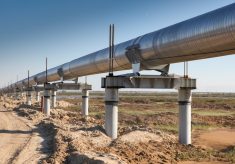
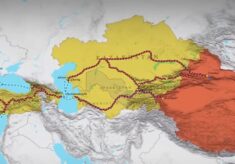
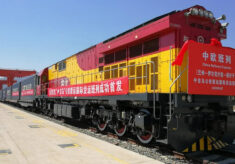
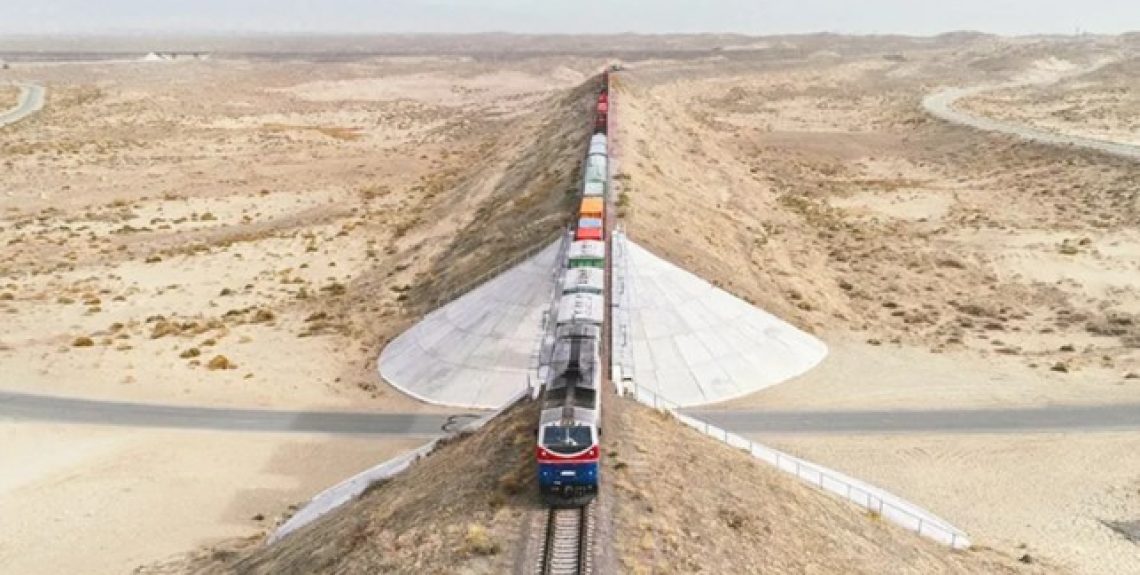
Infrastructure connectivity has become a strategic priority within the Kazakhstan–Pakistan partnership, with particular emphasis on developing a railway corridor linking Central Asia to the Indian Ocean and the Arabian Sea. This would ensure Pakistan profitable access to Eurasian markets, while providing Kazakhstan with the strategic opportunity to open a maritime export route to international markets. For both nations, the corridor forms part of a broader diversification strategy through the development of alternative routes to the Middle Corridor (for Kazakhstan) and the China–Pakistan Economic Corridor, a flagship project of the Belt and Road Initiative promoted by Beijing and centred on the port of Gwadar.
One should note that this project complements others existing, as detailed here, and is essential for facilitating access to at least three landlocked countries, especially Afghanistan, whose direct road connection across the country is not even a highway and whose Ring Road is only partially a highway. Moreover, from a strategic security point of view, these projects count on a progressive stabilisation of Indo-Pakistani relations (and also of the Afghan situation), due to the vulnerability of the infrastructure and the high impact damage that can be caused.

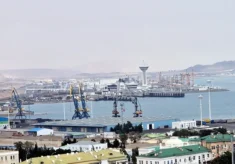
As a landlocked country, Kazakhstan seeks to promote and develop a new southward trade route to expand access to international markets. The $7 billion rail corridor project also involves Turkmenistan and Afghanistan and will focus on the Pakistani ports of Karachi and Gwadar as maritime hubs, guaranteeing lucrative transit rights for the government in Islamabad and reinforcing Pakistan’s role as a regional trade linchpin.
During his recent visit, Tokayev emphasised the construction of a rail link in Afghanistan between Herat and Turgundi (Turkmenistan), a key infrastructure segment connecting Central Asia to South Asia through the port of Karachi. Astana has committed to investing in the Turgundi–Herat–Kandahar–Spin Boldak railway segment, which could potentially be integrated into the International North–South Transport Corridor (INSTC), a project that also involves Russia (A. Saini, Where Do India and Pakistan Stand in Kazakhstan’s Southward Connectivity Push?, The Diplomat, 20 February 2026).