“The spirit of our endeavour is, To strive, to seek, to find and not to yield”

Alessandro Minuto-Rizzo, President

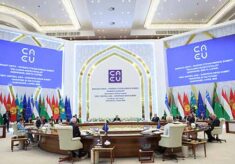
The UN Resolution on Afghanistan and the constructive role of the Central Asian republics

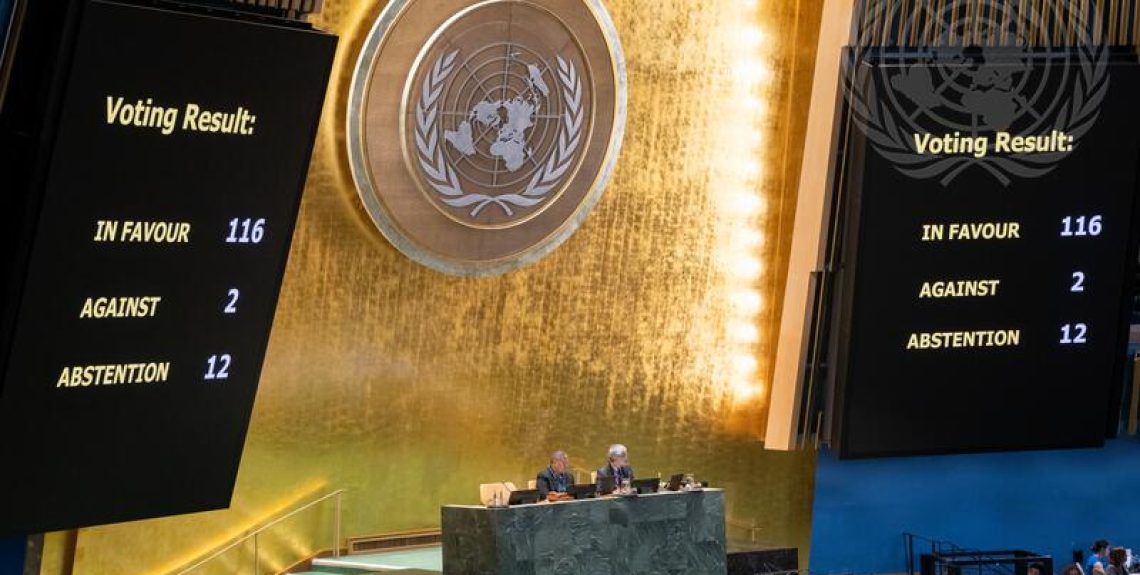
Source: media.un.org
The Afghanistan’s resolution adopted by the UN General Assembly in early July appears to legitimise the efforts of the Central Asian republics, which have focused on dialogue and cooperation with the Taliban government following its rise to power in 2021. The resolution emphasises “the crucial importance of promoting constructive and sustainable regional cooperation” in ensuring the stabilisation and development of Afghanistan (UN General Assembly, The Situation in Afghanistan, 27 June 2025).
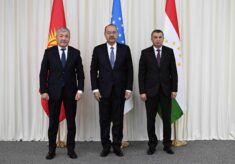
Although major powers with strategic interests in the region abstained (Russia and China) or voted against (the United States), the five Central Asian nations voted in favour, openly supporting a resolution that recognises their efforts to engage with Afghanistan through political dialogue. This approach allows for diplomatically addressing key regional concerns, such as water management, particularly in relation to Kabul’s project to construct the Qosh Tepa canal, which would reduce the flow of the Amu Darya, one of Central Asia’s main rivers.

Source: Jamestown Foundation


The resolution also underscores the importance of the United Nations Sustainable Development Goals Centre for Central Asia and Afghanistan, which will be hosted in Almaty, Kazakhstan. The Centre is expected to play a significant role in coordinating regional development projects among various relevant stakeholders.
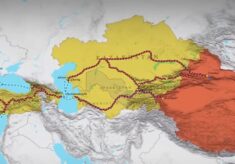
Since 2021, Central Asian states have adopted a pragmatic approach in their relations with the Taliban, aiming at engaging Afghanistan in the development of a regional cooperation framework, focussed on strengthening trade and promoting various infrastructural connectivity projects. Afghanistan, in fact, represents a geographical hub for North–South and East–West transport routes, consisting of road and rail infrastructure corridors that, with the needed development, could attract a growing interest from regional and international players.

Source: https://www.andrewgrantham.co.uk/afghanistan/tag/map/. Except the existing rail, all others are projects.


Source: Unruh, Jon & Shalaby, Mourad. (2018). Road infrastructure reconstruction as a peacebuilding priority in Afghanistan: Negative implications for land rights. Research Gate.


Uzbekistan, Turkmenistan, and Tajikistan share borders with Afghanistan, underscoring how regional stability goals are closely tied to the need for security and the desire to enhance economic and trade cooperation with the country. Uzbekistan, for instance, benefits from several favourable conditions, such as the existence of the only Central Asia–Afghanistan railway corridor (Termez–Hairaton–Mazar I Sharif, operational since 2011) and solid bilateral trade relations (including electricity supply and other products). Trade in 2024 exceeded $1,1 billion, marking a 25% increase compared to 2023 (Uzbekistan–Afghanistan Trade Reaches $1.1 Billion, Tolo News, 7 February 2025).
Afghanistan therefore plays a key role in opening new trade routes that bypass Russian territory, forming part of a broader strategy to diversify transport corridors. Tashkent is supporting the Kabul corridor to enable its goods to transit through Afghanistan and reach international markets via Pakistani ports on the Indian Ocean. At the same time, Uzbek authorities are also interested in establishing an Afghanistan–Iran rail corridor, by extending the railway line to Herat, to make use of Iranian ports as gateways to Middle Eastern markets.

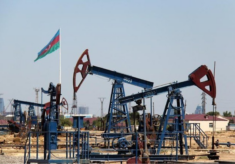
Kazakhstan and Turkmenistan have also shown interest in the trans-Afghan corridor, having signed an agreement with Kabul for a $500 million investment to construct a railway from the Turkmen–Afghan border to Pakistani ports on the Indian Ocean. This would provide access to Southeast Asian and Gulf markets (F. Indeo, TAPI Gas Pipeline: A Paradigm of the Central Asian Pragmatic Approach Toward Taliban, Trends Insights, 28 April 2025).
At the same time, the UN resolution emphasises the need for the Taliban to address several existing issues and distortions, including women’s rights, the fight against domestic terrorist groups, compliance with international agreements, and the need for greater inclusiveness and representation within the national government, all of which could hinder reliable cooperation among the parties.
Despite improved economic relations and dialogue between political authorities, the Central Asian nations have not yet officially recognised the Taliban government in Kabul. Moscow has recently taken this step, driven by geopolitical and economic considerations aligned with those of the Central Asian republics. For Russia, Afghanistan could become a crucial partner in strengthening the International North–South Transport Corridor (INSTC), which also involves the Central Asian states, and in developing an energy export route from Russia to Southeast Asian countries, potentially connecting to the TAPI gas pipeline project.
This infrastructure was originally conceived to export Turkmen gas through Afghanistan to India and Pakistan, but it now also serves Russia’s diversification strategy aimed at compensating for reduced exports to Europe (N. Smagin, Russia Is the First Country to Recognise Afghanistan’s Taliban Government. Why?, Carnegie Politika, 10 July 2025).

Share on

Archive

JANUARY

FEBRUARY

MARCH

APRIL

MAY

JUNE

JULY

AUGUST

SEPTEMBER

OCTOBER

NOVEMBER

DECEMBER

Subscribe to our newsletter