Italian Prime Minister Giorgia Meloni’s official visit to Uzbekistan and Kazakhstan at the end of May clearly reaffirmed the consistent commitment and tangible interest of the Italian government in Central Asia, which is considered a priority in Italian foreign policy.
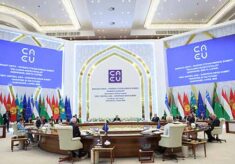
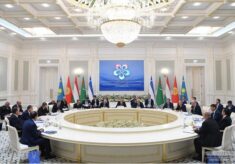
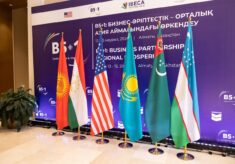
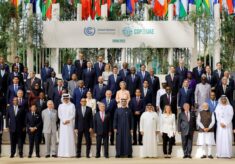
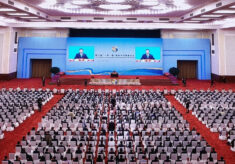
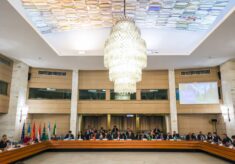
During the two days of meetings, Meloni met with all five presidents of the Central Asian republics, with whom our country has initiated a fruitful bilateral and multilateral dialogue, through an enhanced version of the 1+5 format. In 2019 Italy became the first European country to propose this regional dialogue forum with Central Asia, and while the previous three meetings were held at ministerial level, involving the foreign ministers of the participating states, the recent forum was attended by Heads of State.
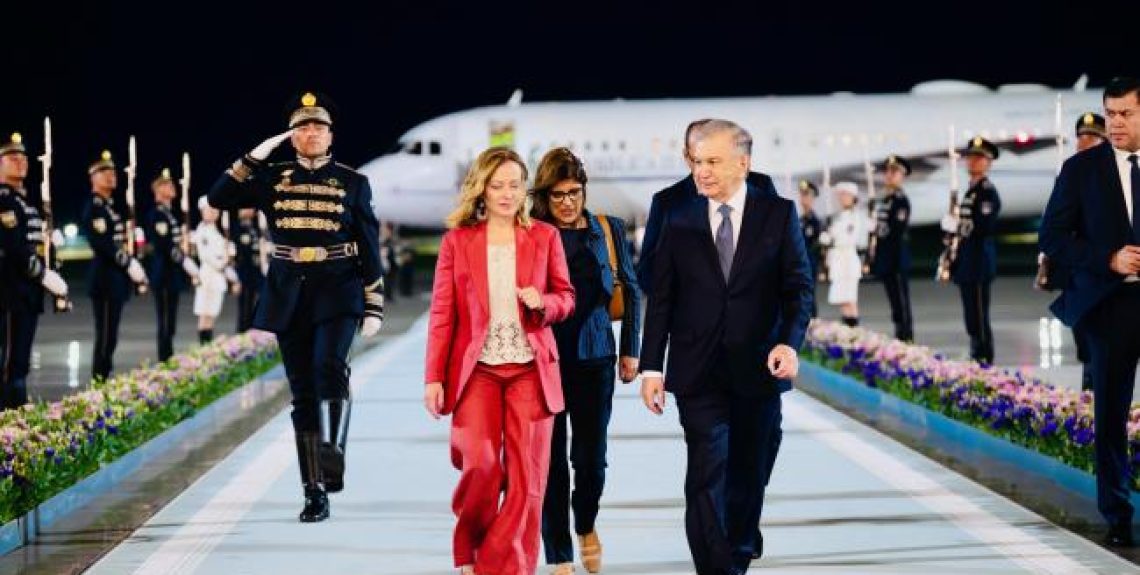
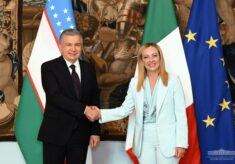
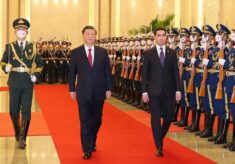
During the meeting with Uzbek President Mirziyoyev in the historic city of Samarkand, relations between Rome and Tashkent were further strengthened on the basis of the strategic partnership signed in 2023. In the bilateral meeting, the parties signed 14 agreements amounting to an estimated €3 billion in investments, covering areas such as the promotion and protection of investments, a key safeguard aimed at offering greater protection to Italian companies choosing to invest in Uzbekistan, cooperation on critical raw materials (in light of Uzbekistan’s vast mineral reserves), academic partnerships, and a Memorandum of Understanding on cooperation in the nuclear energy sector between the Atomic Energy Agency of Uzbekistan and Ansaldo Energia (“Uzbekistan and Italy strengthen strategic partnership: results of Giorgia Meloni’s visit to Samarkand”, News Central Asia, 30 May 2025).
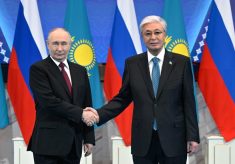
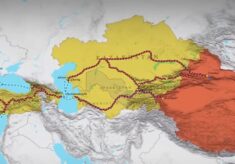
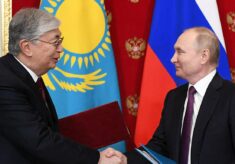
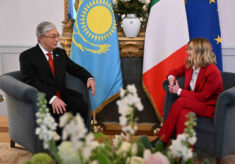
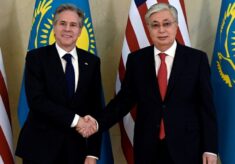
After Uzbekistan, the second stop of the Italian Prime Minister’s diplomatic tour was the Astana International Forum, during which she held a bilateral meeting with Kazakh President Tokayev to discuss cooperation on key issues such as critical raw materials and rare earths, connectivity, and the promotion of the Middle Corridor. During the visit, Rome and Astana signed agreements worth €4 billion, covering the agri-food sector, water management, and trade. As he had done during his official visit to Rome in January 2024, President Tokayev renewed his invitation to Italian companies, expressing hope that they would play an increasingly active role in implementing connectivity projects and alternative trade corridors crossing Kazakhstan, namely the Middle Corridor or Trans-Caspian International Trade Route. (Italian Government, Presidency of the Council of Ministers, Visit to the Republic of Kazakhstan and Central Asia–Italy Summit, 30 May 2025). Furthermore, Tokayev emphasised that Italy is Kazakhstan’s third-largest trading partner and the leading one within the European Union, with a trade volume reaching 20 billion US dollars.
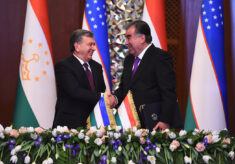
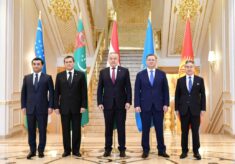
On the sidelines of the first Italy–Central Asia Summit at Head of State level, the Prime Minister held a series of bilateral meetings with the President of the Kyrgyz Republic, Sadir Japarov; the President of the Republic of Tajikistan, Emomali Rahmon; and the President of the Republic of Turkmenistan, Serdar Berdimuhamedow (Italian Government, Presidency of the Council of Ministers, Bilateral Meetings in the Margins of the Italy–Central Asia Summit, 30 May 2025).
Meloni officially invited the Turkmen President to visit Rome in October, where he will attend an archaeological exhibition focused on Turkmenistan. The visit aims to further strengthen bilateral ties in areas of mutual interest, including through the organisation of a business forum involving national companies and encouraging investment in this Central Asian republic. Despite Italy’s regionally inclusive approach, Uzbekistan and Kazakhstan remain its key partners in Central Asia, both as the largest and most promising markets and as primary recipients of investment. Moreover, Tashkent and Astana act as powerful drivers of regional trade integration and enhanced cooperation, having been the main promoters of the Consultative Meeting of the Heads of State of Central Asia, regularly held since 2018.
Indeed, the relevance of this regional format has been highly emphasized in the joint declaration of the Heads of State of Central Asia and the Italian Prime Minister, recognizing that “(the Consultative Meetings) play a key role in advancing regional cooperation, promoting multilateral engagement, fostering peace and stability, achieving sustainable development, and responding collectively to the region’s current challenges” (“Joint Declaration by the Heads of State of Central Asia and the President of the Council of Ministers of the Italian Republic following the First “Central Asia–Italy” Summit”, News Central Asia, May 30, 2025).