“The spirit of our endeavour is, To strive, to seek, to find and not to yield”

Alessandro Minuto-Rizzo, President

Towards the Central Asian Community

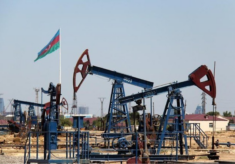
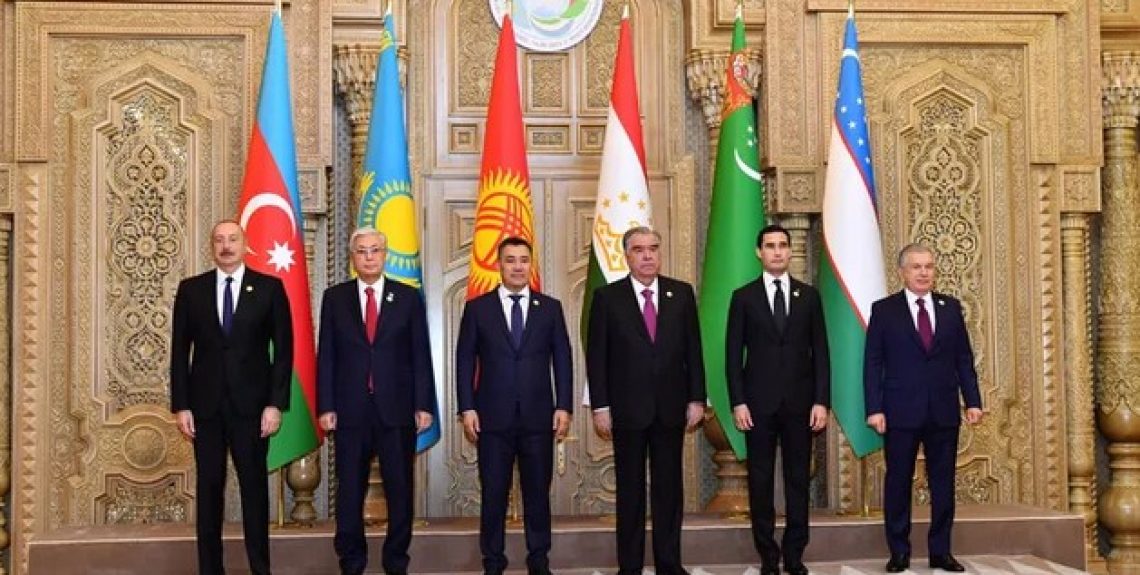
Source: Azerbaijan Presidency.
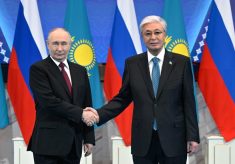
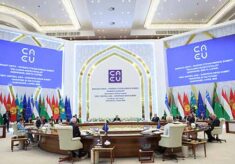
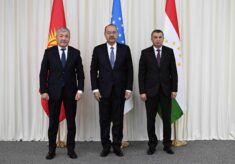
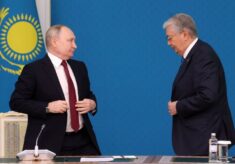
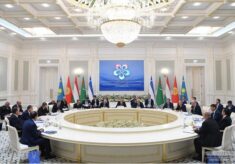
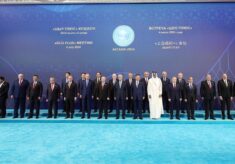
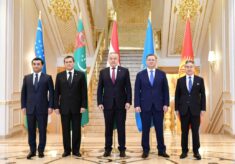
The annual consultative meeting of the Central Asian heads of state took place this year in the Uzbek capital, Tashkent, and was marked by two important developments destined to have a significant impact on the evolution of this dialogue format, inaugurated in 2017 following the new atmosphere of cooperation among the Central Asian republics promoted by the Uzbek President Shavkat Mirziyoyev and the Eurasian policy traditionally supported by Kazakhstan.
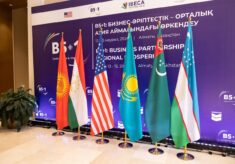
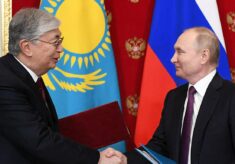
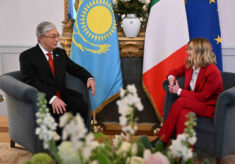
During this seventh edition of the meeting, the Uzbek president expressed his firm desire to move swiftly forward in the process of regional economic integration, promoting the creation of a new organisation, the Central Asian Community. Building on the success of the cooperation format based on a regional approach (1+5, with the United States, the EU, China, Russia, but also Italy, the first European country to start this cooperation format with Central Asian republics in 2019), the Uzbek president argued that the time has come to institutionalise the meeting in a permanent organisation with a secretariat and a rotating presidency.
Its primary objective would be to strengthen cooperation in the economic sphere, coordinate investment, and promote the establishment of transport and energy infrastructures to enhance regional connectivity and integration, devoting particular attention to the management and resolution of shared issues such as the effects of climate change, the shortage of water resources, a potential source of regional conflict, and the prevention of terrorist threats (President of the Republic of Uzbekistan, Address by the President of the Republic of Uzbekistan Shavkat Mirziyoyev at the Seventh Consultative Meeting of the Heads of State of Central Asia, 16 November 2025).
Moreover, the adoption of the Conception of Regional Security based on the Catalogue of Risks appears to pave the way for future joint engagement to begin building a regional Central Asian security architecture, which will require the necessary coordination of foreign policies to address common challenges and threats more effectively (F. Tolipov, “Eclectic Regionalism in Central Asia? The 7th Consultative Meeting of Heads of States”, Central Asia–Caucasus Analyst Institute, 3 December 2025).
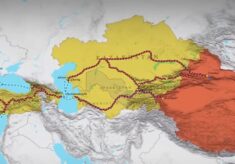
Source: Topchubasov Center. A geopolitical sketch of the 5+1 political logic.


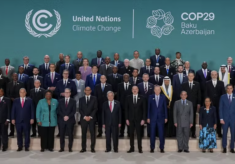
The decision to extend participation in the Central Asian Consultative Meeting to Azerbaijan (starting in 2026) represents the second key innovation, one that is likely to have strategic repercussions across several dimensions. From a geographical perspective, Azerbaijan is part of the South Caucasus (not Central Asia) and is located on the western shore of the Caspian Basin, unlike Kazakhstan and Turkmenistan (and the other non-littoral Central Asian countries) situated on the eastern shore, bordering China. However, from historical, cultural, religious, and linguistic perspectives, Azerbaijan boasts deep ties with Central Asia, conditions that legitimise the proposed enlargement. Indeed, this decision appears to be motivated by the already extensive cooperation between Azerbaijan and the Central Asian republics, which have become strategic partners in several initiatives and projects across multiple domains.
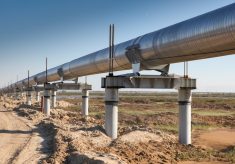
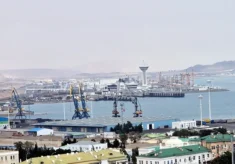
Azerbaijan represents the main linchpin of the Middle Corridor; a project aimed at transporting goods from Asia to Europe via the Caspian Sea, a logistical option in which the Central Asian republics are increasingly interested as they seek to open new markets and mitigate the constraints of being landlocked. In the energy sector, Azerbaijan is a key hub for Turkmen gas and Kazakh oil in an export diversification strategy geared towards European markets. In the renewable energy sphere, Kazakhstan and Uzbekistan signed an agreement with Baku in 2025 to export clean electricity (produced from renewable sources) and green hydrogen across the Caspian Sea to Azerbaijan, potentially using the Green Energy Corridor promoted by the European Commission to reach European markets.
The enlargement of this regional bloc will imply a significant geopolitical transformation in relations with external actors, laying the foundations for a renewed version of cooperation in the 1+6 format. A lasting phase of cooperation among the Central Asian republics therefore appears to be emerging, and they have welcomed the Uzbek president’s strategic initiative to strengthen pragmatic and voluntary collaboration aimed at creating a unified area of cooperation between the two shores of the Caspian (Uzbek president issues call for creation of “Central Asian Community”, Eurasianet, 17 November 2025).
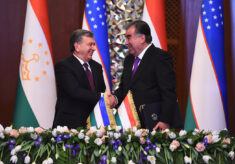
The current level of cooperation and dialogue among the Central Asian states reflects their shared interest in maximising the strategic gains derived from the promotion of connectivity and energy projects. However, the institutionalisation of this regional cooperation does not imply that these countries are ready to pursue a deeper integration process, which could be perceived as a potential challenge to their national sovereignty.
Share on

Archive

JANUARY

FEBRUARY

MARCH

APRIL

MAY

JUNE

JULY

AUGUST

SEPTEMBER

OCTOBER

NOVEMBER

DECEMBER

Subscribe to our newsletter