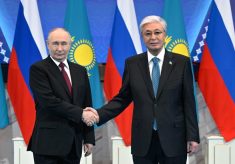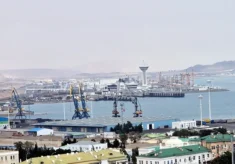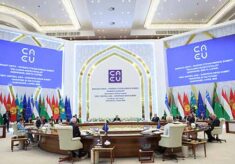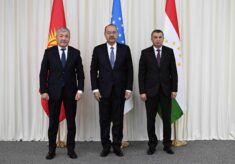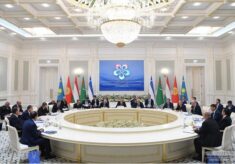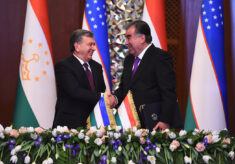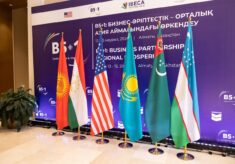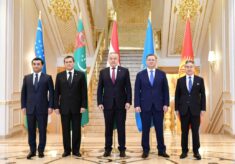
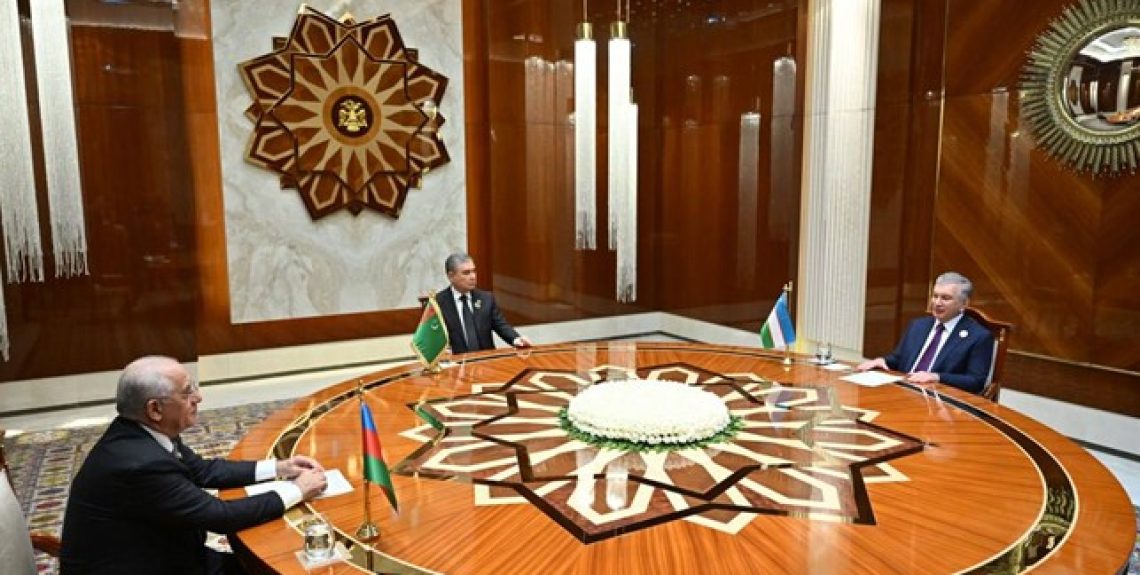
In late August, Turkmenbashi’s port city hosted an important trilateral meeting involving: Turkmen President Berdimuhamedov, Uzbek President Mirziyoyev, and Azerbaijani President Aliyev. This meeting demonstrates the growing desire to promote and develop forms of regional cooperation in several fields, through an institutional dialogue aimed at strengthening the role of these nations as “middle powers” in international relations. The renewed interests of external players (EU, USA) to bolster the geostrategic role of the Caspian Sea region as a trade and energy hub between East and West further pave the way for this multipolar trend.
During the meeting, the three presidents primarily discussed cooperation in the fields of energy, transportation, trade, logistics and connectivity, formalising several agreements aimed at upgrading infrastructures and developing interconnections between the Caspian Basin and Central Asian nations, thereby boosting the international relevance and attractiveness of the region as a corridor for alternative infrastructural routes (Ministry of Foreign Affairs of Turkmenistan, Trilateral meeting in the format “Turkmenistan – Azerbaijan – Uzbekistan”, August 23, 2025).

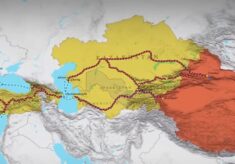
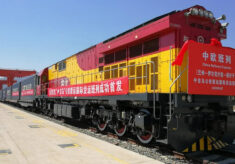
Regarding connectivity, the three nations are fully involved in the development of the Trans-Caspian International Transport Route (Middle Corridor): Baku acts as a logistics hub connecting East and West, while Turkmenistan serves as an alternative (and geographically parallel) route to Kazakhstan for the transport of goods from Central Asia to Europe. On the other hand, Tashkent supports the Middle Corridor as it represents a key trade and export route option, which would be connected to other infrastructure projects promoted by Uzbekistan, such as the China-Kyrgyzstan-Uzbekistan railway corridor. As President Mirziyoyev noted in his speech, Uzbekistan is geographically more distant from the Caspian Basin – the Middle Corridor’s strategic linchpin – compared to Turkmenistan and Azerbaijan and is forced to transit through Kazakhstan or Turkmenistan to access maritime routes. This situation entails increasing costs and high tariffs due to reliance on freight transit that negatively impacts transport capacity.
This dependence can be overcome by promoting strengthened regional cooperation and harmonising procedures (“Uzbekistan, Turkmenistan, and Azerbaijan hold trilateral meeting to discuss regional cooperation”, Kun.uz, August 5, 2025). Furthermore, the parties are closely examining the potential of the new transport corridor between Azerbaijan and Turkey through Armenia (Zangezur Corridor), which, if implemented, could represent an alternative route within the Middle Corridor to the traditional route crossing Georgia, if local political conditions allow (“Azerbaijan, Turkmenistan, and Uzbekistan Strengthen Regional Cooperation Across Multiple Sectors in Turkmenbashi”, Caucasus Watch, August 25, 2025).

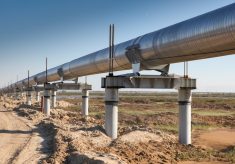
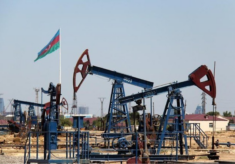
Concerning energy, President Berdimuhamedov’s announcement to commission the construction of a 1,5 MW power plant on the Caspian coast to export electricity to Europe is significant, as it logically complements the tripartite agreement among Baku, Astana, and Tashkent to build an electricity interconnection between the two shores of the Caspian Sea to transport “green” energy (produced from renewable sources) from Azerbaijan to European markets, using the Green Energy Corridor promoted by the European Commission (“Berdimuhamedov: New power plant in Caspian Sea will strengthen energy partnership with Azerbaijan”, Report Az, August 25, 2025). Following the 2021 agreement on the Caspian Dostluk field, the easing of bilateral relations between Azerbaijan and Turkmenistan could facilitate Ashgabat’s involvement in the implementation of the Southern Energy Corridor, exporting natural gas along the Trans-Caspian route.