As hybrid threats reshape the global security landscape, traditional alliance models are proving insufficient for managing risks that fall below the threshold of armed conflict. Nowhere is this more evident than in the maritime domain, where deniable actions, such as infrastructure sabotage, uncrewed system incursions and proxy naval activity, can impose strategic costs without triggering conventional responses. For NATO and the Gulf Cooperation Council (GCC), defence diplomacy offers a practical tool for navigating this challenge.
Defence diplomacy is best understood as the peacetime use of military engagement to build trust, improve interoperability, and shape strategic alignment. Unlike formal alliances, it relies on flexible instruments, tailored in advance: education, training, exchanges and structured dialogue. In politically sensitive environments such as the Gulf, this flexibility in an indispensable strength.
NATO, whose third core task is indeed cooperative security, has further increased its activity in the defence diplomacy sector as part of its broader response to hybrid threats. Capacity-building, professional military education, and multinational experimentation have become key enablers of resilience. In the maritime domain, these efforts are complemented by initiatives that integrate data, autonomous systems, and cross-domain awareness to protect critical infrastructure and deter grey-zone coercion.
The GCC, by contrast, remains institutionally fragmented at sea. While individual Gulf states possess advanced naval capabilities, the absence of shared maritime domain awareness, interoperable surveillance systems and joint doctrine limits collective effectiveness. Hybrid threats exploit precisely these seams, targeting chokepoints, offshore assets, and undersea networks where coordination and attribution are weakest.
Defence diplomacy offers a realistic pathway to address these gaps. Rather than pursuing ambitious but politically unviable institutional integration, NATO and the GCC can focus on four practical areas of cooperation.
First, scenario-based workshops and tabletop exercises can improve preparedness for hybrid maritime crises, from cable sabotage to drone swarms.
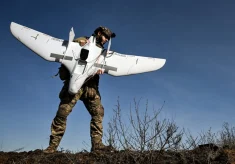
Second, technical exchanges and demonstrations of autonomous systems can enhance understanding of emerging technologies and their operational integration.
Third, officer exchanges and education programmes can build long-term institutional familiarity and trust.
Finally, joint doctrinal work – short of formal agreements – can support convergence on best practices for attribution, escalation management, and civil-military coordination.
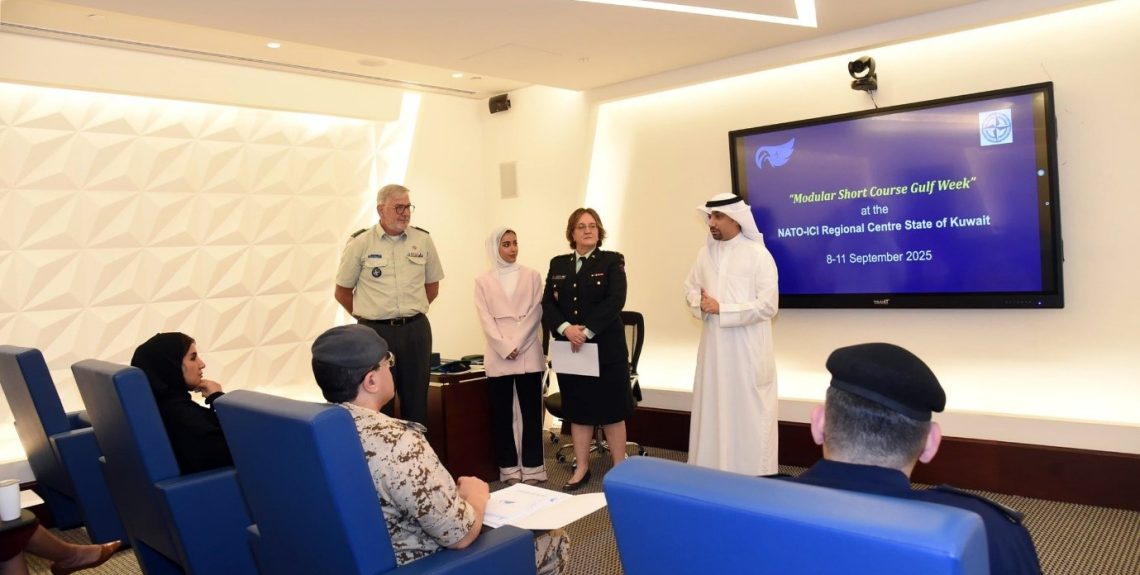
These initiatives could be pursued either through the NATO Istanbul Cooperation Initiative (ICI) Regional Centre in Kuwait, NATO’s principal framework and flagship project for engagement in the Gulf since 2017, or via flexible, ad hoc groupings of willing NATO and GCC members better prepared to advance defence cooperation at a faster pace.
Critically, defence diplomacy does not require the GCC to align formally with NATO or accept external security guarantees. It allows Gulf states to retain strategic autonomy while benefiting from shared expertise and experience. For NATO, it offers a means of strengthening stability along its southern flank without overextension or political entanglement.
That said, defence diplomacy has limits. It cannot substitute for political will, nor can it overcome deep structural divergences within the GCC. Its value lies in enabling conditions, building habits of cooperation, reducing mistrust, and creating a foundation for more structured engagement if political circumstances allow.
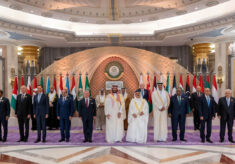
After years of uneven progress, there appears to be renewed scope for deepening inter-bloc cooperation, as reflected in the work of the NATO-ICI Policy Advisory Group, a platform for inter-bloc dialogue and planning coordination, which convened its seventh meeting in December 2025, alongside intensified engagements between senior NATO and GCC officials.
Notably, this renewed push is not only aimed at injecting fresh momentum into the NATO-ICI framework, but also at broadening and consolidating dialogue with the two GCC states that remain outside the Initiative. This outreach is evidenced by NATO Special Representative for the Southern Neighbourhood Javier Colomina’s visit to Oman in November 2025 and NATO Military Committee Chair Admiral Giuseppe Cavo Dragone’s visit to Saudi Arabia in January 2026.
In an era defined by maritime hybrid threats, incremental cooperation may be more strategically sustainable than grand designs. Defence diplomacy at sea provides NATO and the GCC with a toolset that is flexible, scalable, and aligned with the realities of contemporary security competition.