“The spirit of our endeavour is, To strive, to seek, to find and not to yield”
Alessandro Minuto-Rizzo, President
SEARCH
Prediction Markets as the New Hegemony of Intelligence
Source: Canadianaffairs.news
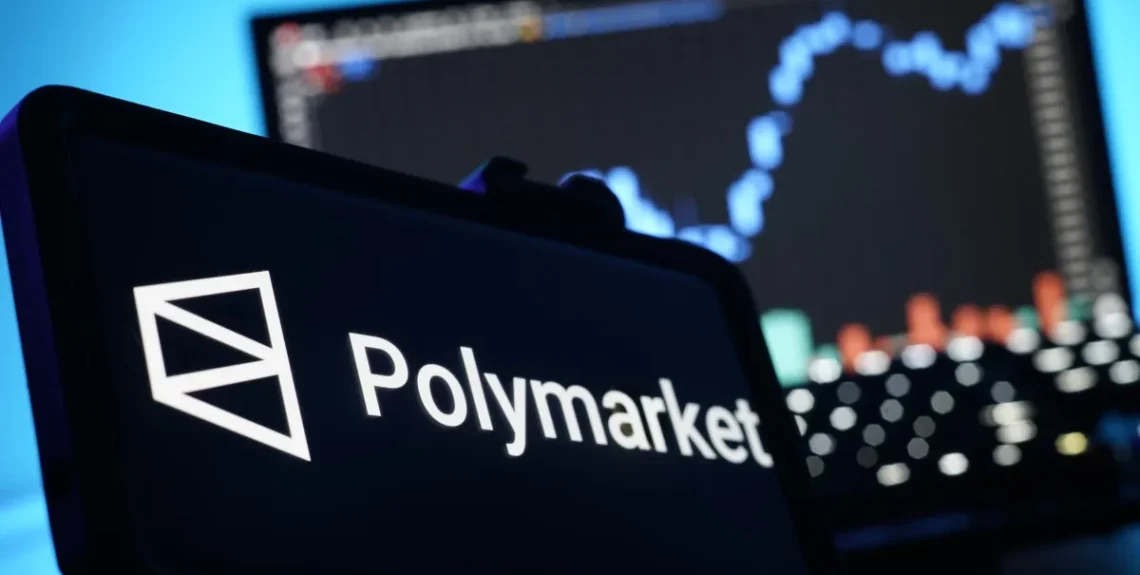
There exists a precise moment when destiny ceases to be a Greek tragedy and transmutes into a betting slip. It occurs in the dead of night, while chancellery halls lie dormant and satellites cast their voyeuristic gaze, all while a neon screen displays a graph fluctuating with the desperate rhythm of a condemned man’s pulse. Its name is Polymarket.
This is no mere casino, though stakes are high; nor is it a news agency, though it heralds the tidings of the day. It is an ear pressed firmly against the iron tracks of the future, straining to discern if the locomotive of History is running to schedule or if it derailed three stations back. To wager on the morrow is no longer a vice; it is an armament. For he who anticipates the perception of others does not merely guess—he carves the very trench into which events, driven by inertia or dread, must inevitably fall.
The Bourse of Secrets
The mechanism is one of a ferocious simplicity: a market of binary probabilities. A blunt Yes or No on the Polymarket platform. Will the invasion commence by Friday? Shall the Prime Minister fall before the lark ascends? Will the extra-terrestrials deign to land in Central Park? One purchases a share. If the market quotes an impending strike against Iran at 0,70 dollars, it signifies that the world, or at least that portion of it possessing both capital and clarity, ascribes a 70% probability to the ordnance plunging on target. If you are vindicated, you collect the pound; if you err, you are left with nothing but the dust between your fingers.
Yet, here lies the stratagem: you do not wager against the house. You bet against another soul (an analyst, perhaps a clandestine operative) who fancies his gaze more piercing than your own. It is a financial exchange that deals not in Brent crude or bushels of wheat, but in fragmented truths. It is the economic incentive applied to the act of confession. If you possess a scrap of knowledge hidden from the masses, Polymarket allows you to sell that secret without betraying any master, save your own conscience. You monetize your epiphany before you even deign to pen it.
The Bluff as Grand Strategy
Intelligence, as we know, is the sublime art of deception. If the market worships the number, then the number must be forged. Consider the mise-en-scène: a security agency wishes to persuade the adversary that the sword has been sheathed. They eschew the press release, a vulgarity no one believes. Instead, they park the Chief of Staff’s vehicle conspicuously at his residence, a silent lure for the hacked webcam and the prying satellite. Simultaneously, a phalanx of trolls is deployed to wager millions against the prospect of conflict.
The price ebbs. The probability withers. The global “sentiment” exhales in relief. And while the enemy relaxes his guard, seduced by the digital “wisdom of the crowd”, the missiles are already airborne. This is the poisoning of the informational well. One may pollute the streams of ChatGPT, manipulate the marionettes of Twitter and construct a synthetic reality that earns its “truth” simply because someone, somewhere, has placed a bet upon it.
The Puppeteer’s Shadow
The crux is not the fact, but the notion of the fact. Like a marginal note in an unwritten diary, we realize that not a single thought, not a solitary strategy of this war was conceived by the “leader” who signs the decree. It all emanates from the mastery of the flow, from those who dictate what we are permitted to believe is possible.
Today’s sovereigns scrutinize these screens with the same tremulous awe with which the ancients peered into the entrails of bulls. If the market decrees their electoral demise, they shall begin to act as the defeated, thereby ensuring the market’s prophecy is fulfilled. It is the hollow, vicious cycle of the self-fulfilling augury. We have traded parchment maps for the blockchain, but the essence remains: the true struggle is not for a kilometre of Ukrainian mire or a desert frontier. It is for the dominion of information.
Intelligence has become a vast bureau of arbitrage. It no longer matters what is true; only what the market deems to be true. In this twenty-four-hour global infirmary, the border between peace and war is as thin as a pixel. And while we watch the flames, there is someone, cloaked in shadows, who has already collected the winnings on our distraction.
The Ontology of the Wager
Betting on the future is no longer a hollow hope or a back-alley hazard. It is the supreme act of political poiesis: the capacity to mould reality through its anticipation. In the twilight of liquid modernity, the ability to intercept not the event, but the shadow it casts upon the collective mind, grants a demiurgic power. This is the new frontier of informational sovereignty.
In the inner sanctums of the most sophisticated services, alongside military cartography and diplomatic cables, there shines a new zenithal indicator: the prediction market. These are not mere agoras for gamblers, but theatres of operation, immaterial battlefields where capital and cognition meld into one.
The Alchemy of Dispersed Truths
Polymarket, bolstered by the architects of the new world, transforms uncertainty into a negotiable asset. Here, the binary question becomes a probe into the depths of the geopolitical subconscious. The price incorporates the unspeakable: the whisper of the disloyal functionary, the intuition of the OSINT scholar, the private satellite feed. It creates a brutal economic incentive for revelation: he who holds a fragment of the secret finds it in his interest to wager before that truth becomes common coin. The market of predictions thus dissolves into a market of privileged information—a digital confessional shielded by the veil of cryptography.
Geopolitical Insider Trading and the Fog of War 2.0
A systematic suspicion haunts these platforms: the spectre of geopolitical insider trading. He who intercepts the flight paths of the Gulf’s elite or monitors the idling engines of an Israeli state aircraft no longer merely reports to his superiors, he capitalizes on his vantage point.
The subtlest snare, however, is the feedback loop established with political deciders. If leaders monitor these markets to gauge the feasibility of an action, they end up tailoring their strategy to what the market has already priced in. Reality no longer precedes the forecast; the forecast risks to become the architect of reality. Polymarket is not a crystal ball, but a thermometer for the world’s fever. It reveals what the global “hive mind” claims to know.
Thought as an Armament
We must concede that the battles of the twenty-first century are not fought solely for trenches or energy routes, but for the absolute mastery of information and its exegesis. As history teaches us, no gesture, no strategy is born of a vacuum: all flows from the control of the thought that precedes the act.
Intelligence must now become the interpreter of these digital oracles, cognizant that truth is no longer a static datum but a value fluctuating incessantly upon the blockchain. In this collision of perceptions, the most potent weapon remains the ability to remain the authentic fathers of strategic vision, wresting from the adversary the control of the narrative of what is to come.
By Gerardo Spagnuolo, Specialist in semiotics, emerging technologies, information warfare, soft power strategies and crisis communication skills.
This website uses cookies to enhance your experience. Some are essential for site functionality, while others help us analyze and improve your usage experience. Please review your options and make your choice.
If you are under 16 years old, please ensure that you have received consent from your parent or guardian for any non-essential cookies.
Your privacy is important to us. You can adjust your cookie settings at any time. For more information about how we use data, please read our privacy policy. You may change your preferences at any time by clicking on the settings button below.
Note that if you choose to disable some types of cookies, it may impact your experience of the site and the services we are able to offer.
Essential cookies and services enable basic functions and are necessary for the proper functioning of the website. These cookies and services do not require user permission according to GDPR.
This category includes all cookies, domains, and services that do not fall into the other specified categories or have not been explicitly categorized.