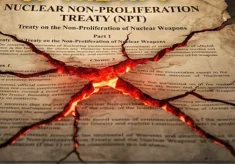
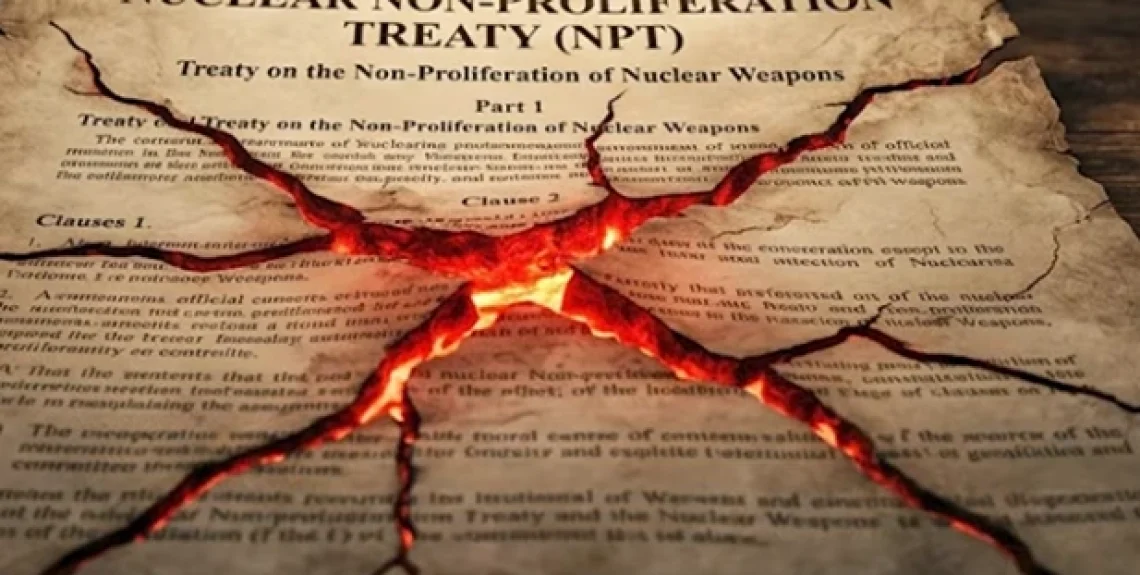
The major review conference of the Non-Proliferation Treaty, the main international forum still in operation that regulates the entire nuclear specter both civilian (nuclear power plants) and military (nuclear weapons), opened on the 27th of April in New York. In force for over fifty years, the NPT establishes the “inalienable right” to nuclear energy, but at the same time prohibits the spread of nuclear weapons to all. Only China, France, the United Kingdom, Russia and the United States are allowed to possess nuclear weapons. Article 6 of the treaty, however, provides for the obligation to negotiate measures regarding the cessation of the nuclear arms race and nuclear disarmament, objectives that are far from being achieved.
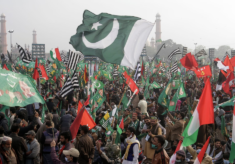
The main strength of this Treaty is the fact that the vast majority of states (191), including the five nuclear-weapon states, have joined it. However, none of the countries that acquired nuclear weapons outside the Treaty (India, Israel, North Korea, Pakistan) are members. The NPT has managed to survive for over 50 years, during which it has been, and still is, the bulwark against the spread of nuclear weapons throughout the world.
The conference opens in a climate of uncertainty and unease and occurs in conjunction with two crises and conflicts that are closely linked to nuclear proliferation. The central issue underlying the ongoing conflict between Iran and the United States and Israel is precisely that of proliferation. No member of the NPT can tolerate that Iran, which is a member of the treaty, acquires nuclear weapons. This is a general principle shared by all NPT members and is the raison d’être of the treaty. But Israel and Trump’s America are more intransigent and cannot tolerate Iran independently enriching uranium, an activity not expressly prohibited by the NPT and which is performed by other non-military nuclear states and can be used for both civilian and military production. An international organization, the IAEA, has the specific task of ensuring that uranium is not diverted for military purposes.
Nuclear proliferation is also a key component of the conflict in Ukraine. Russia, a nuclear power, has attacked and militarily occupied territories belonging to a non-nuclear-weapon country, a member of the NPT that fully respects its provisions. In 1994, Ukraine had joined the Non-Proliferation Treaty and renounced the Soviet nuclear weapons located on its territory, precisely in exchange for a written and signed assurance from Moscow to “renounce the threat or use of force against the territorial integrity and political independence of Ukraine”, the well-known Budapest Memorandum, never ratified by any of its guarantors. Russia, one of the three states guarantors of Ukraine’s territorial integrity, nevertheless attacked it and seized part of its territory. Also. the US signed that Memorandum and thus is expected to assure Ukraine’s integrity.
The lack of progress in the field of disarmament, aggravated by the current resumption of an arms race, including in the nuclear field, has given rise to a “rebellion” by countries, frustrated members of the NPT, which in 2017 concluded a new treaty the TPNW (Treaty on the Prohibition of Nuclear Weapons) that totally prohibits nuclear weapons and does not allow any country, not even the “Big Five” to possess atomic weapons. 74 countries have joined this new document, but none of them is a nuclear-weapon state. The inconsistency between the provisions of the two treaties has so far not become a controversial issue but this doesn’t mean that it won’t arise during the four-week conference.
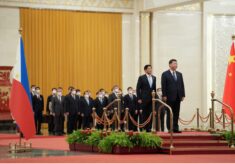
The path of the Conference Chairman, Ambassador Do Hung Viet of Vietnam, is an uphill one, made more difficult by the Trump administration’s general skepticism toward multilateralism, and particularly toward arms control. The remaining nuclear-weapon states are also on the defensive. All fervently desire to prevent new states from acquiring nuclear weapons, but all are rearming and are not ready to make concessions regarding the reduction of their arsenals and their control.
For the past 16 years, NPT conferences have been unable to approve a consensual final document. It would be a miracle if this year, under present circumstances, an agreement on a common language were to be reached even if only to reiterate the positive results achieved way back in 2010.
By Carlo Trezza, member of the NDCF Board of Directors and was Italy’s Ambassador for Disarmament and Non Proliferation.